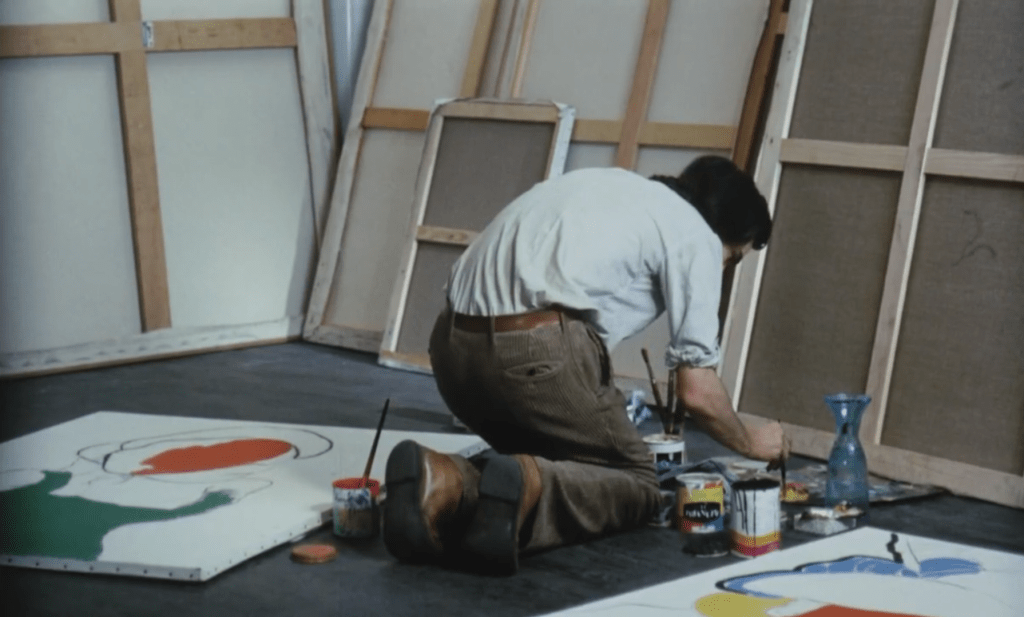
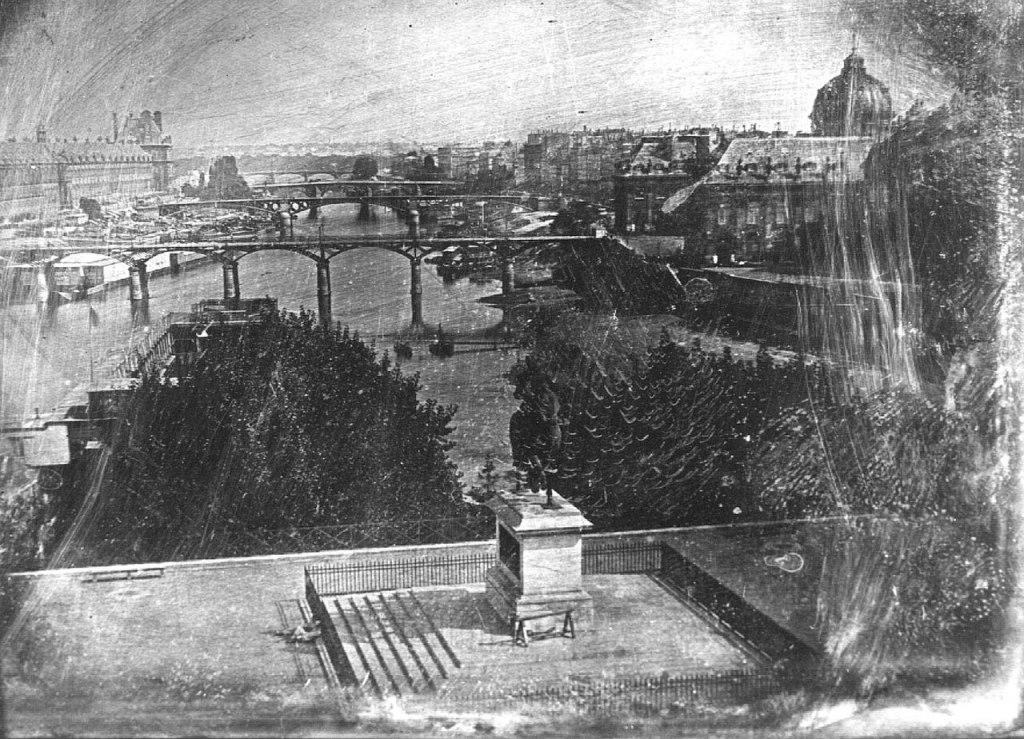
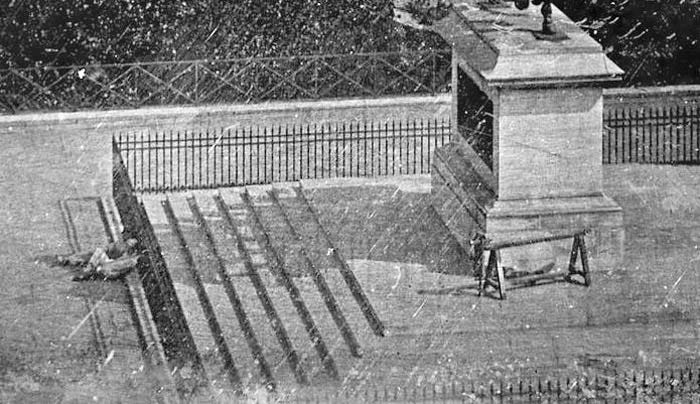
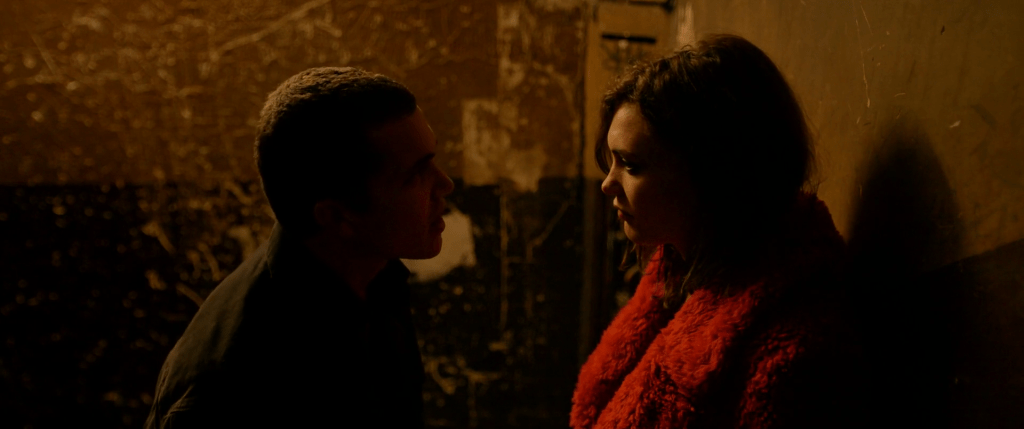
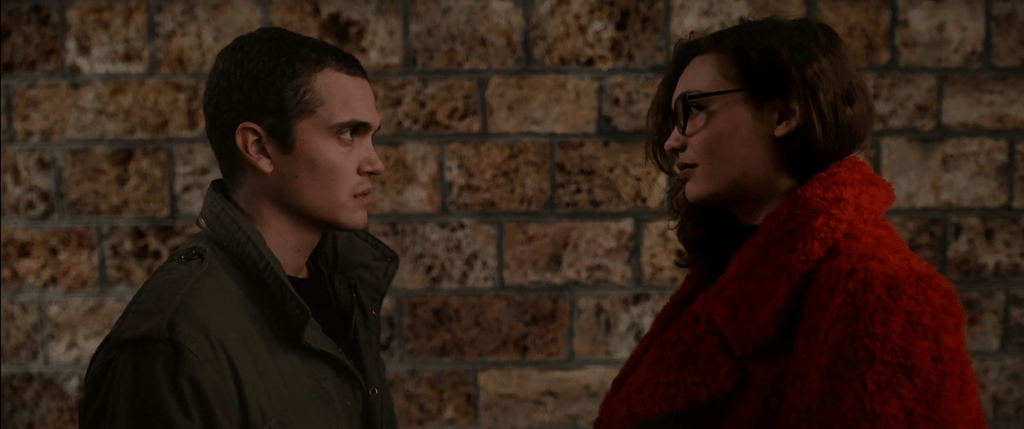
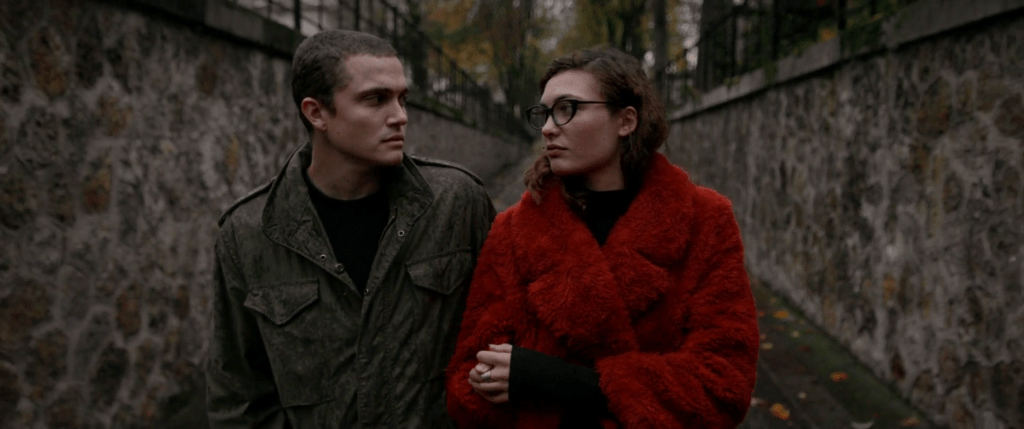
In the closing minutes of Bresson’s second color film and third Dostoyevsky “adaptation,” the usually perambulatory Jacques silently hunches over two partially painted canvases laid across the floor. Earlier in Four Nights of a Dreamer, the viewer catches a glimpse at a couple such paintings that have been more or less finished: large faceless portraits of women defined by bold outlining brushstokes of black uniformly filled with vibrant hues of pure primary and secondary color. The young artist tries to find his ideal woman on the streets of Paris and on the canvases that he leans against the walls or lays across the floor of his studio. Rather, he translates their fleeting forms onto the canvas. As a former colleague from Beaux-Arts tells Jacques, art is about absence, the dual-sided disappearance of the artist and the object. Unable to approach the women who catch his eye and whose eyes he catches, Jacques speaks longingly, poetically of imagined scenarios into his portable tape recorder. In his poetic musings and De Stijl-meets-pop-art portraiture, he removes their features, perhaps unable or unwilling to remember them after his countless failed “attempts” at romantic connection, or perhaps in search of their essence, what they can all be reduced to most essentially, but more than likely this project leads one to his own faint-hearted idealism. This is the impression Jacques offers when Marthe asks for his story, he having just pulled her from the ledge of a suicide attempt over the Seine, having spent one year in wait for a lover who has finally returned from abroad only to ostensibly forget about her. It is as if Bresson took Louis Daguerre’s famous photograph from the Pont Neuf—its panoramic view of the river, the bridges, and the two figures in the foreground, resposing in the shade—as the starting point for his most lovely, sensuous film. Said to be the first photograph taken en plein air and with a visible human figure—and even more, there are two of them. Maybe they are in love, maybe they are not, who is to say.
Let us step away from the impetus and back toward the end. In this scene before the last drowsy blink of the camera iris, Jacques paints an aural picture, a daydream reunion with Marthe: she will apologize profusely for her having abandoned him on their fourth and final night together in favor of her unnamed lover who passes them during the busy nighttime scene. He wants her to admit her mistake, to suffer “one thousand deaths” for him as a result of her decision, but more than anything else in that moment, he wants to be with her again. He ends his soliloquy, rewinds the tape, leaves the recorder at his bedside, and plays back the words he has just spoken. On the other side of the room, he kneels before his painter’s palette, surrounded by the reverse sides of several large paintings already completed with two primary works in progress situated on either side of him. His inability to focus on one or the other recalls the beginning of his story that first night on the bridge: Jacques spies an attractive woman through a shop window, they look at each other with interested glances, he follows her down the street but never approaches, and when he eventually loses her, another grabs his attention. His back turned to the camera, Jacques mixes yellow tube paint with water, trying to achieve a desired consistency, going back and forth between adding more paste and more water. He cannot seem to find the right balance—or maybe he is simply stalling, putting off the work he knows needs to be done—as with water-miscible oil paint, too much water will cause the paint to not adhere to the material support. He abandons this prolonged effort and turns away from the palette and the right hand’s canvas, twisting his focus toward the other open-faced canvas on the left, where an open red paint can sits between the bent artist and his work. Like the others, it is a portrait of a woman: he has finished most of the coloring on her dress green while the halted progress on her face divides her into two halves—one side, red brushstrokes; the other, blank. Without any need for water, he firmly presses and applies the red liquid onto the black-outlined area just above her expressionless, dichotomized face. The adjoining shapes become conflicting ones through their identical hue, marking a new direction for Jacques’s work, wherein previously no region of one highly saturated color is seen to border another of the same color. Further, in the first flashback at his studio, Jacques gets distracted by the conjurings of his own tape-recorded imagination while at work on a similar portrait; however, this red-skinned model’s hair is already in the stagnated process of becoming yellow. And so, the yellow paint Jacques was fussing over was intended to be the brown-blonde hair of Marthe. (He may have been watering down the paint, as when a water-soluble pigment—if that is what it in fact is—is greatly watered down, it will dry darker. Perhaps, Jacques was trying to recreate the subtleties of Marthe within the preestablished astringency of his minimalist style.) Instead he opts for red, the same unmistakable hue of the scarf he bought for her and lovingly wrapped around her head only moments before she left him alone on the street, for the man she believes herself to love more.
This is what becomes of the dreamer. Subsisting himself on fantasies from fleeting memories and imagined fancies, he can only think to expel these feelings outward into some great project he is too embarrassed to share with anyone. He sees his dream as “flat and boring,” but he is a slave to it. Jacques will not be able to get Marthe out of his mind until he captures something of her in his art, so that her canvas, her image can be flipped around and leaned against the wall with all the others, but the ideal will still persist and there is only so much room. The floor is filling up and the walls are bare. A man is condemned to dream, to chase his ideal until he is able to impress it into the mind’s of all men.
I’ve found I quite enjoy a thing after everyone already else has. There’s no pressure to like or dislike it; I can take it as it is more or less. I’ve also found that my more snob-like tendencies are becoming a bit too pronounced for my taste, so it seemed about time to bring myself down to earth—away from the rep theaters, away from prestige miniseries, away from the film schoolers—which, as it turns out, delivered me to You. After an impulsive thought to watch a show that first streamed to massive popularity seven years ago, I watched the first four episodes of the first season last night. Maybe it was in part to my remembering the woman who lived in the dorm next to me freshman year of college, who told me I reminded her of Penn Badgley’s obsessive/delusional Joe Goldberg but in a good way. (Does that say more about how weird and offputting I was or her taste in men? Looking back, both claims are certainly valid.) The other half of this impetus likely lies where it always does for me: Steven Shaviro. In one blog post from 2003, he attacks the “high-minded backlash” of what he calls Anti-Harry Potter-ism: more broadly, in this case, the obnoxious, pretentious, classist tendency of academic/intellectual types to decry the actually existing consumptive habits of the average person outside the ivory tower. Anyway, I gotta say, the court of public taste was onto something with this Lifetime/Netflix original series. The premise alone and the complications/contradictions that arise because of it are entertaining and rife with interesting ideas to think over.
I will have to keep watching the show to see how my thoughts toward it develop, but so far, You (as centered around the lead character, Joe) seems to adopt a bit of that snobbish tone discussed above. However, it takes this stance not toward pop culture media writ large (although it does take its fair share of shots), but toward digital communications technologies—namely, social media. Yet, its attitude is not a hard stanced, uncomplicated one. Joe, the manager of an independent bookstore disavows social media in favor of what he calls the “real thing.” For him, real life is epitomized by books. For example, when Beck asks to know the real Joe in episode four, he takes her into the climate-controlled box in the basement of Mooney’s Bookstore, home to the rare and collectible books (and former prison/murder site to Joe’s first victim in Beck’s ex-lover, Benji). Joe’s anti-technology tone is ironic and hypocritical in his navigation of this dialectic he has unrealistically established, certainly played for laughs all the while complicating his already unreliable narration (in the form of voiceover monologue). The object of his obsession is the unbelievably boring Guinevere Beck (but I feel this actor/character shortcoming only highlights and hyerbolizes Joe’s delusional fantasies). In addition to his usual stalking and breaking and entering, he pickpockets her phone after saving her from an oncoming train. Thanks to the convenience of the cloud and Beck’s poor password protection, Joe receives all her messages in real time, in addition to access to all her log-ins. And so, with the cognitive dissonance that defines his character, Joe nonetheless insists upon his avoidance of social media. The series cleverly depicts the impossibility of being a recluse from the digital, unable to free oneself from the demanding entanglements of network society. Thus, Joe still stays up late stalking potential lovers online, worries about the subtext of a text message, and of course, posts (even if through the Twitter account of the imprisoned/deceased Benji; it’s all the same.) Rather than being unimpeachable or uninvolved due to his reduced digital footprint, Joe is inescapably complicit, in fact, he epitomizes the very lifestyle he postures himself in opposition to. However, on the other hand, according to his status as a force of surveillance via social networking applications, I suppose he really thinks he is above it all.
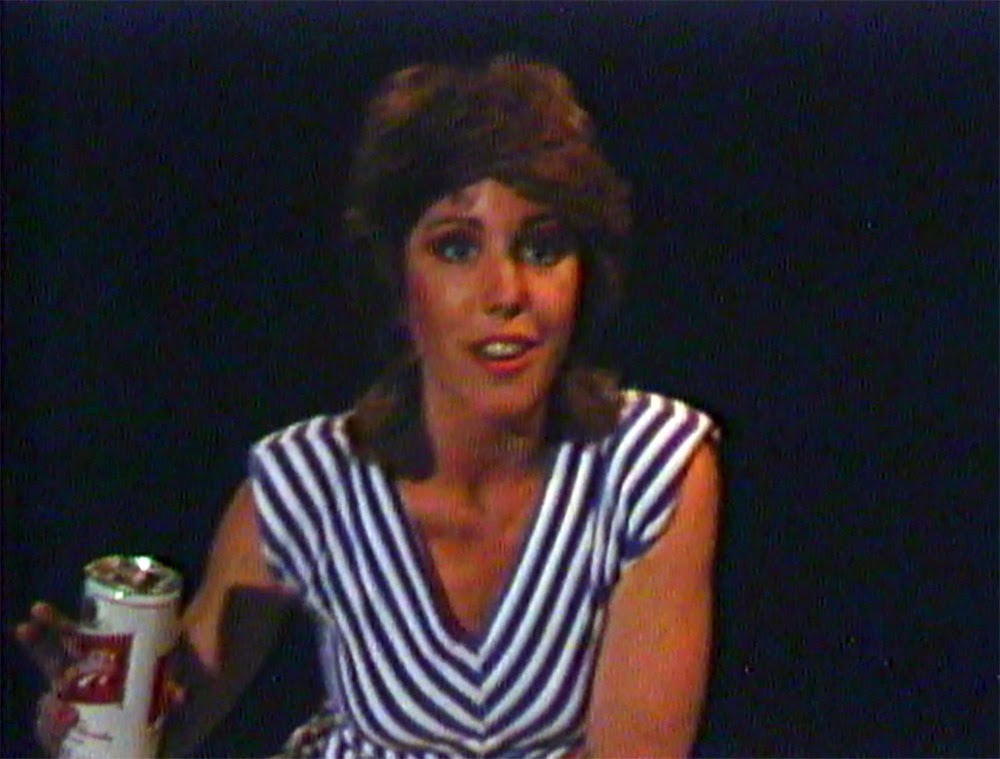
It struck me toward the end of Dale Herd and Barry Hall’s Dreamland Court that this experimental narrative videotape acts as a reversal of Michael Snow’s structuralist masterpiece. In Snow’s Wavelength (1967), an extended snail’s-pace zoom occurs for the entire duration of the film with characters passing through the space, the camera independent and indifferent to their presence. In Herd and Hall’s “performance tale” (based on the novel by Herd), the conceit is centered around a series of four characters shot alone and only in close-ups or medium shots, as they perform directly into the camera. Both works take place on the periphery, but with divergent approaches to narrative and mise-en-scene.
While the direct minimalist approach of Wavelength eschews emotional investment in its actors/characters, it does not entirely forgo characterization, offering only glimpses of some sort of narrative with the static, zooming camera registering actors more as mere set dressing. Dreamland Court, inversely, foregrounds its characters through claustrophobic yet empathetic framing. As for mise-en-scene, there isn’t any, not really anyway. Herd and Hall offer impressions of an inhabited space, but the effect is produced somewhere in between the images: that is, a change in the color of lighting, a new or recurring wardrobe, soft music or chatter in the background, thus signalling whether someone is back in jail or sitting at a dive bar or laying in their bedroom. The four characters (Johnny, Jackie, Carson, and Joann) are presented for the viewer’s scrutiny against a minimal or non-existent backdrop, inviting one to piece together the translucent dynamics that inform these four entangled lives. All this to be intimated without ever having to be seen, without ever seeing them act together; the rest is to be imagined. (Even now, I cannot tell whether the mise-en-scene I am able to recall was in fact videotaped by the camera or intimated by me according to contextual cues.) This approach hinges entirely on its four characters and the unbelievably compelling performances given by these talented, underappreciated actors. And for much of the video’s runtime, it is apparent they are all in some perverse form of dialogue with one of the others at some point. Even while oftentimes acknowledging one of the others or addressing them by name, as if speaking to them face-to-face, it never feels like shot/reverse shot. The rhythm achieved between the montage and the actors feels more like a series of epistolic vignettes than a conventional cinematic construction of legible, contiguous space-time.
From the first address of Johnny, a down-on-his-luck jailbird with a lucky streak, where he looks directly down the lens of the camera, Dreamland Court situates itself in contradistinction to Hollywood continuity editing. Each character is shot straightfoward as they talk to/about themselves, another character, or the audience—each inhabiting their own uniquely determined and identifiable spaces. Dialogue spoken exclusively as monologue adds a heightened degree of theatricality and hinders the possibility of the videotape’s editing as intercutting. To an outside observer, everything has already happened (in between the edit) before the next character reacts and gives their take on the events that were just described to us (i.e., a failed suicide-by-cop, a violent confrontation, or an accidental pregnancy). A constant game of catch-up for the viewer and these socioeconomic outcasts of 1980s LA. And so, the editing is not refusing narratively motivated cutting outright, but eyeline-matched shot/reverse shot as a foundational basis of spatiotemporal continuity is stretched beyond coherency. Dreamland Court as a text always feels gleefully disjointed as Johnny, Jackie (his unsatisfied wife), Carson (Johnny’s close friend and Jackie’s lover), and Joann (the teenager that Johnny presumably gets pregnant) are never pictured in the same place at the same time.
Like Wavelength pushing the bounds of its own central experiment (e.g., by mixing multiple film stocks, stitching together multiple shots, applying color filters, intensifying a nondiegetic, high-pitched whine, etc.), as Dreamland Court goes on, characters start to walk out of frame as they monologue, the camera refusing to track them as they leave their mark, or they’ll have their face framed in three-quarters profile and positioned mostly offscreen to accentuate the negative space, or indiscriminate zooms in and out. Moreover, in one instance, a dialogue overlap of Johnny onto a shot of Jackie rings more discontinuous than the device’s usual cinematic deployment for the sake of smoothing over stitches between shots/scenes. (Can these monologues even be called scenes? Between the many appearances of all four characters, there are little identifying markers to distinguish one appearance from the other beside a tightly-framed change in wardrobe or lighting.) In addition, the final two shots—Johnny and his naive teenage girlfriend, both talking about her possible pregnancy—stand out from the previous vignettes and forgo the typical spatiotemporal ambiguity of the video. These two appear to communicate more directly and immediately than any other instance in Dreamland, looking out at each other across space and time to somehow envision a happy life together, if such a possibility can even exist.
Where Wavelength drives toward its own death with unrelenting force, toward the photographic basis of cinema, Dreamland Court explores video as a medium in which to converse with oneself. Through the monologue and the video camera (with the actors likely witnessing their own image as live feedback via CRT monitor), Dreamland Court’s performance tale explores two intertwined threads of video since its inception: as narcissistic and/or therapeutic practice. At once, these self-aware/deluded inhabitants of the LA underworld are talking to/for themselves, “puking” (Johnny’s preferred term) their oftentimes embarrassing and turbulent emotions in a similar vein to therapy methods implemented six decades ago, involving patient self-confrontation via video. According to one such experiment conducted in 1963 at the University of Mississippi, the aim was that patients would see themselves objectively, as an object and as others see them, in order to motivate psychological growth (Collopy 109). To engage with and invest energy in the self-as-image was actually suggested as a cure to narcissism. Another experiment saw one subject conversing with himself as a means of self-conducted therapy and fostering a richer awareness of his ego (110). Famously and contradictorily, Rosalind Krauss formulated video as based upon a psychological medium rather than a material one, that of narcissism. She argues that the feedback loop causes artists, modulating and reacting to their images in real time, to invest energy inward, into selfhood, as opposed to an art object. And thus, Dreamland Court juggles these two oppositions of the video art dialectic expertly, mirroring the well-intentioned, forgotten, desperate, heated lives of a Los Angeles couple and their extramarital lovers. In their comitragic hoping against hope, Johnny, Jackie, Carson, and Joann find meaning and misery, heartbreak and a fresh start within their individual, collimate prisons—not to mention the emblematic jailhouse that habitually imprisons Johnny, testing the limits of all their relationships in turn.
Am I…washed up? These days, it is so hard for me to imagine myself writing something as focused as this piece. Maybe that’s just what happens when writing becomes a hobby you sometimes do in between working and hanging out rather than a full-time field of a study. I barely changed a thing about this paper from April 2022, only really fixing the numerous typos. I notoriously did not proofread my essays before I submitted them (often at the last possible minute), and this one for Film History II is no exception. Anyway, my professor loved it, calling it a “marvelous reading . . . that genuinely defamiliarizes and enlivens my sense of and appreciation for a film I’ve seen and taught dozens of times.” I don’t know if it’s that groundbreaking; perhaps I’m just in a mood, because I have to send someone a sample of my writing and feeling my more recent efforts inadequate and sloppy. Just the thought of spending this much time at the keyboard again—researching, outlining, writing—feels unbelievably daunting.
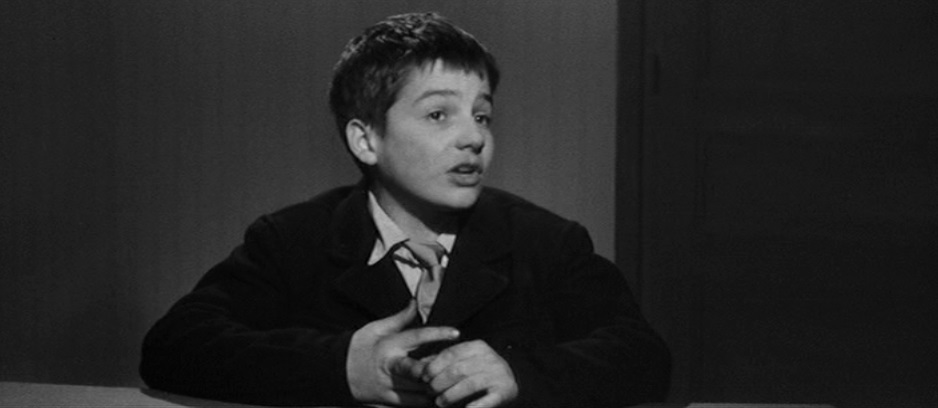
The 400 Blows is not just one of the seminal works of the French New Wave, but a semi-autobiographical declaration of adolescence based on its film-critic-turned-director, François Truffaut. Truffaut opens his childhood up to the screen, presenting himself through Jean-Pierre Léaud’s performance as Antoine Doinel. In the film, Truffaut maintains a mimetic dialogue between himself as filmmaker and his represented childhood self, somewhere in between imitation and opposition. However, in the scholarship surrounding this film, the Antoine-Truffaut connection is passing contextualization and the New Wave is blanketly regarded as a radical departure from or rejection of classical aesthetics. In what “had to be best scene” of the film, Truffaut stages a three-minute conversation between the institutionalized Antoine and a psychologist. The psychological evaluation in The 400 Blows foregrounds the mimesis at the heart of the film and of the French New Wave. This scene deconstructs the division not only between Antoine as character and semi-autobiographical alter-ego but reflects the mimetic relationship between Hollywood and the emerging nouvelle vague.
Before breaking down and exploring Truffaut’s own breakdown of mimetic distinctions of character and industrial-sociohistorical contexts, I need to examine how Truffaut mimetically employs and inevitably departs from the groundwork of Cahiers du Cinéma criticism and theory. This background is important for the mimesis of Truffaut and Antoine and between that of the French and American cinemas that follows. Firstly, the scene in the psychologist’s office disrupts the realism to which cinema should aspire, according to André Bazin, proto-auteur theorist and godfather of the New Wave. This scene is marked by several dissolves that deter any realistic sense of space-time, as the camera stays entirely trained on Antoine alone despite the classical cue to introduce the next scene. Thus, this formal experimentation subverts Hollywood assumptions of film grammar as well. Mimetically experimenting with Bazin’s film philosophy, the “wide-angle, deep focus long shots” that capture Antoine’s “moments of freedom” are abandoned—the distance between foreground and background no longer “exaggerated” (Fabe 128). The dissolves, which remain within the psychologist’s barren office, imply this scene is a long take that has been cut up in the editing room. This itself is mimesis: a long take that is edited but smoothed over with dissolves into a pseudo-long take—rejecting the confines of either filmic component. Unlike the long takes on the streets of Paris or of a running Antoine, there is no physical subject to track in this lengthy psychological examination. The mise en scéne is not shot in deep focus and rich with polyvalent props for the spectator to spot. There are no visual indicators to distinguish between fore-, mid-, and background; there is only Antoine, a dark wall, and a table. The interrogation room is a liminal space, its claustrophobia is imposed by the wall behind Antoine, which heightens the gravity of this moment for Antoine’s uncertain future. The quieted handheld immediacy invokes this narrative crossroad. In this scene, the audience is not afforded to “run by his side,” as Sam Solecki phrases it (58).
Returning to the central argument(s), this scene foregrounds and (formally) disrupts the mimesis between Truffaut and Antoine. Most notably, the score and usual camera movement are not present here, which are responsible for the “aura” that lessens Antoine’s misdemeanors; therefore, Antoine is put on display without these intermediating factors (Solecki 54). He seems to be telling the truth: the character of Antoine, that is, but he is departing from the life and script of Truffaut. Antoine is finally able to speak for himself. For example, in the police booking scene, he is spoken for by the officers and his adoptive father. Now, Léaud gets to improvise his own characterization for Antoine, distancing himself from Truffaut. Once again, there’s no deep focus or nondiegetic score; it’s just him.
The rattle of the camera mirrors the uneasy body language of Antoine and Truffaut behind the camera is likewise characterized as anxious under that restless and rebellious charm. Both young men are aware of their respective audiences. Truffaut is not only an iconoclast kickstarting a film movement with international repercussions but sharing his traumatic childhood. In this moment, the audience, like Antoine and the judicial system, are reckoning with his character and the decisions he has made up to now. Erin Hogan describes Truffaut’s camera as “highly sympathetic” to Antoine and his session with the psychologist is a rare moment where an “authority figure listens to him” (30, 36). However, Truffaut is much less sympathetic to adult characters—the psychologist is never even pictured, she is noncorporeal, she is unhuman. The absence of an actress on set during filming affirms that the adults in Antoine’s life are (literally) not there for him. Moreover, the woman’s voice added after the fact is therefore separated spatially (she is not on set) and temporally (by the dubbing in post-production and her age). In agreement with the documentary-like aesthetics fostered by cinematographer Henri Decaë, the added voiceover of Jeanne Moreau becomes a voice of God (which formally highlights the psychologist as an authority figure), as Léaud does not hear it. And during the shooting of this scene, Truffaut asks the questions to Léaud, establishing a mimetic effect through the semi-autobiographical narrative (“Jean-Pierre” 0:55–1:00). Furthermore, the scene was largely improvised, constructing a break between Truffaut as Antoine and Léaud as Antoine that still fits within the fluidity of mimesis. The actor strays from the director’s childhood as source material, rejecting stringent autobiographical imitation. Yet, Truffaut did not directly transcribe his early teenage years onto the screen, treating mimetically his own childhood in addition to a flexible approach to screenwriting and filmmaking.
The interview elucidates Antoine’s motivations for his crimes, as up until this point, there was minimal explanation in his own words that speaks to the “degree of his unhappiness” (Solecki 56). Concerning Truffaut, the answers in the interview, which still draw from his childhood, reflect his motivation for becoming a filmmaker and bringing his own story before an audience. This scene not only solidifies our support for Antoine’s escape—even if it is brashly juvenile and his capture inevitable—but Truffaut’s first feature and inauguration as a filmmaker. Antoine, like Truffaut, feels trapped, and the film’s form reflects this truth. Wide, open shots that record the city are shaky and restless but not illegible, expressing an equally restless desire to break free from unsatisfying circumstances. The enduring movement of the frame constantly projects to the audience that the story of Antoine is that of Truffaut. So, the relative formal restraint of the interview is Truffaut telling the audience that he is still there, albeit less so. This is Antoine/Léaud’s moment, and the audience must examine why they support the delinquency of this boy. What are the implications of his actions? What are the causes? Truffaut urges his audience to be critical of their own spectatorship in addition to being cognizant of their passive status before a projected series of images. Put simply, this confrontation with Antoine is a confrontation of our own spectatorship. Why do we support Antoine? Why is this scene here, disrupting the flow? What should happen to him? The freeze frame that ends this scene arrests our uncertainty, suspending the conclusion of the examination. This photogram solidifies the spectator’s sympathy for Antoine and formally recalls and foretells the other instances of his imprisonment. The placement of this frozen medium close-up after the one in the police booking scene questions but ultimately affirms the spectator’s sympathy toward Antoine in the final suspended shot. Truffaut challenges passive consumption of narrative that has been shaped by the invisible editing of Hollywood, raising more questions than he answers in typical New Wave fashion. Truffaut criticized French films for their lack of formal risk and sincerity, so he inserts a scene between the lead actor and himself—albeit slightly disguised—that highlights the self-reflexive sincerity of Léaud and Truffaut. Both draw from their lives to form one character.
On the other hand, this scene also highlights the mimesis between the French New Wave and Hollywood. The Cahiers critics were cinephiles enamored by several auteurs within the American film industry; however, these same foundational French critic/filmmakers diverted from American cinema and the socially unconscious American and French societies. The striking quietness of the examination—auditory and kinesthetic—contrasts the gestural, handheld 16mm aesthetic of the film before and after this scene. As a result, the stillness of the camera in this scene functions in opposition to its role in classical Hollywood; the anomalous stasis of the camera calls attention to itself when bookended by a film that rejects stasis almost entirely. Antoine’s slightly offscreen gaze heightens this effect, not quite acknowledging the camera, like he’s intimidated by it, refusing to register its overbearing presence. This scene contains seven dissolves that do not all operate in the same fashion: that is, in service to spatio-temporal continuity. These transition effects make legible the subtle differences in space and time. The first dissolve, discounting the one that opens the scene, is placed after the interviewer’s question but Antoine’s answer immediately follows as if the edit was not present, unaffected. In addition, the next two dissolves occur in quick succession as he listens to the psychologist relay claims from his parents that he is a liar. Truffaut manipulates the passage of time by keeping the psychologist’s voiceover consistent, but the image of the fidgeting Antoine is mirrored in the editing that acts equally uncomfortable and uncertain. This loosening of classical grammar invokes form following function by creating a similar residual effect in the viewer. Furthermore, the subdued state of the camera in this scene rattles and even pans slightly, never fully embodying stillness. The slight visual discontinuities between the dissolves betray the ostensible lack of movement. For example, the aforementioned dissolve brings the doorknob into the frame and its position on the otherwise blank wall illustrates the gestural nature of the original long take. Even at its most still, the caméra-stylo reveals Truffaut behind it. The audience is never aware of the time that passes for Antoine during the interview, as some dissolves shrink gaps in between questions and others seem superfluous in this respect.
Truffaut negotiates with Hollywood filmmaking grammar in a less jarring and more mimetic manner than Jean-Luc Godard and his extensive use of jump cuts one year later in Breathless. (The contained camera in the psychologist’s office also recalls Breathless, but in a less radical way than the temp morts of the twenty-five-minute apartment scene.) The refusal to cut to a reverse shot of the disembodied voice is another example of Truffaut tackling Hollywood formal practices and twisting them, in addition to the not-quite stillness of the camera and the incongruous dissolves. Even the film’s most notable formal element, the freeze frame, is present but obscured in this scene. The dissolve that transitions from Antoine in the office interior to the visitors at the front gate exterior hides the frozen image of the interviewed youth. In conjunction with the muddled continuity of the dissolves, the frozen frame mimetically interacts with Hollywood by subduing its own formal experimentation. In other words, the preservation and maintenance of continuity associated with the dissolve subverts Hollywood aesthetics but is employed to hide the classically divergent freeze frame. Even within the suppressed rebellion of Truffaut’s usually kinetic camera, which he demonstrates undeterred in the dissolved shot before this scene, cinematic conventions are being broken. The stasis of this scene reflects Truffaut being contained by the pre-New Wave tradition de qualité that restricted French cinema through its stale, bourgeois form.
Ultimately, this scene is a test for Antoine and Truffaut, as the boy next to Antoine warns in the previous scene. The scene with the psychologist is not a conversation, but an evaluation; there is an asymmetrical power dynamic between the interviewer and the interviewed. Like Antoine and the absence of an actress on set, Truffaut cannot see his audience. Thus, the dissolves reflect their desire to escape this interrogation, as if this transition technique is them trying to incite the next scene, foregrounding their discomfort. Antoine desires to escape this grueling trial and Truffaut desires to return to long take tracking shots; they both get their wish. When the awaited transition to the next scene finally ends the interview, the image is frozen, calling attention to the indexical makeup of film. Here, Truffaut is reversing the hierarchical organization of filmmaker over spectator and once more implicating the audience in the film, asking them to actively engage with it as spectator and socio-political actor. In short, he plays with audience expectations of film form to self-reflexively elicit an awareness of their spectatorship. As a newcomer director in a well-established national industry, Truffaut reverses the director-spectator relationship, invoking more active participation with the moving (and sometimes frozen) images from his audience and highlighting his own discomfort with cinematic and industrial stasis to induce their own discomfort. The freeze frame that ends this scene suggests that Antoine is not heard by the psychologist after all and the system she represents—this notion is left ambiguous, to say the least. The final freeze frame of the film channels this energy directly onto the audience, directly calling upon their newfound active involvement to expand beyond the diegesis.
In conclusion, Truffaut does not imitate either approach to cinema—Cahiers or classical—instead opting to mimetically experiment with both modes. In addition, the similar appearances and childhoods of Truffaut and Léaud contributes to the mimetic characterization of Antoine. The mimesis between Antoine and Truffaut is itself mimetically entangled with that between Hollywood and the French New Wave. It is impossible to separate these mimetic dialogues, as they mutually inform each other, as evidenced in the scene between Antoine and the psychologist. I cannot even make clear separations between the two in the organization of this essay due to this overlap. Nonetheless, the onscreen mimesis between Antoine and Truffaut highlights a style of filmmaking that was more sincere, personal, risky, and socially conscious than le cinéma de papa (Truffaut lauded aspects of American cinema as bold and lambasted the French industry for its monotony). Truffaut’s opus offers a challenge to the form. Yet, the mimesis directed by Truffaut is not just found in relation to autobiography or classical Hollywood, but movements and genres from Italian Neorealism to film noir. The New Wave brazenly centers the abstraction that comprises the mimesis at the heart of the movement.
Works Cited
Fabe, Marilyn. “Auteur Theory and the French New Wave: François Truffaut’s The 400 Blows.” Closely Watched Films: An Introduction to the Art of Narrative Film Technique, U of California P, Berkeley, 2014, pp. 120–134.
“The disaster ruins everything, all the while leaving everything intact.” —Maurice Blanchot
To have this movie be an adaptation of The War of the Worlds—a respected science fiction property that has been remixed by the likes of Orson Welles, Steven Spielberg, and Classical Hollywood—is hysterical and is so bold in its ridiculousness that it horseshoes itself back into being almost brilliant. Think of Ice Cube’s oft-repeated lines when on video call with his colleagues or children: “I’ll circle back.” Each of the aforementioned and adored adaptations, like another popular science fiction novel turned classic film(s), Invasion of the Body Snatchers, has been tackled by several filmmakers who all impart their own social critiques into the central figure of the alien invader. And it is here that I feel this movie and its screenlife style try to accomplish something interesting. A production impacted by the pandemic five years ago, War of the Worlds (brought to you by a music video director and a big tech giant with a $2 trillion market cap) adopts a stylistic approach that mirrors (1) the diegetic patriarchal surveillance of DHS dad Will Radford (Ice Cube), (2) the extradiegetic constraints imposed on people in lockdown, and (3) the formal and economic limitations of a film industry in the midst of a global pandemic. Like another release from this year, Ari Aster’s Eddington, this film (although less expressly) sorts through the wreckage of a world torn apart by Covid-19 as mediated by the increased presence of digital communications technologies in our lives.
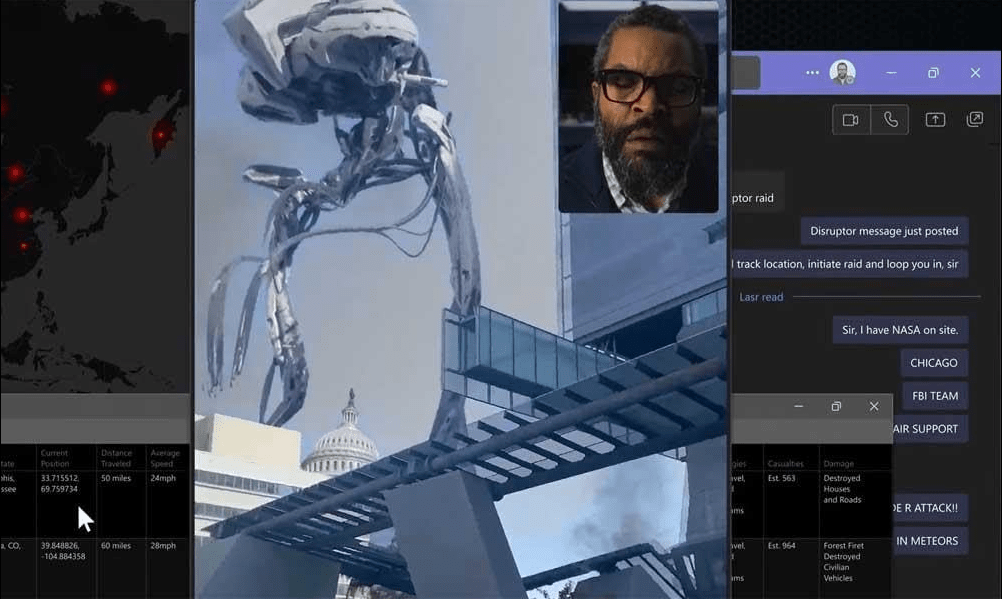
What struck me almost immediately about this film is its depiction of care onscreen, or rather how care as we experience it now can only be accurately depicted via screens. In particular, this protective but somewhat distant father (a result of his wife’s death) switches through dozens of windows and tabs and dialog boxes in order to watch over his pregnant daughter Faith: commandeering CCTV cameras and surveillance drones, checking her Apple Watch heart rate monitor, remotely breaking into her MacBook to read her text messages, etc. In one hilarious scene after an alien attack on her lab, Will guides his bleeding-out biologist daughter into a Tesla that he has hacked into, instructing and reassuring her over FaceTime, as a towering tripod alien lumbers toward her position. “Focus on me,” he tells her, as he clicks, scrolls, and zooms through his surveillance application software (aptly named Guardian), all the while simultaneously watching news coverage of the invasion and firing off messages to colleagues. In an affective sense, this is exactly how it feels to live in a post-pandemic world, how it feels to live in the aftermaths of the apocalypses that characterize twentieth-first century life. For example, many still work from home or at the very least are never not answering work texts and emails: the balance between work and life continuing to erode, the internet only having made everyone all the more productive. A consequence of neoliberal network society, the digitized privatization of everyday life. With the younger generations, this takeover looks a little different: Will begrudges his son Dave for staying home and streaming himself playing videogames, but this is a very real (albeit parasocial) response when one is faced with the inability to physically/emotionally connect with one’s peers in person after a year of staying home with only immediate family. Will goes as far as to remotely access his son’s PC and uninstall the new game as an act of tough love. The world feels so much different now, and so does care.
Cinema feels so different now too. Likewise, most of the formal devices employed in War of the Worlds are thoroughly post-cinematic, this film taking place largely on a desktop; however, when director Rich Lee on the rare occasion opts for a standard cinematic device (e.g., a fade to black or a static shot from a nondiegetic camera toward the end of the film), it is these select moments that actually feel jarring and offputting: that is, the language of cinema that we have become accustomed to for over a century is no longer adequate to reflect that which is current. It is exactly that this movie does not take place, take up space1, that heightens its postmodern affectiveness. In other words, the limitations of physical life are dwarfed by the phenomenological demands and precarious neuroses of our internalized virtual environments.
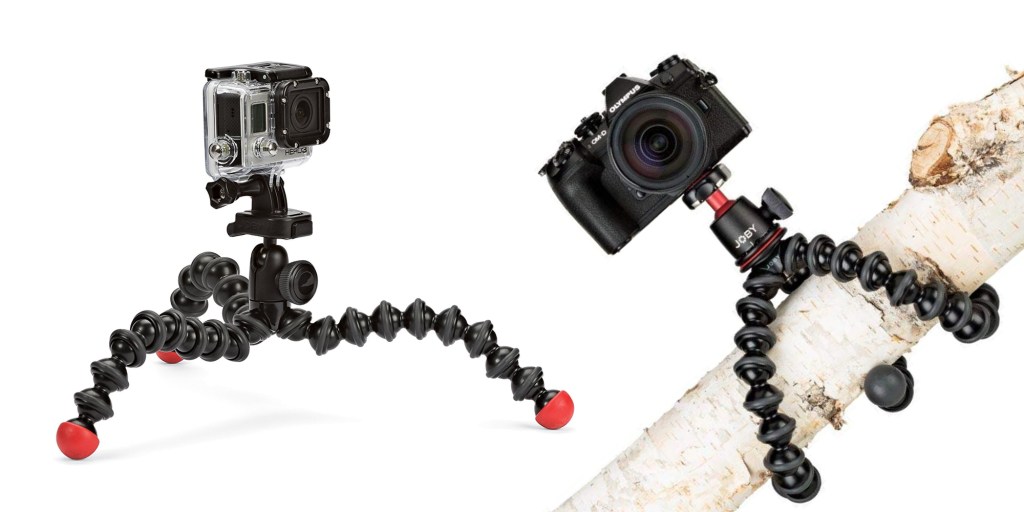
The cameras are off their tripods, so to speak, and like the curses escaped from Pandora’s box, they can never be put back. The camera is no longer even a camera. Moreover, after cybersecurity analyst father and leader-of-the-resistance hacker son team up and fail to infect the data-mining tripods with an “old school” computer virus, the spacecraft-esque heads detach from their robotic legs and fly toward the locations of each member of the Disruptor hacker team, having tracked their IP addresses. In this situation, the camera liberated from its support and itself, we have become not the imagemakers but the images themselves. Ice Cube is relegated to a little box on a Discord call as he watches on helplessly, his home ostensibly destroyed, believing to have just lost his son who he was finally beginning to connect with as well as any trace of his wife, having never cleared out her belongings. Will frantically commandeers a nearby surveillance drone to watch the rubble and cinders. Every man his own Twitch streamer, forced to react when constantly confronted and never not inundated with a feed of all the world’s horrors. Taking this point even further with wonderfully clunky irony, we learn from human characters, who are only ever interacting with each other via screen mediation (there is one marked exception, maybe more on that in a later post), that the occupying threat are hybrid organisms containing both biological and cybernetic components.2 This confusion of man and machine—watcher and watched, invader and invaded—invokes precisely that we ourselves have become the hosts for digital imaging and networking technologies and in turn have attached ourselves to other people primarily and irremovably through these pathways.
And so, according to this digital regime, turning men into cyborgs, how might love, for example, between a father and his family, look and feel? At first, Will is obsessive: he sends his dead wife messages on Facebook everyday, he repeatedly listens to a mundane voice memo she left him, and he spies on his own children in order to feel close to them. So then, what does love feel like at the end of the movie, after this character changes throughout the course of this invasion? Love, as it turns out, is letting people into your system, like a virus. In the finale, as Will ventures out from the safety of his command center for the first time, he relinquishes remote control of his computer to Faith, who has to navigate his multi-screen displays, seeing how her father sees the world and interacts with others, as she guides him through the bowels of the Department of Homeland Security headquarters. In addition, she must also guide her brother as he hacks into military drones in order to destroy the oncoming alien attacks (that look straight out of Action Movie FX, which is in no way derogatory) that are targeting an Amazon delivery drone flying through DC, which is manned by her delivery driver boyfriend Mark, to get to Ice Cube in order to bring him a thumb drive for the “cannibal code,” newly converted from the DNA sequences of a cancer cure into computer code, that will deactivate the U.S. government’s top-secret data collection program, and thus deactivate the data-sucking space invaders. And so, rather than voyeuristically keeping tabs on his own family, the workaholic dad learns to let go and trust himself to trust his children.
Despite its dull insistence on sentimentality and the redemptive power of the family unit, War of the Worlds nonetheless offers an amusing and thought-provoking illustration of the collision, the event horizon between the digital world, the world of data, and the real world, the world of people. As Ice Cube likes to tell Eva Longoria over at NASA whenever she asks him about the recent abnormal weather events that prelude the invasion, “I told you, I watch people.” Even that simple statement alone maintains this confused, collided perspective; after all, he does not actually watch people, he watches images. Yet perhaps that begets the question: what’s the difference?
While I do not think this is an evil or unconscionable movie or even an unwatchable one, it is certainly a self-exculpating venture. When the aliens from another world first arrive, the on-the-ground news coverage style footage immediately invokes climate disaster: one shot especially conjuring the recent forest fires that ravaged California in the last year. Not to mention, when they first arrive, the tripods attack such sites as natural gas pipelines and electric grids, emphasizing the continuing and irreversible acceleration toward ecological destruction. One character remarks that this coordinated assault is not only attacking necessary human resources but also our ability to collectively respond to them. The tripods specifically target these stockpiles, but none are more important than the data centers. And so, this film poses a critique of our economy’s obsessive, full-steam-ahead attitude toward surplus and accumulation by having these parasitic invaders attack sites of abundance and wealth generation for tech oligarchs.3 However, this film premiered exclusively on Prime Video, a streaming platform that belongs to the largest information technology corporation in the world.4 So, of course, Amazon has countless data centers of its own, each comprised of tens of thousands of servers. (No wonder data is said to be the most valuable resource over and over.) In fact, these data centers are responsible for hosting Amazon Web Services (AWS), lending cloud storage services to some of the biggest companies in the world (e.g., Netflix, Twitch, LinkedIn); in fact, approximately one third of all internet traffic passes through AWS.5 Thus, it would not be an exaggeration to say that if Amazon data centers went down, a good chunk of the internet would also be affected. And so, the environmentalist and big tech anxieties become empty platitudes, as these data centers require enormous expenditures of energy in order to store our digital footprints, just for them to be sold as discrete packages of information to advertisers, credit and insurance companies, or even law enforcement. So, these vampiric, bionic reapers (that are invoking climate disaster in the film) are behaving themselves much like these corporations who are significantly causing and entangling these crises in the first place.
Like many projects in this faux populist turn within Hollywood (or really just Hollywood writ large), this film reifies the status quo but now with a little added lip service, but perhaps that is giving too much credit to a movie that no one took seriously. Nonetheless, War of the Worlds would like you to believe that only the federal government with its bloated bureaucracies and bad actors is the one responsible for burning a hole in the ozone layer or for selling out your data to be kept behind glass in case of emergency.6 It is the same blame shifting, buck passing that Disney did with WALL-E; however, this time, it appears that no one is buying it. Frankly, one could easily trace this ethos all the way back to the very inception of the blockbuster form, to fellow H. G. Wells admirer, Steven Spielberg, fifty years ago.7 And so, when any movie tells you how bad things are and that all you need in spite of that is a little Faith, just remember, as this film’s trailer tells us outright, “it’s worse than you think.”
Notes
Diegetically, it consists mostly of screen recorded desktop footage of a man in his office. Formally, there is no physical medium onto which the images shot are imprinted and those images are further distanced by being frames within frames within frames. Metatextually, as this movie was swept under the rug and dumped onto Prime Video only yesterday with a trailer dropped only a week before that. ↩︎
In Invasion of the Body Snatchers, as in War of the Worlds, we learn that maybe we are not so different than those who enslave us. Body Snatchers never just about the infiltrating communist threat—although it certainly reflects that Cold War anxiety—but also certainly the stark conformity already present in suburban 1950s America. This same polyvalency can be applied no doubt to Lee’s War as well. ↩︎
As a result of the alien assault on data centers, Will looks on frantically as the Facebook messages with his wife, the last trace of her voice, her pictures—that is, her digital footprint—are scrubbed from an internet under attack: her digital death. By having the widower retreat into his work following her biological death, the obsession with the digital reflections of his wife, his constant tormenting of himself and inability to let her go, is intrinsically linked to capital’s obsession with constant accumulation for its own sake, way past the point of profit. The latter informs the former. ↩︎
Not to mention, in terms of self-exculpation, War of the Worlds has for one of its heroes an Amazon delivery driver, saving the day by having someone place an order to activate his delivery drone. ↩︎
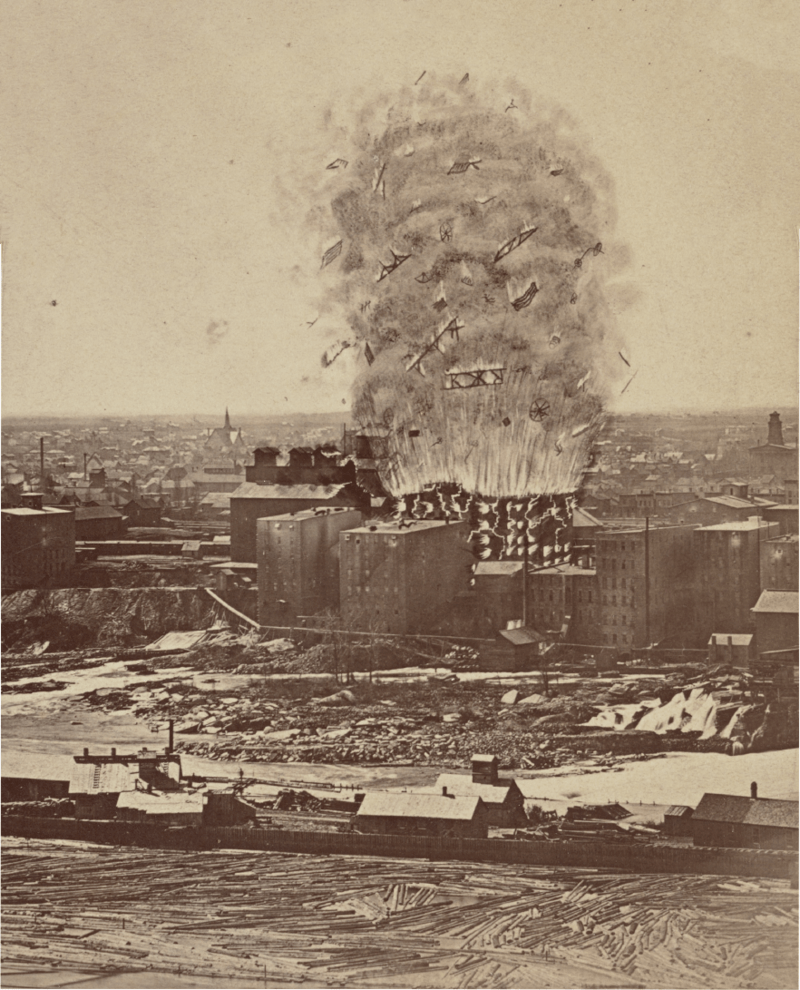
A question was posed to me recently. How is it that after hundreds of thousands of years of evolution we have not found any means to deal with the question of dust? The fact that our race has not found a way to effectively circumvent or prevent dust proves we must still have a use for it, no? We have not evolved past it because we have not evolved past the need for it.
Dust derives from non-use. Dust signifies lack. Dust is death. But dust is also smoke, and where there is smoke, there is fire.
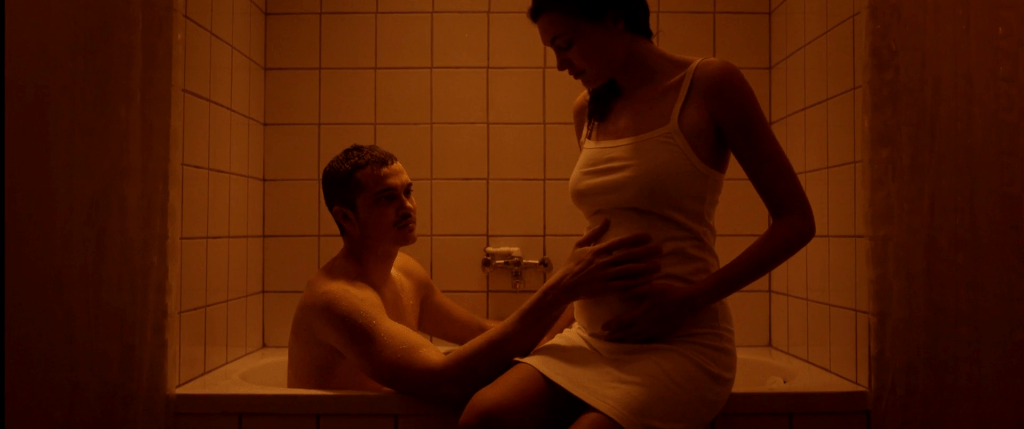
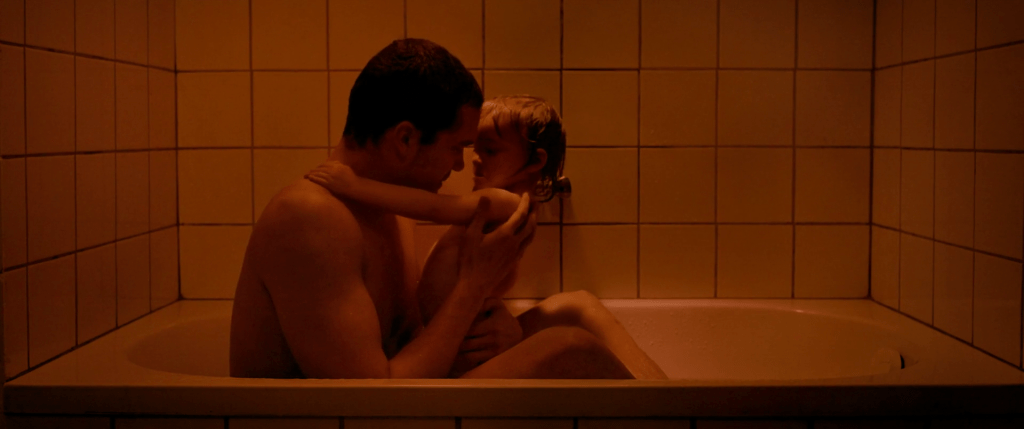
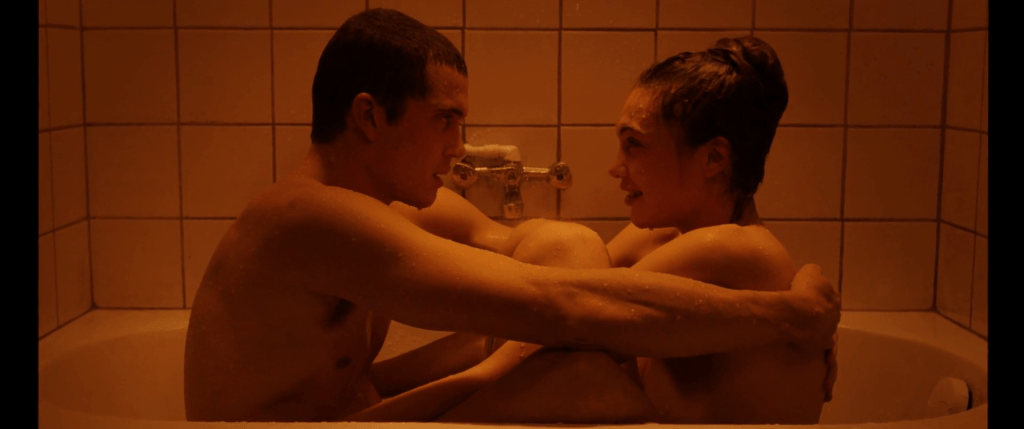
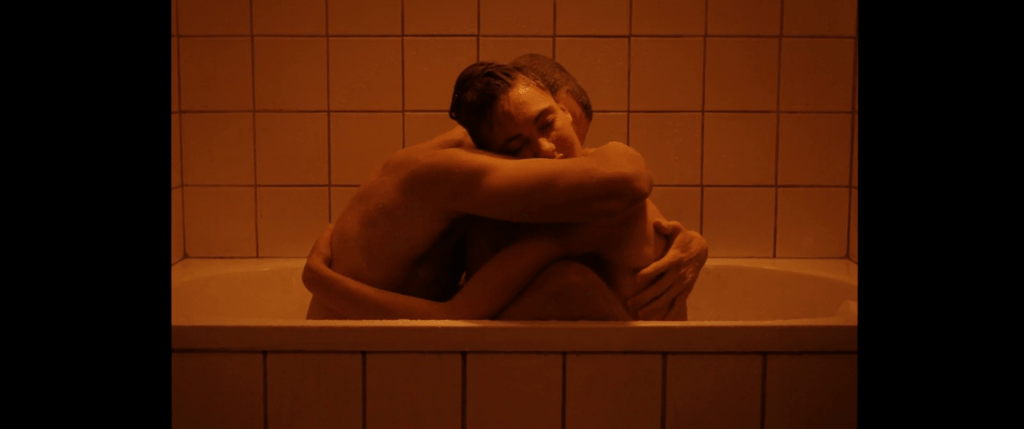
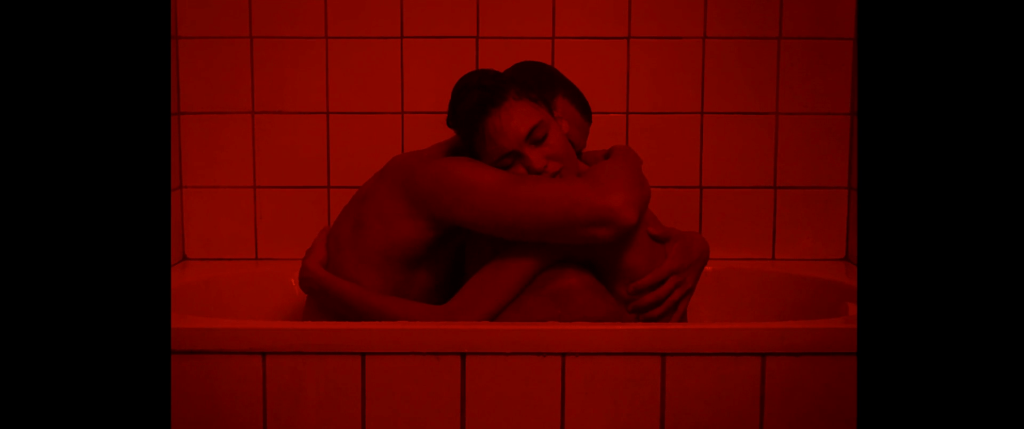
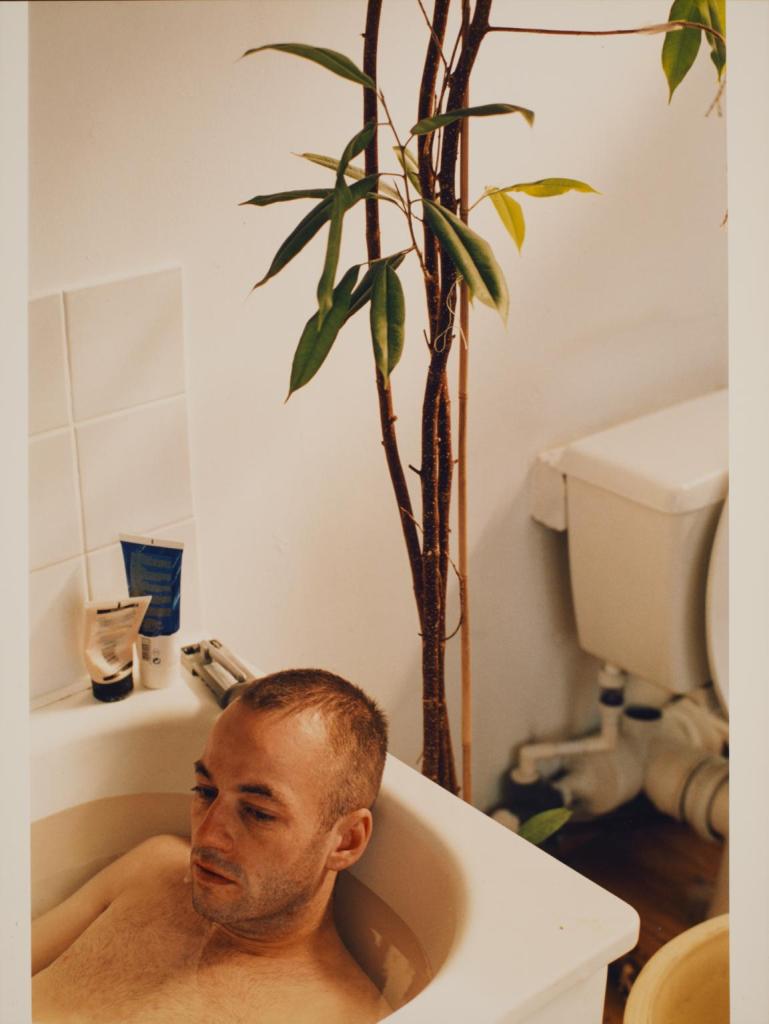
When I die, I’d like it to be in the bathtub. Why is it that water is associated with death? It could be the innate mammalian fear of drowning or the association of anti-consciousness with the amniotic fluid whence we were conceived. It could be mythological or ritualistic, the ancient Egyptians believing souls were ferried across a river of death while their physical bodies were washed and purified before mummification. The source of this union could be etymological, derived from the proto-Indo-European root *wed-, containing within it the noun water as well as the verb to well (that is, to dig a hole into the ground to obtain water). Well cognatively links to will, introducing connotations of desire and choice while recalling the future tense and the inevitability of things that have not yet come to pass: as in, you will die. All in all, no one is really sure and water has more or less always just kinda been water; like time or death, it has always been there with us.
But it is being in the tub, either standing or sitting, that situates one in an overdetermined site of ritual and allows one to confront death in one’s own tiled sensory deprivation chamber. As soon as the warm water hits your skin and the concurrent wave of pleasure has enveloped your senses, your mind dissociatively absorbs into your body. Here, all the things you should have said or the things you should have never said flood your mind or you formulate conversations that have never and never will happen. Paradoxically, it is also here you find the compulsion to keep your eyes always open for fear of an attacker appearing on the other side of the curtain. And so, it is being in water for an extended period of time that makes the tub the perfect site of death, as the past and the future converge within you, all the while acutely aware of the naked vulnerability of living.
However, we know now that death is never so permanent. We can’t let the water run forever, forced to eventually return to the chill on the other side of the vinyl barrier. Man created plastic to defy death. You have to rip it back, ending your appointment with death, yet ironically returning to the domain in which it will likely claim you. Sometimes, after being submerged for far too long, well after my fingers have started to prune, I’ll find myself overflowing with too many ideas. As I dry off, I’ll repeat mnemonic phrases from each over and over in my head for the next fifteen minutes of my nightly routine, in order to not forget them before I can make it to the bedroom and write them down. Not all of them make it that far. It seems almost poetic that in the shower one’s skin begins to prune and wrinkle, as if the body is beginning to accelerate toward its own end. It is the reminder of death, the reminder that there is still work to be done that causes the eternal ritual of death to give way to the defiant, powerless, anachronistic one of preservation.
The man in the tub, like the fly in ointment, the fire in the water. The Proto-Indo-Europeans believed in an ancient deity, *H₂epom Nepōts (or Descendant of the Waters), known by such a contradictory symbol as the latter. This mythological entity thus suggests the proximity toward death—whenever consciousness is submerged or showered in water—as not only defiant but divine. The aforementioned paradox between mind and body and life and death is thereby maintained. It is from this deity that the early Eurasians derived the root *h₂ep- (“body of water”), a passive configuration of the active root *wed- (simply “water”). To slip into the shower, it is a surrender to water and to death in order to create something, to give birth. In the shower, in death, you can be anyone, but you have to get out of the water.


 videophage.com