Uncategorized

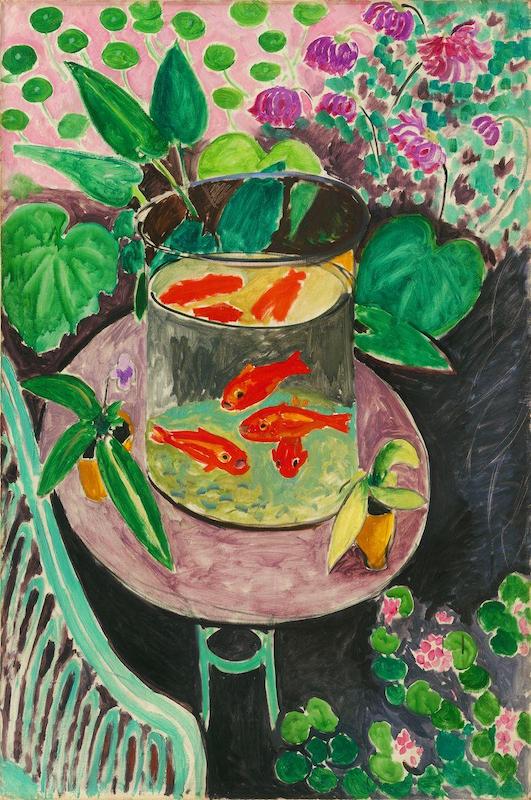
  • Goldfish Bowl

    Woman before an Aquarium (1921-1923, Henri Matisse)

    It has taken me so long—writing and rewriting, revising and rearranging, rereading and rereading and rereading: incessantly so—because, I think, I have things I want to say, but they cannot be said honestly. What needs to be said are not noble words, but I try to wriggle out of my obligation, trying to twist them into such. I just couldn’t buy into them myself, those dulcet, discarded fragments. We have enough of those between us, and frankly, I am fed up with them. I don’t want to be the Romantic hero anymore. There’s a reason Young Werther killed himself. I’ve been trying too hard when less is more. Of course, I finally accept that only after having dedicated a literal novel’s worth of confession to you; however, I can’t put the bow on it and just be done with it. I can revisit, reflect on how I felt then, but I don’t know how I feel now. My moods keep swinging, and too frequently. Am I afraid of you like someone who avoids the sun, too scared of their own shadow? And so, no, I think it is me I am afraid of. I don’t know how I feel about you now, but I assure you, I think of you so much.

    I think I see part of the problem. I still cling to the notion of being liked, and I have convinced myself that it’d mean the most coming from you, so I am just as convinced that it’d hurt all the more to turn away from you for good. I got carried away in my rumination and I’m sick of seeing you splash about in yours and I’m sick of subjecting myself to watching you do it. For me now, reading something you wrote feels like what Moses must have thought to himself when he climbed Mount Sinai and was bestowed with those two stone tablets. Most of this is ridiculous and overwrought, but it is God after all, so we must be grateful. I really have no idea what to do, but whenever I sit down to write you, you always come out the other end a deity, clothed with the sun and covered in shit, making you all the more lovely to the compulsive dumpster-dweller. I know, in reality, you are shrouded in neither. I know you so well. I know you too much. You’re a sadistic fuck. I don’t know you at all. I have toiled tirelessly and with unparalleled devotion, having already staved off sleep night after night to dissect your open letter as if it were a bifurcated chest cavity upon an operating table amid an autopsy. I felt I had to work fast or risk losing my favorite patient. I was convinced you would grow bored and forget about, stop caring for, me and our covert, digital, no-contact, long-distance, sadomasochistic union. After all my efforts, I have nothing to show for it.

    But you tapped the glass and spooked the goldfish, and it’s been the longest three seconds of my fucking life. I am swimming in frantic circles within the green-glass bubble that I cannot escape. After all this time apart, it feels like I’ve only ever known you in this way—even our time together being subsumed—through the eyes of a fish stuck inside its bowl. But I must admit, I am losing faith in you. I want to continue to glorify you, but I’m afraid it’s just not in me anymore. Nonetheless, my goldfish brain still desires your secular presence, even as I fitfully pore over the revived possibility, the subsequent consequences of—in all likelihood now—actually seeing you again. But I assure you, that is not to say that I don’t crave this reunion, that I have not fantasized about it endlessly, outlined elsewhere—in the waste—how I’d like it to pass.

    I think I know why I am so afraid, why I have been so hesitant to reply. I have nothing left to say according to the positions in which we have fortified ourselves: the woman who finds herself the torturer and the man who loves to be tortured. I am wiped out from the trip down memory lane. I yield. Yet, if you saw the thousands of words abandoned in pursuit of your eager reception, you would likely disagree. Look, there’s so much still to say. But there’s a reason I’m here and they’re not. Each attempt always overflowed out of control before it had to be dumped. It’s all just too much to bear. It seems you don’t await another story but a proper response—to unveil myself for you—and I have tried and tried, but I cannot write one that contents me and faithfully captures everything I want to tell you. I don’t know how to write that, I don’t want to write about myself; and I wish you’d write about anything other than yourself—your body and its organs, your desire and its past—because your words are wasted on you; but they needn’t be about me. I’m tired of seeing you like this, from within this fish bowl that refracts our vision and reflects our own images back at us. I cherish you, I do, for you have given me so much, but I have to return to the current, but maybe I’ll see you when you get here.

    I pervertedly miss you.

    ,
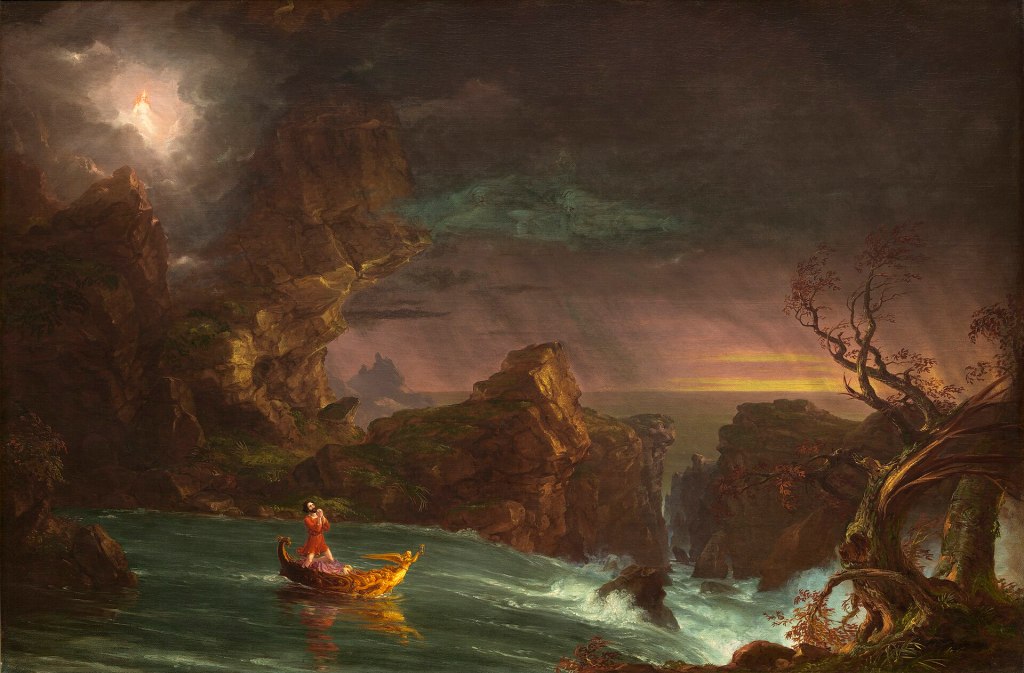
  • The Voyage of Life: Manhood (1842, Thomas Cole)

    He hates her when he reads her words. He does not think of her anymore as emphatically and obsessively as he once did those three years ago. However, she still comes and goes, passing through the walls of his brain like a ghost; sometimes he even conjures her up himself, he can’t help it. He hates that he cannot help himself, but sooner or later, he has to give in. Sitting at the computer, he scavenges through the rubbish pile of her curated history, descending further and further until he finds something promising, then descending again down another labyrinthine rabbit hole, moving quickly but deliberately for any sign of himself still left inside her. He hates that her words are so carefree and that there are so many of them; they are able to be so carefree because there are so many of them. There is an indescribable hollow fury, then he is filled with disgust at the whole ordeal—the hackneyed vanitas of candlelight and light-emitting diodes that color and smooth the resurfacing savory memories of their expired rendezvous. Nevertheless, he continues his excavation. He hates that he still cares, that he still has to know. He hates that his life has gone on, hers too. A romantic sentiment centuries ago maybe, a cause worthy enough of taking one’s own life once upon a time, but he knows better; he knows too much. And so, he wonders whether she has given the virtual projections of his life the same investigation, that same squinting scrutiny. A couple of vulnerable narcissists, he thinks.

    He feels at once the fish and the fisherman, luring himself and letting himself be lured according to the tug on the opposite end of the line. He sees a post that beckons him, practically calling out to him and him alone—a message in a bottle that has finally reached him—but nonetheless still blurred and indistinct. In that moment, black text over white appears indistinguishable from the inviting gaseous glow of red and blue neon hanging on the other side of wet midnight glass. After gorging himself on the pink, wriggling flesh of her words, the hook still piercing his fish lips, he goes still and still feels hungry. The anger dissolves in an instant and he feels foolish, selfish. He reads and rereads in a pathetic frenzy. Now, he has become more like the worm, inching about uselessly over the same bone that it has already picked clean, hoping for a bite of meat it missed. He dissects her poetics and interrogates his past: did I say that? can this be me? did I say that? I could’ve; I must’ve; I could’ve. He just wants her to write about him. He wants her to write about him and to want for him to read it and for him to want her to want him to read it. He aches for her write his name, to give some pointlessly concrete indication that he is still her cherished object. To be loved as such by her would mean all the more the world to him than the nights they spent together, or at least the memories of them. Then again, maybe not really. It would be a hideous shame if she were so uncharacteristically literal, for that would surely spell the same for him. He could not convene with her again as he does now, dissecting the months-old lyrical bulletins of indulgences now three years passed. No, the fact she never names him allows this routine to continue. He would certainly hate otherwise. It is simply against the rules of the game and that is always what reconnects them, but then again, never brings them together.

    He feels sick now. He hates that he is overcome with the urge to confess whenever he dives headlong into her current, swept away by the undertow. It feels more like drowning actually, the burning excitement in his organs giving way to extrasensory bliss after the first breath of her flows—a deadly trick of his own mind slowly shutting down. With him, or rather with her, it has always been that way, feeling like a guilt-ridden stowaway aboard his own solitary vessel, some imposterous seafaring vagrant anticipating the moment he will be caught redhanded by some shipmate who simply is not there. As if hypnotized by a siren’s song, he feels compelled to leap overboard and fling his body into the sea, baring his soul for the sake of eyes he may very well never meet again, leaving behind a display of his few abandoned possessions for when the time comes for their invisible judgment. He hopes to find her there, on the other side of the confessional channel, and when she does, that she might offer some sign that she found her way. Even in her absence, he still desires her approbation; even in absence of any particular wrongdoing, he still desires her absolution. He could never hate her. Her words are not carefree at all, not in any derisive sense. Her words are unabashed, excruciatingly intimate and violently impassioned, and so he envies her, having hated her as the reminder of who he is not. To become language, expression for such an unyielding muse, is to be regarded in the highest honor, to be born again as an object immortalized amidst a sea of others, a fetish encoded and remixed—exalted!—with all the erosional tides of history and desire. Through all his doubt and failing memory, he knows who “he” is to “her” and who “she” will be for “him.” Thus, he plans his message to the sea and the woman who might be there, waiting on the other side of the waves.


    The light outside has long gone down now, the space only illuminated by the glow of screens and the waxen stump dimly flickering and sputtering in the base of its brass holder. That’s one more day in one more year between them.

    There is the rest of a day to attend to.

    paulschraderprotagonist.substack.com

  • Maybe psychoanalysis is what I need. I have horrible dreams, dreams that don’t feel like dreams. Not all that long ago I woke up from a particularly alarming one, one that seemed as if it’d never end. In my dream, I was no longer a man, or so I really believed. I decided I had had enough and went to a doctor to get my penis removed, only to mourn its absence shortly afterward, hiding the fact of the procedure from my weightless dream friends. It was as if those I had met in my university days were amalgamated with my big city friends, doubling the potential humiliation should my regretful secret be revealed.

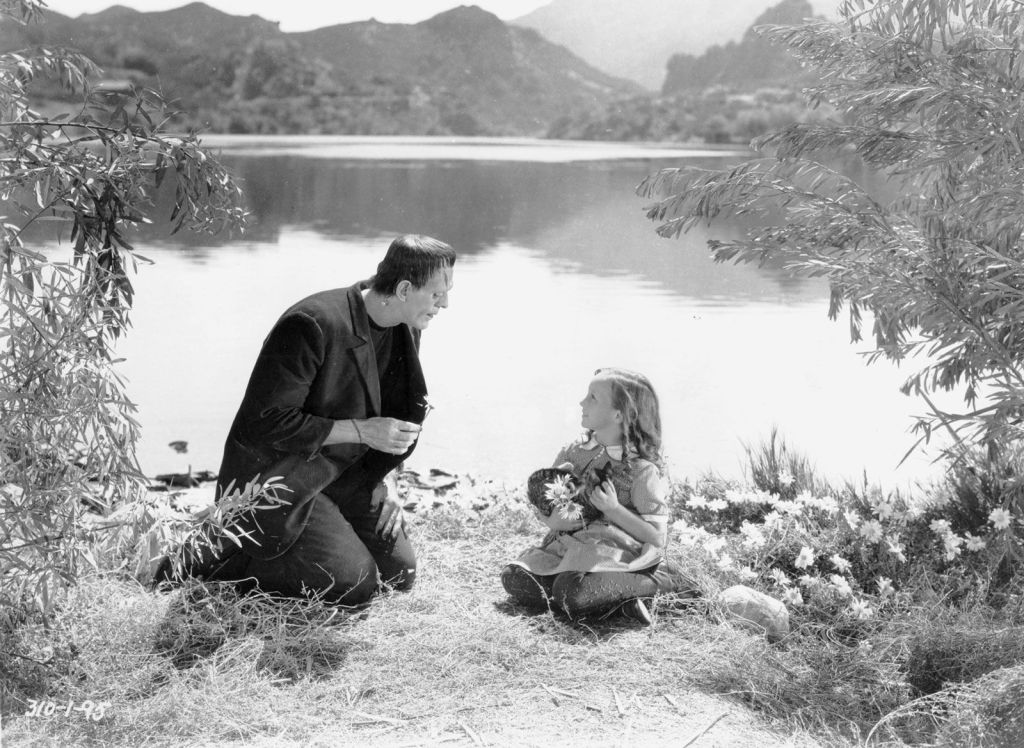
    I was trying to figure out how to get my dear old penis back, speaking with a man over the phone, learning that they’d likely take someone else’s freshly chopped, still warm piece and Frankenstein it back onto my body. You see, by this time, my own dick would’ve been too cold and too far gone. It may have been the same nebulous caller who made the point that now I could no longer photograph my dick, not to mention that the infection around the surgical staples would become red and inflamed, and thus, unsightly. It was a horrific sight to look down and imagine, the handset still pressed to my ear. I was not pleased with the seeming certainty that I could have a penis back but it would not be my old one, and I was even less so pleased with the very real possibility that I could be trapped with someone else’s smaller, alien part.

    There was a growing, burning discomfort between my legs: the sensation of having to pee, hours after one should’ve already relieved oneself. But I wasn’t pissing, I was holding it. This was because, and made all the more distressing by, the ongoing birthday party for one of my amalgamated dream friends, a hyper-feminine presenting young woman with coquettish, childlike inclinations. The celebration was building toward a movie night in the living room, the living room that had a simultaneous feeling of the first in a long line of bedrooms from my childhood. One, with the denim walls, that no longer exists. I have to pee so bad, but now, I’m actively avoiding it. How would I pee out of a dickless urethra? I couldn’t bear the sight of that.

    The pleasantness of the evening only made me all the more acutely aware of the burden, the burden of constant tears that I could not determine whether were welling up inside me or pouring down my face. The disc for movie night could not be found anywhere and to keep myself distracted and agreeable to the maintenance of my charade, I searched the nearest bookshelf for the missing movie. I saved the day when I found it tucked away on a hidden stack behind the titles aligned neatly on display: a slim pink case with adorable baby blue bubble letters and cartoon characters, like those cute chimeric avatars that should really only be of interest to preteens. Everyone is slowly convening in the amalgamated dream living room. I swing around the dining table bench, angling it toward the TV, hoping that two particular women across the room sit on either side of me; I couldn’t really say who. I worry it’ll be two male partygoers nearby that take their places instead.

    Before I can find out, I’m awake, immediately grabbing my crotch to make sure I haven’t lost anything for real. I have to pee really fucking badly.

  • Dust Drive

    A question was posed to me recently. How is it that after hundreds of thousands of years of evolution we have not found any means to deal with the question of dust? The fact that our race has not found a way to effectively circumvent or prevent dust proves we must still have a use for it, no? We have not evolved past it because we have not evolved past the need for it.

    Dust derives from non-use. Dust signifies lack. Dust is death. But dust is also smoke, and where there is smoke, there is fire.

    Pages: 1 2 3 4

    , ,
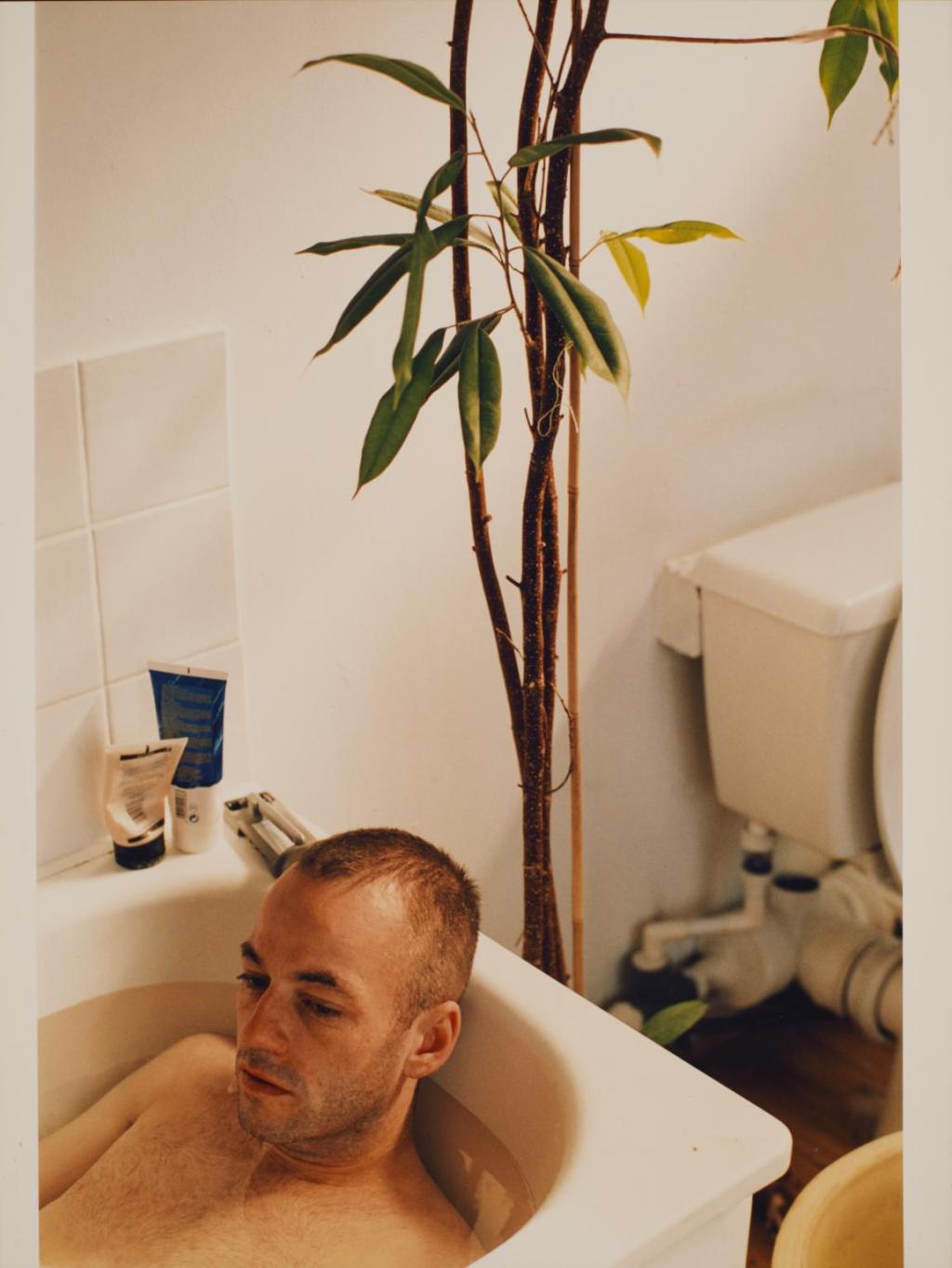
  • Jochen taking a bath (1997, Wolfgang Tillmans)

    When I die, I’d like it to be in the bathtub. Why is it that water is associated with death? It could be the innate mammalian fear of drowning or the association of anti-consciousness with the amniotic fluid whence we were conceived. It could be mythological or ritualistic, the ancient Egyptians believing souls were ferried across a river of death while their physical bodies were washed and purified before mummification. The source of this union could be etymological, derived from the proto-Indo-European root *wed-, containing within it the noun water as well as the verb to well (that is, to dig a hole into the ground to obtain water). Well cognatively links to will, introducing connotations of desire and choice while recalling the future tense and the inevitability of things that have not yet come to pass: as in, you will die. All in all, no one is really sure and water has more or less always just kinda been water; like time or death, it has always been there with us.

    But it is being in the tub, either standing or sitting, that situates one in an overdetermined site of ritual and allows one to confront death in one’s own tiled sensory deprivation chamber. As soon as the warm water hits your skin and the concurrent wave of pleasure has enveloped your senses, your mind dissociatively absorbs into your body. Here, all the things you should have said or the things you should have never said flood your mind or you formulate conversations that have never and never will happen. Paradoxically, it is also here you find the compulsion to keep your eyes always open for fear of an attacker appearing on the other side of the curtain. And so, it is being in water for an extended period of time that makes the tub the perfect site of death, as the past and the future converge within you, all the while acutely aware of the naked vulnerability of living.

    However, we know now that death is never so permanent. We can’t let the water run forever, forced to eventually return to the chill on the other side of the vinyl barrier. Man created plastic to defy death. You have to rip it back, ending your appointment with death, yet ironically returning to the domain in which it will likely claim you. Sometimes, after being submerged for far too long, well after my fingers have started to prune, I’ll find myself overflowing with too many ideas. As I dry off, I’ll repeat mnemonic phrases from each over and over in my head for the next fifteen minutes of my nightly routine, in order to not forget them before I can make it to the bedroom and write them down. Not all of them make it that far. It seems almost poetic that in the shower one’s skin begins to prune and wrinkle, as if the body is beginning to accelerate toward its own end. It is the reminder of death, the reminder that there is still work to be done that causes the eternal ritual of death to give way to the defiant, powerless, anachronistic one of preservation.

    The man in the tub, like the fly in ointment, the fire in the water. The Proto-Indo-Europeans believed in an ancient deity, *H₂epom Nepōts (or Descendant of the Waters), known by such a contradictory symbol as the latter. This mythological entity thus suggests the proximity toward death—whenever consciousness is submerged or showered in water—as not only defiant but divine. The aforementioned paradox between mind and body and life and death is thereby maintained. It is from this deity that the early Eurasians derived the root *h₂ep- (“body of water”), a passive configuration of the active root *wed- (simply “water”). To slip into the shower, it is a surrender to water and to death in order to create something, to give birth. In the shower, in death, you can be anyone, but you have to get out of the water.

    ,
  • Rock Bottom Maxims

    1. Fun seems foreign.
    2. New York makes you evil.
    3. “Who gives a fucking shit about anything?” Repeat thrice daily.
    4. You were designed to be impotent.
    5. Any accomplishment was manipulation.
    6. Every hour of the day feels insomniaic.
    7. No posture is comfortable, not even hunched.
    8. Bartelby yourself.
    9. Fantasize about buying a gun and commiting a realtor genocide.
    10. Starving and saving are one and the same. The same applies to brain fog and brainstorm.
    11. All means of digital expression must be broken: phone, camera, laptop, computer. You had nothing to say anyway.
    12. Do not lean on me.
    ,
  • What’s Your Favorite Word?

    Daily writing prompt
    What’s your favorite word?

    Pussyfart.

  • Won’t you please let me go?
    These words lie inside, they hurt me so
    And I’m not the kind that likes to tell you
    Just what I want to do
    I’m not the kind that needs to tell you
    Just what you want me to

    I saw you this morning
    I thought that you might like to know
    I received your message in full a few days ago
    I understood every word that it said
    And now that I’ve actually heard it
    You’re going to regret
    And I’m not the kind that likes to tell you
    Just what you want me to
    You’re not the kind that needs to tell me
    About the birds and the bees

    Do you find this happens all the time?
    Crucial point one day becomes a crime
    And I’m not the kind that likes to tell you
    Just what I want to do
    I’m not the kind that needs to tell you, ooh

    Lost you, I’ve lost you, I’ve lost you, I’ve lost you, I’ve lost you
    Lost you, I’ve lost you, I’ve lost you, I’ve lost you, I’ve lost you
    Lost you, I’ve lost you, I’ve lost you, I’ve lost you, I’ve lost you

    Ooh-ooh, ooh
    Ooh-ooh, ooh
    Ooh-ooh, ooh
    Ooh-ooh, ooh
    Ooh-ooh, ooh
    Ooh-ooh, ooh
    Ooh-ooh, ooh
    Ooh-ooh, ooh
    Ooh-ooh, ooh

    Ooh!

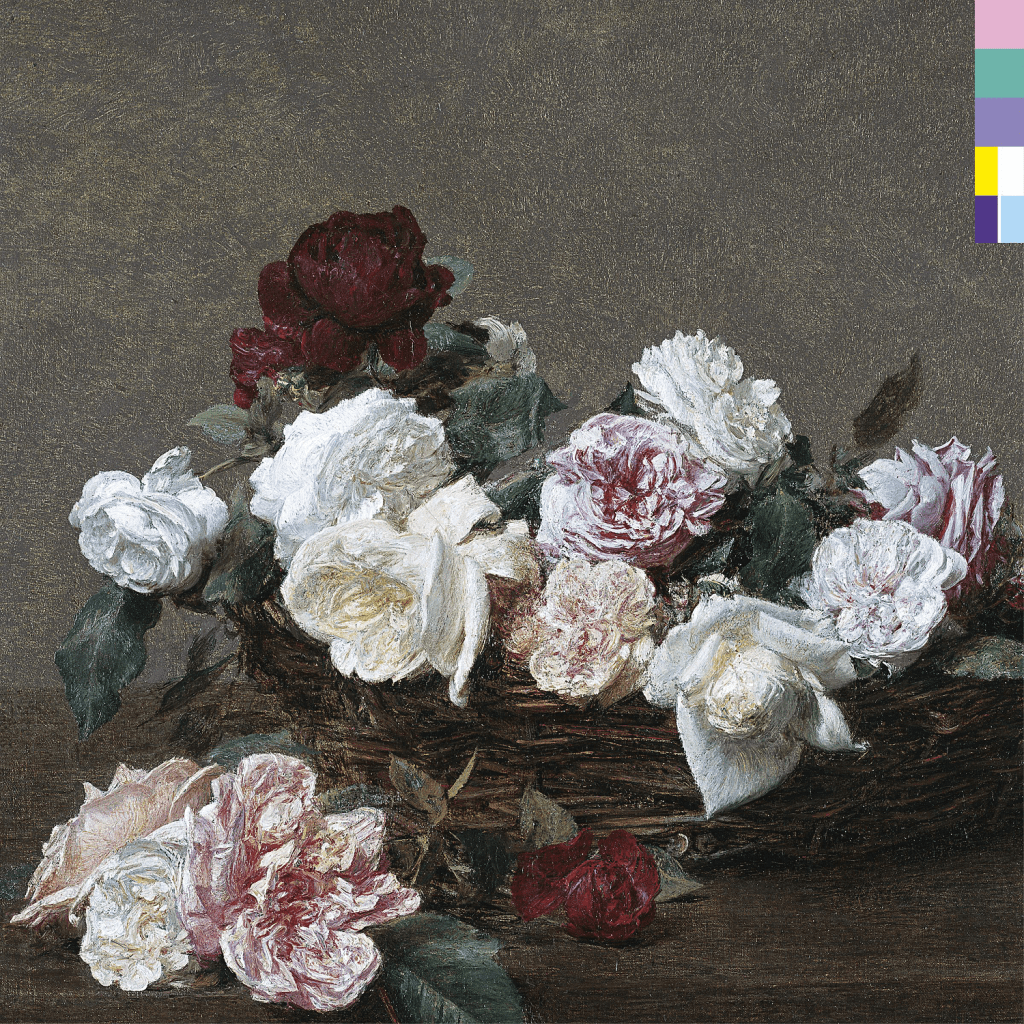
    The above lyrics are taken from this wonderful piece of songwriting from one of my favorite musical groups at the moment. The italics are mine, to distinguish between the two distinct timbres of Bernard Sumner’s singing, to be addressed momentarily.

    I am living by a new rule where I stop giving a shit about people who don’t give a shit about me to combat the creeping exhaustion I feel (emotionally, physically). I invest too much in other people’s shit: fix your own problems! leave me be! I am in the midst of a great uprooting: my 30-day notice signaling the end of my rental agreement at the end of this month, my two-week notice marks my exit from my job with my last day being tomorrow, I have way too many projects going on right now: an essay/collection of related essays/book I wanna start researching/outlining/writing, two short-form videos both started but not finished, a public art experiment, my short movie, an impromptu feature-length movie of sorts that needs to be stitched together, and I have no phoneit’s at a new friend’s house (I have been spending a considerable amount of time with her because I enjoy her company and conversation, it’s hard for me to find people I actually find funny and charming and worthy of respect) and I don’t have transportation or time to go get it (not that I particularly need it; wait, yes I kinda do, I gotta call my grandma to tell her I plan on taking her up on her offer to live at her house for the remainder of the summer), so day three without a phone begins tomorrow. No matter.

    I was reminded of someone who was at the foreground of my mind some months ago (go back and see for yourself) today. I had been sticking to my new rule, but today was such a good day, although I can think of absolutely no particularly discernible reason why, so after I walked home from the bus stop in the rain, I decided to perform a dreaded check-in—a 21st-century digital phenomena wherein a rejected party masochistically, and therefore, often routinely, keeps tabs on the person(s) who have turned them away. It has been about two months probably since I told myself to finally cut that shit out, and in my stubborn resolve, I stuck to it rigidly and absolutely. It was this person too that came to mind when I listened to the first song off my first playthrough of New Order’s Power, Corruption and Lies (May 26th). As I kept returning to the song in the following days and weeks, the two intonations of the vocals struck a chord within me. Now, the more I mull it over, the more I think this is such an obtuse observation, but I see the two timbresone high and strained, one low and tiredas a man and a woman, the complementing objects of the song. But, they are not having a conversation. Each of their respective verses like a telegraph through time to the other, not even certain if the other will hear it, let alone respondsent out into the ether to be picked up, only if they happen to stumble on the right digital crater, that is, if the breadcrumbs were followed correctly. It’s a game, simple sign exchange, word=play, and the best part, you don’t even know if they’re even playing at all.

    Yet, what I am also just now realizing is the vocalizations at the end of the song are sung in the higher-pitched voice. Across space-time, the response of his lover is lost, made blurred and indistinct by the distance, “further all the time.” Curtis’s choice of further instead of farther denotes the distance as a metaphorical one, bridged by a technological (in)capability that compresses physical space into modulated waves, a relationship of re-/delayed mediation.1 Stretched too thin. Are they cries? shouts? elation? guilt? anger? or symbolic of everything left unsaid? An understanding, yes.

    Oh, and so what did I find on this walk through the museum gallery of the digital Other? Words that I take as written only for me. They found me and plucked all the same chords, so they are only for me. And once more, their words inspired me to action, stirred an idea that had been brewing internally, now poured out into the ether. Read my thoughts. Who knows if I’ll get back to youwhen? Two months later, my bad idea got its proper conclusion after only two weeks, as it turned out, unbeknownst to me. You see, it was after my message was received in full that I made my rule to get my shit together. I knew it wasn’t a bad idea: it was absolutely necessary.

    The beauty of the excruciating situation of the song and the events recalled to me tonight? None of it was meant for me. It means absolutely nothing. The song can be interpreted according to any number of readings, as one voice or two or entirely otherwise, all at once. The message I found carefully framed on the wall could be about me or anyone else. How brilliant! You write poetry, I write nonsense. I feel so much better. It’s not even a question.

    You sly dog, you do think about me! Did you check in?! I’m calling it there, that’s what I’m telling myself. Look how much fun this is. It is beautiful.

    Hello?

    Do you read me?

    Huh, guess no one’s home.

    Note

    1. The alternative meaning of further as adjective (i.e., moreover, furthermore) not shared by farther manifests that the “touching” is happening “all the time” precisely because of the “distance”the constant contiguity of techno-mediation. It’s just digital screens instead of analog radios.
    , ,
  • My growing YouTube Watch Later
    The books that are waiting to be read
    Embarking on the history of philosophy from the beginning
    Moving to a new state on my own without any help
    Planning & shooting my video short
    My neglected note-book & film journal
    Catching up with my favorite past professor
    Getting a haircut
    The clothes from a past relationship that I cannot throw away even though I have no feelings toward them
    Baudrillard’s theory
    My skin looking worse year after year
    Buying shit until the day I die
    Calling to schedule to a long overdue dentist appointment
    The growing list of albums I need to listen to
    The superfluous generational desire to fill silent moments with noise
    The book I’m currently reading
    My unproduced essay ideas
    Not knowing why I piss concerningly often
    The movie my grandma lent me that I haven’t finished
    The stripped bottom of the bathtub from an experiment gone wrong
    Getting a credit card
    Eating healthier without spending a lot of money
    All the books I started reading, got decently far, then picked up something else
    Living as a nomad on video like a traveling circus performer or establishing a career
    Worrying about nostalgia
    My camera roll that keeps growing
    My chipped phone camera that can no longer focus
    Buying a new phone—flip or cell?
    Staying informed on world events
    Having the correct leftist opinion on Ukraine
    Eventually having to put in my 2-weeks
    Continuity editing
    Getting better at small talk
    All the unread sites I have bookmarked
    All the PDFs I have to sort and eventually read
    Productivity brainwashing
    Being recognized for my work
    My old stuff I need to sell online that’s still sitting in my room
    My $6,000 one-way ticket out of here
    Getting out of work before the last bus of the night leaves
    Offers to be a line cook or to-go specialist
    Starting new social media accounts for a collaborative video art project
    The phrase “putting yourself out there” and/in all its contexts
    How every video essay is boring & absolutely dogshit, uninteresting
    The concept human
    My crooked mouth & jaw
    My failing memory
    The persistent long-term side effects of taking SSRIs for several months—then quitting
    Forgetting to include something on this list
    An obligatory “Western descent toward fascism”
    Clearing out my inbox even though it’s not that full
    Finding a drycleaner to clean my father’s leather jacket I took from my brother
    I just ate like 12 oranges
    I think I’ve run out of things to say
    I probably spent too much time on this instead of updating my diary before bed, and wow, I’m out of time
    When will I take the trouble to transcribe this list online?
    Do women even find me attractive anymore?
    I’m gonna keep having these thoughts as I try to sleep in a moment
    1, 2, 3, 4,…
    Am I funny?
    So, I have to keep shaving for the rest of my life even though I can’t even grow good facial hair to begin with?
    The government sends 20% of my weekly paycheck to Israel
    How will doing x affect the energy bill?
    All the open tabs on my phone and computer
    My overflowing Notes app
    The eBay purchases I need to return
    Roman Polanski is a free man
    The male gaze
    How I look in photographs
    The list goes on
    What’s next?
    Or does
    “What’s next?
    The list goes on”
    Sound better?

    The current image has no alternative text. The file name is: screenshot_14.png
  • Breadstick Sociology

    There is a rule at work that you have to ask a manager before you eat a breadstick. It’s a stupid fucking rule, because no one who is hungry and on the clock is gonna go track down an authority figure to eat some greasy, oversalted bread. So, no one actually asks, obviously. However, if a manager or restaurant professional does happen to see you eating one, it’s always, “did you ask to get that?” The kneejerk reaction is to lie and end it there, but you might jokingly admit that you, in fact, did not. “You know you’re supposed to ask.” Everyone knows that, but no one, especially not management, actually cares. The thing that strikes me as ridiculous is that they know no one is gonna ask to eat fucking bread, especially when we’ve been rushing around nonstop for hours and finally have a chance to take a 30-second break to eat the only available food—then back to work before anyone notices. That’s the way it goes. Even though you know nothing will actually happen if you’re caught, you cannot help but eat one only when you know no managers are around, and when you don’t know for certain where they are, you go hide in the piss-poor excuse for a “breakroom” (dry storage) that doesn’t even have any chairs or tables. Eat if you will, but it won’t be a break.

    And one might think, “oh, they’re enforcing dumb policies to hold even more power over their workers,” and yeah, sure, but it’s more complicated than that, because this unwritten rule is not ridiculous at all from their perspective. They know with absolute certainty that this one rule will be broken: that is quite literally what it was designed for. This one little asinine mode of control is the only one constantly harped on precisely for this reason. You are allowed to break this nominal rule, so long as you obey all the other big ones: report all your tips accurately, card all guests who order alcohol, don’t commit “time theft,” and so on. This one rule sets the entire tone for the workplace dynamic. An uneasy, steady alliance of we-know-what-you’re-doing and you-know-what-we’re-doing. A delicate balance atop a straight razor. Eat the bread without asking, but don’t organize, don’t steal, don’t demand what’s owed you. You wouldn’t dare.

    I should go across the street and work at Red Lobster instead, they got way better bread anyway.

    ,
  • Daily writing prompt
    What topics do you like to discuss?

    I can’t talk to most people about most things I want to. They talk out of their ass and bore me or I start talking out of my ass ’cause I’m bored. I don’t do that anymore. I’d rather sit in my boiler room and think of more interesting conversations with the most interesting people. Not reliving old ones (no, I try not to be nostalgic), but imagining new ones. Sometimes I write them down—my little scenes on little notes strewn across my desk, or bulletin board, or tucked away in folders. Maybe I’ll use them for a project if I can ever do anything about anything. But I can never finish them. After a certain point, I don’t know what you’ll say next. If people ever venture into my double-monitor sauna, I’ll have to hide these scraps that I ration myself on. I don’t like people looking over my shoulder before it’s done, and even if it reaches completion, I have trouble with confessional. (I probably sound really ungrateful. I like my friends, and my grandma is my favorite person in the world, and I have wonderful, memorable conversations with both, but not about the things I can never talk about, not because they are forbidden, nothing like that, but, as people, they are so literal, and I wouldn’t know where to even begin with them.) Everyone is so goddamn literal.

    I like people who can speak without opening their mouth—the body, the eyes have their own language. I’m reminded of Nietzsche and his well-documented love for dance: “Dancing in all its forms cannot be excluded from the curriculum of all noble education; dancing with the feet, with ideas, with words, and, need I add that one must also be able to dance with the pen?” I can’t move very fluidly or even speak without losing an entire train of thought or tripping over the ten simultaneous rushing thoughts, none of which are fleshed out, mind you, but if I could just get them all down and work through them and connect the dots to then disconnect them, then I could definitely make something great. Plus, the most I can muster is a trance-like stumble to “Venus in Furs” in the solitary dark; however, I know that I can dance with written words. But Nietzsche does not stop there: “I do not know what the spirit of a philosopher could more wish to be than a good dancer. For the dance is his ideal, also his fine art, finally also the only kind of piety he knows, his ‘divine service.’” For the dancer is my ideal, and so on, and so on.

    To dance is to stretch. I feel constrained by words one after the other, linearity, continuity, rows and columns—how do I make the words do what I want, arrange them into a new (dis)organization, while making them somewhat legible to the people who will get what I’m trying to do, or at least appreciate it? That’s what I’m trying to figure out, how to manage the impossible challenge of putting a form onto the formless, or rather, the unformable—a stretch, one might say. With dancing, I would imagine that you have to stretch before and after, so is there ever a point where a dancer is not dancing? Their body is in constant, undying service to dance, fighting time and age and weather to contribute to the craft they crave. I wonder what it’s like to think in dance. For me, I think it’s shots and cuts—fragments, images, objects, assembled together after the fact, plan beforehand or not. Video: “I see.”

    If we take Nietzsche at his word, then I think we could just as easily turn to Shakespeare and his metaphor-of-choice for life—the stage. “All the world’s a stage, // And all the men and women merely players” (As You Like It, II, vii). He continues in Macbeth, performed some years later: “Life’s but a walking shadow, a poor player // That struts and frets his hour upon the stage” (V, v). And I don’t think it would be a stretch to substitute dancers where he supposes players, given that both “[strut]” and “[fret]” on a stage. To dance is to stretch, to spread oneself thin in one’s life performance(s) atop that tragicomedic Shakespearean stage. And so, it is the second line—a perfect form-follows-function—of Macbeth’s soliloquy that catches my eye: everything stretches out into “Tomorrow, and tomorrow, and tomorrow.” Mind/body stretched too thin in time—into sheer surface. I can see my hand through it. It’s thin and white. The weight of a letter never sent. Paper beats rock, but two rocks create fire.

    POSTSCRIPT But you know what’s even funnier about the man who trumpeted the death of God? In “On Reading and Writing” from Zarathustra he writes, “I would believe only in a god who could dance” (41, trans. Kaufmann). But if he would’ve been there that night, he would’ve seen his dancer-god. Yet, I was there and I didn’t even realize the presence, the gravity of what I saw and heard until a lifetime had already eclipsed; because that night, I wasn’t there to be looking for her onstage. Time was out of joint. I wish I could play it back with what I know now. I wouldn’t move my eyes from her, tracking every slight expression in order to glimpse what she hides away under cryptic lock and key. I wouldn’t adjust in my seat. I wouldn’t blink. I wouldn’t breathe. I would be converted by nothing else. I, her most pensive spectator. Now, we’ve come full circle, back to sitting in the dark to watch a most generous God perform for me without knowing it. The first recurrence in our eternity current. I will not die happy until I see the encore, but I won’t be around the next time she goes up.

    ,