
Am I…washed up? These days, it is so hard for me to imagine myself writing something as focused as this piece. Maybe that’s just what happens when writing becomes a hobby you sometimes do in between working and hanging out rather than a full-time field of a study. I barely changed a thing about this paper from April 2022, only really fixing the numerous typos. I notoriously did not proofread my essays before I submitted them (often at the last possible minute), and this one for Film History II is no exception. Anyway, my professor loved it, calling it a “marvelous reading . . . that genuinely defamiliarizes and enlivens my sense of and appreciation for a film I’ve seen and taught dozens of times.” I don’t know if it’s that groundbreaking; perhaps I’m just in a mood, because I have to send someone a sample of my writing and feeling my more recent efforts inadequate and sloppy. Just the thought of spending this much time at the keyboard again—researching, outlining, writing—feels unbelievably daunting.
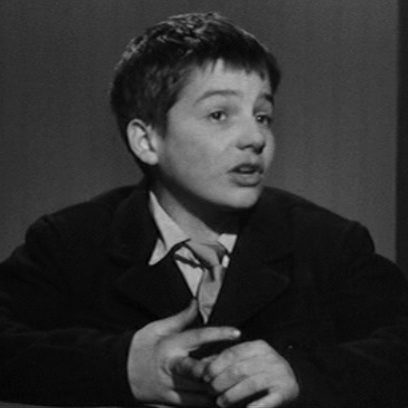
The 400 Blows is not just one of the seminal works of the French New Wave, but a semi-autobiographical declaration of adolescence based on its film-critic-turned-director, François Truffaut. Truffaut opens his childhood up to the screen, presenting himself through Jean-Pierre Léaud’s performance as Antoine Doinel. In the film, Truffaut maintains a mimetic dialogue between himself as filmmaker and his represented childhood self, somewhere in between imitation and opposition. However, in the scholarship surrounding this film, the Antoine-Truffaut connection is passing contextualization and the New Wave is blanketly regarded as a radical departure from or rejection of classical aesthetics. In what “had to be the best scene” of the film, Truffaut stages a three-minute conversation between the institutionalized Antoine and a psychologist. The psychological evaluation in The 400 Blows foregrounds the mimesis at the heart of the film and of the French New Wave. This scene deconstructs the division not only between Antoine as character and semi-autobiographical alter-ego but reflects the mimetic relationship between Hollywood and the emerging nouvelle vague.
Before breaking down and exploring Truffaut’s own breakdown of mimetic distinctions of character and industrial-sociohistorical contexts, I need to examine how Truffaut mimetically employs and inevitably departs from the groundwork of Cahiers du Cinéma criticism and theory. This background is important for the mimesis of Truffaut and Antoine and between that of the French and American cinemas that follows. Firstly, the scene in the psychologist’s office disrupts the realism to which cinema should aspire, according to André Bazin, proto-auteur theorist and godfather of the New Wave. This scene is marked by several dissolves that deter any realistic sense of space-time, as the camera stays entirely trained on Antoine alone despite the classical cue to introduce the next scene. Thus, this formal experimentation subverts Hollywood assumptions of film grammar as well. Mimetically experimenting with Bazin’s film philosophy, the “wide-angle, deep focus long shots” that capture Antoine’s “moments of freedom” are abandoned—the distance between foreground and background no longer “exaggerated” (Fabe 128). The dissolves, which remain within the psychologist’s barren office, imply this scene is a long take that has been cut up in the editing room. This itself is mimesis: a long take that is edited but smoothed over with dissolves into a pseudo-long take—rejecting the confines of either filmic component. Unlike the long takes on the streets of Paris or of a running Antoine, there is no physical subject to track in this lengthy psychological examination. The mise en scéne is not shot in deep focus and rich with polyvalent props for the spectator to spot. There are no visual indicators to distinguish between fore-, mid-, and background; there is only Antoine, a dark wall, and a table. The interrogation room is a liminal space, its claustrophobia is imposed by the wall behind Antoine, which heightens the gravity of this moment for Antoine’s uncertain future. The quieted handheld immediacy invokes this narrative crossroad. In this scene, the audience is not afforded to “run by his side,” as Sam Solecki phrases it (58).
Returning to the central argument(s), this scene foregrounds and (formally) disrupts the mimesis between Truffaut and Antoine. Most notably, the score and usual camera movement are not present here, which are responsible for the “aura” that lessens Antoine’s misdemeanors; therefore, Antoine is put on display without these intermediating factors (Solecki 54). He seems to be telling the truth: the character of Antoine, that is, but he is departing from the life and script of Truffaut. Antoine is finally able to speak for himself. For example, in the police booking scene, he is spoken for by the officers and his adoptive father. Now, Léaud gets to improvise his own characterization for Antoine, distancing himself from Truffaut. Once again, there’s no deep focus or nondiegetic score; it’s just him.
The rattle of the camera mirrors the uneasy body language of Antoine and Truffaut behind the camera is likewise characterized as anxious under that restless and rebellious charm. Both young men are aware of their respective audiences. Truffaut is not only an iconoclast kickstarting a film movement with international repercussions but sharing his traumatic childhood. In this moment, the audience, like Antoine and the judicial system, are reckoning with his character and the decisions he has made up to now. Erin Hogan describes Truffaut’s camera as “highly sympathetic” to Antoine and his session with the psychologist is a rare moment where an “authority figure listens to him” (30, 36). However, Truffaut is much less sympathetic to adult characters—the psychologist is never even pictured, she is noncorporeal, she is unhuman. The absence of an actress on set during filming affirms that the adults in Antoine’s life are (literally) not there for him. Moreover, the woman’s voice added after the fact is therefore separated spatially (she is not on set) and temporally (by the dubbing in post-production and her age). In agreement with the documentary-like aesthetics fostered by cinematographer Henri Decaë, the added voiceover of Jeanne Moreau becomes a voice of God (which formally highlights the psychologist as an authority figure), as Léaud does not hear it. And during the shooting of this scene, Truffaut asks the questions to Léaud, establishing a mimetic effect through the semi-autobiographical narrative (“Jean-Pierre” 0:55–1:00). Furthermore, the scene was largely improvised, constructing a break between Truffaut as Antoine and Léaud as Antoine that still fits within the fluidity of mimesis. The actor strays from the director’s childhood as source material, rejecting stringent autobiographical imitation. Yet, Truffaut did not directly transcribe his early teenage years onto the screen, treating mimetically his own childhood in addition to a flexible approach to screenwriting and filmmaking.
The interview elucidates Antoine’s motivations for his crimes, as up until this point, there was minimal explanation in his own words that speaks to the “degree of his unhappiness” (Solecki 56). Concerning Truffaut, the answers in the interview, which still draw from his childhood, reflect his motivation for becoming a filmmaker and bringing his own story before an audience. This scene not only solidifies our support for Antoine’s escape—even if it is brashly juvenile and his capture inevitable—but Truffaut’s first feature and inauguration as a filmmaker. Antoine, like Truffaut, feels trapped, and the film’s form reflects this truth. Wide, open shots that record the city are shaky and restless but not illegible, expressing an equally restless desire to break free from unsatisfying circumstances. The enduring movement of the frame constantly projects to the audience that the story of Antoine is that of Truffaut. So, the relative formal restraint of the interview is Truffaut telling the audience that he is still there, albeit less so. This is Antoine/Léaud’s moment, and the audience must examine why they support the delinquency of this boy. What are the implications of his actions? What are the causes? Truffaut urges his audience to be critical of their own spectatorship in addition to being cognizant of their passive status before a projected series of images. Put simply, this confrontation with Antoine is a confrontation of our own spectatorship. Why do we support Antoine? Why is this scene here, disrupting the flow? What should happen to him? The freeze frame that ends this scene arrests our uncertainty, suspending the conclusion of the examination. This photogram solidifies the spectator’s sympathy for Antoine and formally recalls and foretells the other instances of his imprisonment. The placement of this frozen medium close-up after the one in the police booking scene questions but ultimately affirms the spectator’s sympathy toward Antoine in the final suspended shot. Truffaut challenges passive consumption of narrative that has been shaped by the invisible editing of Hollywood, raising more questions than he answers in typical New Wave fashion. Truffaut criticized French films for their lack of formal risk and sincerity, so he inserts a scene between the lead actor and himself—albeit slightly disguised—that highlights the self-reflexive sincerity of Léaud and Truffaut. Both draw from their lives to form one character.
On the other hand, this scene also highlights the mimesis between the French New Wave and Hollywood. The Cahiers critics were cinephiles enamored by several auteurs within the American film industry; however, these same foundational French critic/filmmakers diverted from American cinema and the socially unconscious American and French societies. The striking quietness of the examination—auditory and kinesthetic—contrasts the gestural, handheld 16mm aesthetic of the film before and after this scene. As a result, the stillness of the camera in this scene functions in opposition to its role in classical Hollywood; the anomalous stasis of the camera calls attention to itself when bookended by a film that rejects stasis almost entirely. Antoine’s slightly offscreen gaze heightens this effect, not quite acknowledging the camera, like he’s intimidated by it, refusing to register its overbearing presence. This scene contains seven dissolves that do not all operate in the same fashion: that is, in service to spatio-temporal continuity. These transition effects make legible the subtle differences in space and time. The first dissolve, discounting the one that opens the scene, is placed after the interviewer’s question but Antoine’s answer immediately follows as if the edit was not present, unaffected. In addition, the next two dissolves occur in quick succession as he listens to the psychologist relay claims from his parents that he is a liar. Truffaut manipulates the passage of time by keeping the psychologist’s voiceover consistent, but the image of the fidgeting Antoine is mirrored in the editing that acts equally uncomfortable and uncertain. This loosening of classical grammar invokes form following function by creating a similar residual effect in the viewer. Furthermore, the subdued state of the camera in this scene rattles and even pans slightly, never fully embodying stillness. The slight visual discontinuities between the dissolves betray the ostensible lack of movement. For example, the aforementioned dissolve brings the doorknob into the frame and its position on the otherwise blank wall illustrates the gestural nature of the original long take. Even at its most still, the caméra-stylo reveals Truffaut behind it. The audience is never aware of the time that passes for Antoine during the interview, as some dissolves shrink gaps in between questions and others seem superfluous in this respect.
Truffaut negotiates with Hollywood filmmaking grammar in a less jarring and more mimetic manner than Jean-Luc Godard and his extensive use of jump cuts one year later in Breathless. (The contained camera in the psychologist’s office also recalls Breathless, but in a less radical way than the temp morts of the twenty-five-minute apartment scene.) The refusal to cut to a reverse shot of the disembodied voice is another example of Truffaut tackling Hollywood formal practices and twisting them, in addition to the not-quite stillness of the camera and the incongruous dissolves. Even the film’s most notable formal element, the freeze frame, is present but obscured in this scene. The dissolve that transitions from Antoine in the office interior to the visitors at the front gate exterior hides the frozen image of the interviewed youth. In conjunction with the muddled continuity of the dissolves, the frozen frame mimetically interacts with Hollywood by subduing its own formal experimentation. In other words, the preservation and maintenance of continuity associated with the dissolve subverts Hollywood aesthetics but is employed to hide the classically divergent freeze frame. Even within the suppressed rebellion of Truffaut’s usually kinetic camera, which he demonstrates undeterred in the dissolved shot before this scene, cinematic conventions are being broken. The stasis of this scene reflects Truffaut being contained by the pre-New Wave tradition de qualité that restricted French cinema through its stale, bourgeois form.
Ultimately, this scene is a test for Antoine and Truffaut, as the boy next to Antoine warns in the previous scene. The scene with the psychologist is not a conversation, but an evaluation; there is an asymmetrical power dynamic between the interviewer and the interviewed. Like Antoine and the absence of an actress on set, Truffaut cannot see his audience. Thus, the dissolves reflect their desire to escape this interrogation, as if this transition technique is them trying to incite the next scene, foregrounding their discomfort. Antoine desires to escape this grueling trial and Truffaut desires to return to long take tracking shots; they both get their wish. When the awaited transition to the next scene finally ends the interview, the image is frozen, calling attention to the indexical makeup of film. Here, Truffaut is reversing the hierarchical organization of filmmaker over spectator and once more implicating the audience in the film, asking them to actively engage with it as spectator and socio-political actor. In short, he plays with audience expectations of film form to self-reflexively elicit an awareness of their spectatorship. As a newcomer director in a well-established national industry, Truffaut reverses the director-spectator relationship, invoking more active participation with the moving (and sometimes frozen) images from his audience and highlighting his own discomfort with cinematic and industrial stasis to induce their own discomfort. The freeze frame that ends this scene suggests that Antoine is not heard by the psychologist after all and the system she represents—this notion is left ambiguous, to say the least. The final freeze frame of the film channels this energy directly onto the audience, directly calling upon their newfound active involvement to expand beyond the diegesis.
In conclusion, Truffaut does not imitate either approach to cinema—Cahiers or classical—instead opting to mimetically experiment with both modes. In addition, the similar appearances and childhoods of Truffaut and Léaud contributes to the mimetic characterization of Antoine. The mimesis between Antoine and Truffaut is itself mimetically entangled with that between Hollywood and the French New Wave. It is impossible to separate these mimetic dialogues, as they mutually inform each other, as evidenced in the scene between Antoine and the psychologist. I cannot even make clear separations between the two in the organization of this essay due to this overlap. Nonetheless, the onscreen mimesis between Antoine and Truffaut highlights a style of filmmaking that was more sincere, personal, risky, and socially conscious than le cinéma de papa (Truffaut lauded aspects of American cinema as bold and lambasted the French industry for its monotony). Truffaut’s opus offers a challenge to the form. Yet, the mimesis directed by Truffaut is not just found in relation to autobiography or classical Hollywood, but movements and genres from Italian Neorealism to film noir. The New Wave brazenly centers the abstraction that comprises the mimesis at the heart of the movement.
Works Cited
Fabe, Marilyn. “Auteur Theory and the French New Wave: François Truffaut’s The 400 Blows.” Closely Watched Films: An Introduction to the Art of Narrative Film Technique, U of California P, Berkeley, 2014, pp. 120–134.
Hogan, Erin. “Boyhood, Abuse, and Adult Intervention in The 400 Blows (Truffaut 1959), Small Change (Truffaut 1976), and Pellet (Mañas 2000).” Red Feather Journal, vol. 4, no. 1, 2013, https://img1.wsimg.com/blobby/go/6a58c084-8445-4b4d-b5fb-2bc65b9a6026/downloads/Hogan%20RF%20V4i1%20SP2013.pdf?ver=1646403833519.
“Jean-Pierre Léaud at the 1959 Cannes Film Festival for 400 Blows.” YouTube, uploaded by Criterion Collection, 4 Oct. 2012, https://www.youtube.com/watch?v=zvQp2xiHaDs.
Solecki, Sam. “The 400 Blows: A Life on Film.” A Truffaut Notebook, 1st ed., vol. 3, McGill-Queen’s UP, 2015, pp. 53–61. ProQuest, https://ebookcentral-proquest-com.ezproxy.lib.usf.edu/lib/usf/reader.action?docID=4396126.


Leave a Reply