• On WAVELENGTH

    “I really don’t know why it is that all of us are so committed to the sea, except I think it is because in addition to the fact that the sea changes and the light changes and ships change, it is because we all came from the sea. And it is an interesting biological fact that all of us have in our veins the exact same percentage of salt in our blood that exists in the ocean, and, therefore, we have salt in our blood, in our sweat, in our tears. We are tied to the ocean. And when we go back to the sea, whether it is to sail or to watch it, we are going back from whence we came.”

    John F. Kennedy, Jr., Remarks at the America’s Cup Dinner Given by the Australian Ambassador, September 14, 1962

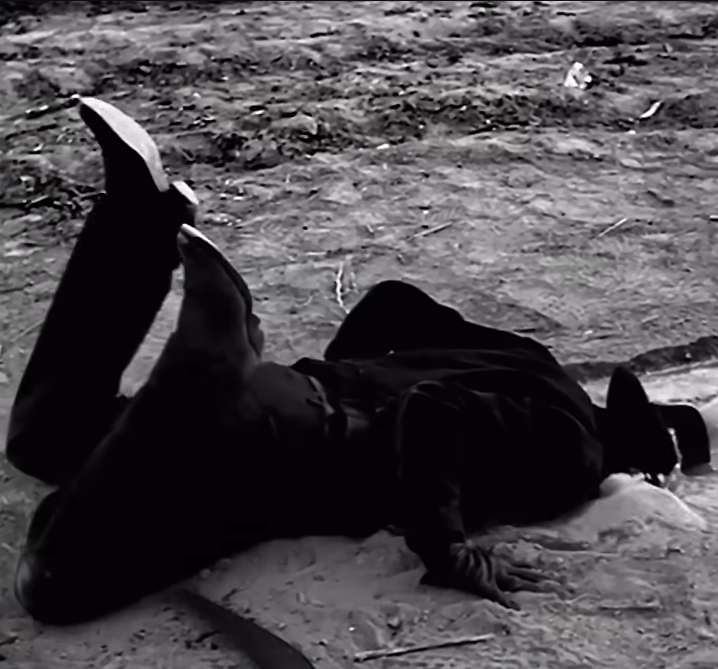
    Michael Snow’s Wavelength (1967) opens with a team of people moving a shelf into a room. Throughout the course of the film’s structuralist experiment, the shelf remains mise en scene until the persistent and linking zoom segments slowly bury it in the illegibility of extradiegetic space. The frame: everything onscreen eventually becomes everything offscreen. That is the nature of the camera, exemplified here by the continuous, encroaching zoom at the center of the film. At the apex of the experiment lies a photograph, prefiguring the cinematic obsession with (its own) death. A moment that will never occur again arrested in time and space and flattened forever; the zoom must also come to an end, there is a limit even to the lengthiest and most penetrative gazes, otherwise, what you have is not cinema. Snow’s quasi-long take zoom gives motion to death. This is really no different than any other film, but the fundamental elements of Wavelength do not obscure this fact, in fact, quite wholly and only the opposite.

    The addition of the empty shelf in the opening of the film mirrors the room and the medium itself, each cell is space to be filled with matter. Yet, herein lies the central paradox of film: still images are only indexed onto these film cells via light, and only when projected in time do these “dead” images come to “life.” As Prospero reflects in The Tempest, “These our actors, / As I foretold you, were all spirits, and / Are melted into air, into thin air.” The photographic intervention transforming subject into object, something even less: an image—a flicker that delights across the screen. To shoot is to record, but to replay is to reanimate. The bookshelf remains empty, lined with only dust and light, like the strip of spectral images of the object itself.

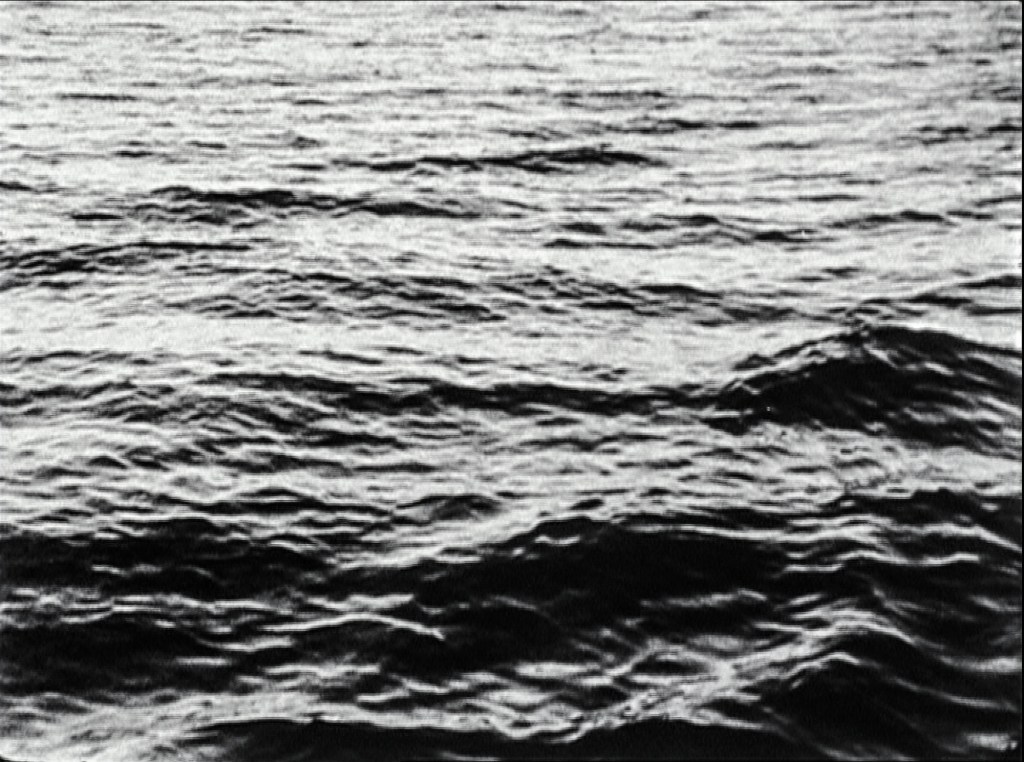
    And so, the same applies with either of the windows on the back wall; however, they (and the room at large) do become populated with subjects/objects, yet the central paradox still holds true, further emphasized by their fleeting nature onscreen. None of these things last. At the outset, watching Wavelength feels like being a fly on the wall, observing life events unfold from a singular and determined vantage point, never receiving context for the glimpses of actualities beyond and within these four walls. Women chat, cars pass, men die. In other words, there is a narrative in Wavelength—somewhere in between its forty-five-minute runtime—but one the spectator is not privileged to, unable to escape the confines of this Canal Street loft. Despite its overwhelming lack of furnishings and relentless forward propulsion, the viewer is always acutely aware of the larger picture. Women chat, cars pass, men die, and film rolls. The ceaseless thrust toward the final image, toward the film’s death, toward our own, despite the aforementioned signs of life—the photographed waves a worthy figure of this death drive.

    That is, photography is the only means by which to capture it. Film absorbs the waves of the visible light spectrum and channels it here into fluid momentum. All that is Wavelength is the cresting of the wave that just begins to crash back down in its final formal gesture—the image of the water tacked to the back wall washes away in blur. Final frame: like a radio being tuned to catch different waves of transmission, the image finally revealed and held in all its detail starts to lose clarity until its ripples and waves are lapped into shallow focus, swept into the nothingness of the camera apparatus. Across several different film stocks and print processes, Snow pushes us toward the pull of the void. When one wave crashes, another is formed in its ripples, and so on ad infinitum. To the sea, to the photographic basis of cinema, to the mortality of men, or to the end of the film itself, Wavelength returns the viewer back whence they came.

  • Blood Moon Prophecy

    I went out looking for the moon.
    All I found was a cat.
    The moon was supposed to be red.
    The cat was white with gray.
  • JAWS Essay Outtakes

    I couldn’t figure out how to weave the lines of argumentation that follow below into my essay from several months ago, so I just cut it from the more-or-less final draft. I certainly have a tendency to write bloated essays, finding it rather difficult to cut things out once the idea has already come to me, or finding the essay expanding out of control with it now requiring much more research than originally intended, so that I end up never finishing it. However, I’ve developed more restraint, I feel. So, that being said, I liked what these scraps of writing contributed enough to include them elsewhere.

    • Even in the perceived comfort of the burbs, Jaws and its cinematic progeny nonetheless allegorize the anxieties and desires of the (ironically) diminishing stability of middle-class American life.
    • Yet, in New Hollywood the biggest revolution was not stylistically or thematically, or even related to filmmaking. It was bigger than that–much bigger–a corporate revolution. Four years before the release of Jaws, the Powell Memo outlined the means by which corporations in the United States could fortify their position within American commerce and government, in corrosive antagonism to the already crumbling relic of the New Deal. More specifically and of utmost relevance here, Powell encourages corporations and their ownership of the media apparatus to be better spent influencing public opinion. This, of course, had obvious and unforeseen cultural consequences. Amongst business conservatives like Powell, the “inequitable taxation” of exceptional business leaders promoted the oncoming neoliberalization. But are these leaders individuals or corporations? This acutely obtuse application of language is key to Powell’s later court decisions as a Supreme Court justice, namely First National Bank of Boston v. Bellotti, in which corporations are granted the same rigorous legal protections under the First Amendment as an individual. The individual reigns supreme. And while Spielberg optimistically places his faith back in the individual after being bombarded with images of the failure of the American way of life, his faith in the everyman who can still do good as long as he remains unfettered, he (perhaps?) naively reifies the protection and re-reification of the subject as the center of political action, itself at the center of what Powell deemed an “Attack on [the] American Free Enterprise System.” Not to mention, turning himself into a pop auteur in the process, the very essence of late twentieth century cinema and beyond. The mythological individualization of cinema.
    • Heroes come together as does the audience in a theater (less of an occurrence nowadays, with individuals or their families opting to stream at home)
    • community amid postwar suburbanization undermined
    • In his confidential memorandum addressed to the Chamber of Commerce, Powell sows the seeds that would blossom into the neoliberal revolution.
    • When the memo was exposed by Jack Anderson of The Washington Post two years later, the blockbuster was well under way.
    • tight knit communities, immediate over extended family
  • It Can’t Be Done

    Electoral politics is designed to individualize.
    Everything about modern life is designed to individualize.
    I am individualized; therefore, I am liberalized.
    I am an individual; therefore, I am a liberal.

    Part I (of II)

    On the one hand, the onus should not be on the individual to vote if they do not wish to select either/any candidate for any reason. They are not to blame for the failure of another’s desired outcome. On the other, is it not also individualistic for the non-voter to abstain from their right, “to have their voice heard,” whether out of systematic disillusionment or outright refusal to vote for a candidate that does not reflect their values? To hold out entirely because of non-negotiable steadfastness to individual convictions. But then, there is the dilemma of your fellow man: don’t you owe it to them? Wouldn’t lesser-evilism, harm reduction, settling, voting blue no matter who, be the responsible thing to do? Nothing changes when you do; it’s all a fundraising racket that convinces the subject that they can make a difference, be a part of something larger than themselves. But then, the right to vote is only granted precisely because it is such an unsubstantial part of politicking; plus, anything that can be given can and will certainly be taken away. Not to mention, that it’s not even your vote that elects your officials, it goes to a college of electors, who so graciously take the burden off your shoulders. (However, even they have no opportunity for individual political expression, lest they be deemed “faithless” and replaced with someone who will tow the party line.) And yet, despite it all, when things don’t go the way they were supposed to, the burden always shifts to the shoulders below yours nonetheless. Rinse and repeat all of the above: this debate can ouroboros itself ad nauseam.

    I say this all as someone who did not vote just one week three months ago. I had to work. Yes, I could’ve made time: officially changed my residence and gotten a new state ID weeks or months prior, or looked into requesting an absentee ballot. But I had to work. It makes sense to me that the impetus for electoral engagement should default back to the party. You have to rally the masses out of their inertial comfort. (However, if a global pandemic couldn’t even do that, it’d be ridiculous to imagine electoralism as a stronger oppositional force, somehow succeeding in moving an immovable needle the other way. On the contrary, electoralism is part of the illness, this condition that arrests the movement of those who may not even realize they were never moving to begin with.) The people have to be sold. Everything is advertising and I wasn’t advertised to convincingly enough, at least not by anyone I would want in office. If you can’t even pull me away from my job that I hate, you can’t get me to do anything. There, again, it’s all about me, the individual always wants their way. “Why should I?” “What do I get?” “How does this help me?” I didn’t make things this way. Make it easier to vote and I will. Make me excited to vote and I will. Do that and I will play along. But what is it I’m voting for exactly? The economy? The president doesn’t even have the power to control the masters’ house, but we have to pretend he does. One person always has to be there to take credit or take blame. That’ll make me feel better, won’t it?

    Pages: 1 2 3

  • Letters of Resignation (2/2)

    “I was young when I left home / And I’ve been out rambling ’round / And I never wrote a letter to my home”
    “I Was Young When I Left Home” (1961, Bob Dylan)
    If I didn’t have an elderly grandmother I swear to God I would’ve stuck to the plan. I would’ve left without saying anything, except when opportunistically and absolutely necessary. I do really think she is the thread that I’m hanging on by. I only told her I was leaving the afternoon before my bus was scheduled to depart. She had no idea that, when I came into her room and tried my best not to break down, my bags were already packed in the other room and the ticket had been purchased days before. I only told her I was leaving just hours before two friends came to pick me up, to spend the night with before they drove me to the station the next morning. Grandma promised not to tell my dad outright, but if he called and asked about me, she would not lie.

    As it turns out, he called me with impeccable timing, having just arrived at my destination. I had just gotten out of the shower. In an upstate New York suburban home only minutes from Lake Ontario, meeting for the first time my future first roommate, whom I had found through one of those roommate-finding apps that never seem to work for anyone. The phone is still ringing and he goes to voicemail before I can answer. I had a second phone and a brand new SIM card, I could’ve made the switch anytime over the past two days and thousand-plus miles. I could’ve continued to delay accountability, but that would be antithetical to the reason for moving away. I made a promise to myself and I was going to see it through. I said I wasn’t gonna look back, and that I was, in fact, prepared to do, but I did pick up the phone. The first crack in the myth I was trying to make for myself.

    Now, still transfixed on this sort of ridiculous nonsense that I feel most people never even think twice about, I cannot help but feel I should’ve committed one way or the other. I did both half-assed: instead of leaving it all behind and creating something new for myself like the dutiful mythologizing individualist I wish so desperately I wasn’t, I cut people out and feel obligated to get them back since I hear they’re upset I left without saying goodbye. Yet, even now, this is mythology I want to live by, but maybe that’s my whole problem, aside from these juvenile obsessions that I unrealistically want to uplift myself toward in the first place (all because they got a nice ring to them). It’s mythology, it’s a story that I’ve made up to be told around a campfire, to entertain, to make people feel some kind of way. I left the warmth of a perfectly good fire to whittle at kindling, in the hopes that I could build something even better, and then everyone would want to be around my bonfire, congratulating me on what a great flame I built all on my own. But, I’d only want them to want to be around it. It doesn’t matter since I have neither heat nor light. No one told me it was always gonna rain.


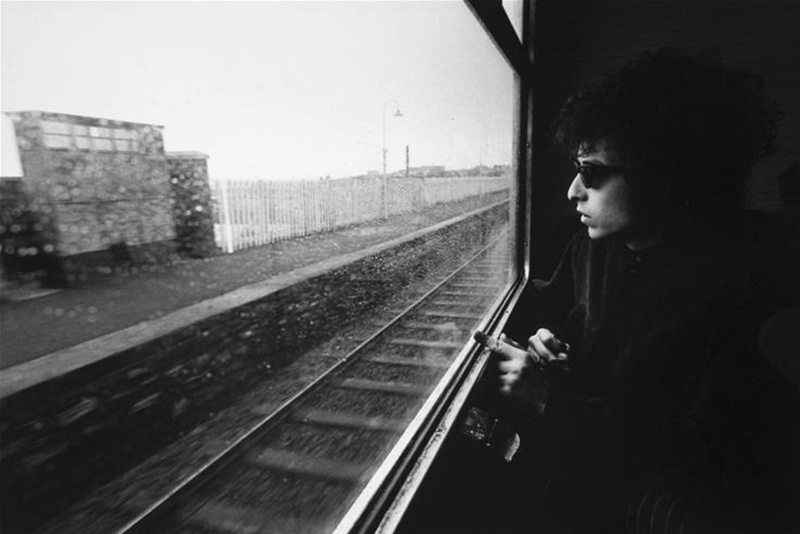
    Bob Dylan’s “I Was Young when I Left Home,” coming from early in his catalogue, is a nostalgic lament, in which its narrator ostensibly wants nothing more than to return home. Hearing news of all the familial tragedies that he missed since his departure, it is a song that sees the narrator grappling with his regret and his own (past) self-conviction.

    The original folk tune from a fresh-faced Dylan employs various forms of repetition within and between lines and across verses to establish a thoroughly nostalgic tone. More specifically, Dylan creates a closed circuit of nostalgic narcissism, as lines are often preceded by anaphora (e.g., “Not a shirt on my back / Not a penny to my name” or succeeded with epistrophe (e.g., “Gonna make me a home out in the wind / In the wind, Lord in the wind / Make me a home out in the wind).” In the anaphoric verse, the narrator only repeats himself twice, before further indulging himself with epizeuxis and a self-pitying outcry: “Well I can’t go home thisaway / Thisaway, Lord, Lord, Lord / And I can’t go home thisaway.” On the other hand, the epiphoric verse is the greatest example of uninterrupted repetition with three successive lines. Therefore, despite bemoaning the loss of his previous domestic life, whether already unconsciously convinced or currently trying to convince himself, the narrator has made his decision and will live with it, even if the reader can practically picture the lonesome traveler holding his head in his hands as he laments his self-imposed exile from home.

    Further, the song hinges on one of the most oft-repeated phrases, “thisaway,” a masterful double entendre in its own right. The polyvalent phrasing of the line (“But I can’t go home thisaway”) expresses both figurative and physical connotations of the narrator’s current state. Firstly, he is overwhelmed by feelings of inadequacy, considering himself unworthy to return home until he has made something of himself. And so, his reaction: to repeat—both formally and psychologically (that is, to fixate on the past); the young Dylan crafting here a formidable form-follows-function. And secondly, in the more literal sense, he cannot go back home by continuing to live away from home. However, also, in the same line, the same lyrics nonetheless convey steadfast reluctance in his reasons for leaving home: that is, he can’t just go-home away his problems. Thus, in the same breath, he recognizes that nostalgia will get him nowhere physically, but also especially in that aforementioned figurative sense.

    Even in the deepest drunken stupor of nostalgia, as you passively retreat into fantasy, it projected before you on the ceiling, pleading to relive the past, you’re still looking for any excuse to break free of its addiction, even if, in this very moment, you are unable to pull yourself away.


    With this vacation, I returned to the grounds of the fire that had warmed me, and there was no one left. All this talk (I guess, really thought) over the last few years—of the posthuman, the digital, the nostalgia of neoliberalism, anti-individualism, anonymity— is how I compensate for an unshakably selfish nature. Consider this my resignation.

    “I can’t go home thisaway”

  • Two Weeks’ Notice (1/2)

    I had forgotten what it’s like to sleep without socks on and how much the people in my family love to talk. For the first time, in one year’s time, I took a vacation. I went back to a few of the places I come from and I stayed with my wise, wonderful ol’ grandmother. These are just some of things that I wanted to record in the couple weeks I left behind.

    “They’re particularly gay in this one.”
    My grandma, making me watch my first episode of Queer Eye

    “Guess what’s coming out?”
    My grandma, turning her phone around to show me a Facebook post about a fake Shawshank Redemption sequel

    There’s a Trader Joe’s that just opened up in my unincorporated community of a hometown sometime in my absence. At checkout, I notice someone I recognized in the line behind us: a kid I met in elementary school. We became friends in middle school, and then became removed from each other by high school. In tenth grade, he spread the nudes of one girl he was talking to. Justifiably and hilariously, she called him a “pencil-dicked curry muncher.” Of course, being in high school, you make fun of the whole situation amongst friends, but by yourself—by myself—I just remember feeling horribly sorry for her. I remember her being in my first period physics and second period driver’s ed. She was always nice to me. He’s in considerably worse shape and balding now, so I guess that’s his just deserts. I wonder how often I, she, those days cross his mind.

    “Walking is the reason I’m also not on life support.”
    Shortly after my grandma told me this, her best friend Nancy died. Nancy who went to UMN with Bob Dylan, smoked like a chimney, and loved the ocean. In the days after her passing, I heard several stories from her and my dad about this woman whom I had only superficially interacted with as a child and teenager. One story goes that one of Nancy’s sorority sisters even dated Dylan.
    “She was ready to go.”
    “I outlived them all.”

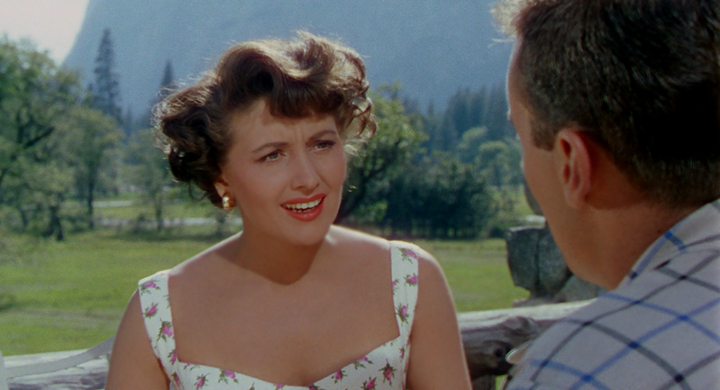
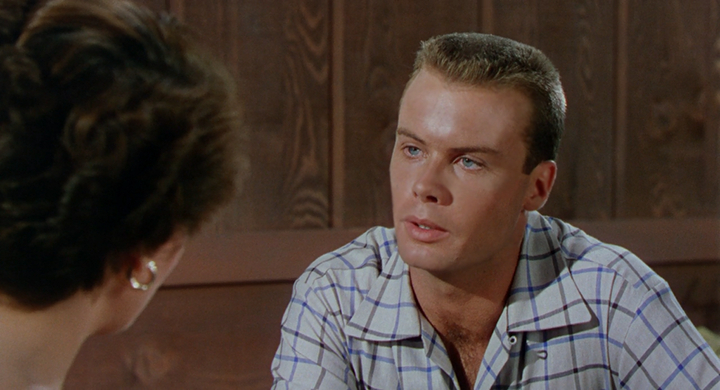
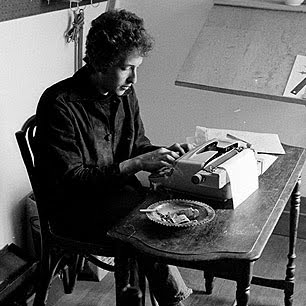
    The Caine Mutiny was on while she got the news about Nancy. I wasn’t much use at all when it came to comforting her. I was mostly transfixed by how much May Wynn looked like my grandma as a young woman. I thought back to the photograph on my bedroom wall back in New York. When I first moved into my grandma’s condo after my post-graduation lease ended, she was in Virginia staying with family. There were patterned boxes on the floor next to the head seat at the dining room table. All alone in her house, one of the first things I did was take the time to look through every single printed memory. (At this point, the unshakable idea that I had to move up, and on my own without telling a soul, was almost at its peak: it had never felt more attainable.) I found a photograph with a duplicate, “ / 1957 / Ind. U” written on the back of only one. That’s the one I keep and take with me. That’s the picture that looks like May Wynn, smiling as she looks up from her typewriter. In my grandpa’s old room, the one that I moved into, I find a transparent Kodachrome slide lying in a woven basket. It’s a photo of him and a little girl who’s holding a striped cat: “Christmas 62.” Here, he reminds me of Robert Francis, if he had a more coy, reticently devilish grin that liked to creep out from behind a stoic exterior every now and then. No one knows I took either of these tokens for my self.

    It almost pains me to write it, but I was feeling nostalgic. I’ve tried to live life like I would never have any regrets at all, but it didn’t work. I’ve just about removed the last threads of Camus’s existentialism that weaves itself into the minds of annoying, less-than-extraordinary 20-year-old men, unspooling itself until it becomes a twisted, knotted mess of intellectual machismo and melancholic superiority. It was time to cut the cord and let the spool fall where it may. I suppose I agree with Orson Welles now: “I can’t imagine not having a regret about almost everything.” The chance to see your self in a completely different life; to treat your life as one big what-if. But almost contrary to expectation, being back in the past makes me think about the people who only know me now. It’s funny to think that they met a dried husk of that former young man. God, I used to be so cool. I used to write well and have unprotected sex with crazy women. Only kidding. I don’t really wanna go back (and I’m not too cool for Camus).

    After the first stop on my Grand Apology/Reunion tour, an extended breakfast with the last two people I saw before I left home, I come back to a clogged toilet. All my old shit is coming back up and I can feel the panic begin to rise inside me as the soiled water inside the bowl rises almost to the top, stopping right before it would spill over onto my grandmother’s white tiles. One flush isn’t gonna wash anything away, it takes a little effort, maybe even getting a little shit on your hands. I don’t know what the plunger would be in this analogy. I don’t know why I’m suddenly going for these rather straightforward conceits, that doesn’t seem very like me. Nevertheless, I carefully got the toilet unclogged and it was all flushed down the pipe in an instant.

    “People always go away, so they can forget where they were.”
    Martin, to Christina before she leaves Pittsburgh forever, from Martin (1977, George A. Romero)

    “I’ve had one man. Why would I want another?”
    Grandma, filling me in on her septuagenarian neighbor getting a new boyfriend and offering her two cents

    “I always thought I was adequate. Maybe that’s the best way to be.”
    Grandma tells me that there is a pivotal moment in someone’s life that breaks them and they never quite bounce back from it. At least that’s how she sees it in my family, particularly among her male children. My uncle cut from the Texas Rangers, my father failing to make his middle school basketball team. She swears that’s what did it. That last one didn’t make sense to me at first, that it’d be something so seemingly minor and childish; yet, I think it’s those little letdowns that lead to the most devastating what-ifs. It got me thinking about what my one moment would be—the greatest singular disappointment internalized into an all-encompassing, haunting personal failure. Which one would be it? I’ll tell you exactly what it was. It was the incomplete production of a micro-budget short called Dark Chamber. Before we had a chance to finish shooting, I moved in with Grandma, then I moved away. I still have half a movie around here somewhere. Back “home” I had promise, everyone would come to me for anything related to film or writing. I get to New York and there are thousands just like me. I don’t lament the shattered illusion of my uniqueness (although my first time at Anthology Film Archives was a wake-up call on that front)—no!—I see myself reflected back in all these young people who were the brightest minds from their own shitty suburbs or small towns. They had potential too, and everyone left behind believed they’d make it. Now all I have is waste.

    “Everyone has one flaw, and that’s yours!”
    Grandma, on my not being a pet lover

    “The sky is trembling and I must leave fast”
    —Bob Dylan (1965, “Farewell, Angelina”)
    I think they say two weeks is the perfect length for a vacation, that way you can begin to miss home, ready to return to the routine recently refreshed. It was sometime in the second week that the trip down memory lane stopped being a fun carnival ride and started becoming a crushing weight, as the staggering heights of the entire amusement park above started to collapse on top of me. Floating through the Tunnel of Love on a heart-shaped bed unable to move, my gaze unable to point anywhere but up, as skyscraper confections and steel beams crash through the smoke and mirrors into the lazy river around me. My mattress raft, slowly going under from the load, is swirled and spat out the end of the stream onto desert sand, just moments before I would’ve been fully submerged. In the smoldering pile of rubble, I can finally move. I don’t know what to do or what to think. I spin around to flee, and it’s Bob Dylan, the Shadow King, who’s there to catch me—off-guard. He stares into the evacuated hearts of fevered eyes and refuses to speak. As my head races with questions and pleas for help or advice or comfort, my mind feels like it’s tearing itself away from my body. He keeps staring with an ambiguous glare. I go to speak, but cut myself off before any sound touches the air. A mercurial apparition, what I take to be my mind, temperamentally hovers and surges about my frame like a solar flare, as if eager to abstract itself from its tether. He leans forward, ever so slightly, hiding his eyes in his brow and giving me his ear. I’d just like to ask him one thing.

    “Do you still have visions of Johanna?”

  • For the greater half of this last year, I did not have a fully functioning computer. I was forced to make due with the Surface Pro 3 that I brought with me to New York. I originally bought the thing in high school with the first thousand dollars I ever saved. But as time went on, the type cover stopped typing, the lower half of its touchscreen didn’t respond to touch, in addition to the expectation of manufactured obsolescence after a protracted seven years.

    I don’t know why people do this, it’s fucking awful. Absolutely no one cares, but some of these dates are certainly wrong and I am certainly forgetting about some of the things I watched. This exercise honestly might still be a success, because I will never recordkeep the dogshit I consume ever again. I have stopped doing it altogether, as of this new year. This is beyond ridiculous; however, I had to see it through.

    7/2: Au revoir les enfants (1987, Louis Malle)*; Fireworks (1947, Kenneth Anger)*; Rabbit’s Moon (195070, Kenneth Anger); Eaux d’artifice (1953, Kenneth Anger); Scorpio Rising (1963, Kenneth Anger); Kustom Kar Kommandos (1965, Kenneth Anger)

    7/3: Don Quxiote (1605, Miguel de Cervantes)—Finished; The Coming (1996, Busta Rhymes)

    7/7: Brat (2024, Charli xcx); Closer (1980, Joy Division)*

    7/8: Uncut Gems (2019, Josh and Benny Safdie)*

    7/13: Blow Out (1981, Brian De Palma); Special Effects (1984, Larry Cohen)

    7/17: Cléo from 5 to 7 (1962, Agnès Varda)

    7/25: Sherlock Jr. (1924, Buster Keaton)

    7/29: Le Doulos (1962, Jean-Pierre Melville) 24 Hours in the Life of a Clown (1946, Jean-Pierre Melville); Le silence de la mer (1949, Jean-Pierre Melville)

    8/2: Monsieur Hulot’s Holiday (1953, Jacques Tati)

    8/3: Trap (2024, M. Night Shyamalan)

    8/20: Trick Baby (1972, Larry Yust)

    8/22: Shaft (1971, Gordon Parks)*

    9/2: Afraid (2024, Chris Weitz)

    9/3: New Morning (1970, Bob Dylan)*; Smile (2022, Parker Finn)*

    9/4: Army of Shadows (1969, Jean-Pierre Melville); Daughters of the Dust (1991, Julie Dash)*

    9/9: Blink Twice (2024, Zoë Kravitz); High Fidelity (2000, Stephen Frears)

    9/10: Blade (1998, Stephen Norrington)*; 27 Dresses (2008, Anne Fletcher)

    9/11: Southland Tales: The Cannes Cut (2006, Richard Kelly)

    9/12: In Utero (1993, Nirvana)*; Bleach (1989, Nirvana)*; What a Way to Go! (1964, J. Lee Thompson)

    9/16: Scooby-Doo, Where Are You! “What a Night for a Knight!” and “Hassle in the Castle” (1969); Aloha, Scooby-Doo! (2005, Tim Maltby)*

    9/17: The First Band on the Moon (1996, The Cardigans)*

    9/18: Wings at the Speed of Sound (1976, Wings); Beetlejuice, Beetlejuice (2024, Tim Burton)

    9/19: Close Your Eyes (2023, Víctor Erice); Blade II (2002, Guillermo del Toro)*

    9/20: Mama’s Gun (2000, Erykah Badu)

    9/23: Klute (1971, Alan J. Pakula); Blade: Trinity (2004, David S. Goyer); Ghost Rider (2007, Mark Steven Johnson)*

    9/24: The Substance (2024, Coralie Fargeat); Alien: Resurrection (1997, Jean-Pierre Jeunet

    9/25: Fullmetal Alchemist: Brotherhood (2009–2010, Yasuhiro Irie)*—Started

    9/28: Trancers (1984, Charles Band)

    9/29: The Devil, Probably (1977, Robert Bresson); Moonlighting (1985)—”Read the Mind… See the Movie,” “The Next Murder You Hear,” “Brother, Can You Spare a Blonde?”; Tenspeed and Brown Shoe (1980)—”Tenspeed and Brown Shoe: Part 1″

    9/30: The Greatest Backflip of All Time (2023, Enrico Drago); Megalopolis (2024, Francis Ford Coppola)

    10/2: Weekend (1967, Jean-Luc Godard)*; Mona Lisa (1986, Neil Jordan)

    10/3: My Dinner with Andre (1981, Louis Malle); The Driller Killer (1979, Abel Ferrara)*

    10/9: Chan Is Missing (1982, Wayne Wang); The Passion of Joan of Arc (1928, Carl Theodor Dreyer)

    10/13: Saturday Night (2024, Jason Reitman)

    10/15: Joker: Folie à Deux (2024, Todd Phillips)

    10/16: The Devil, Probably (1977, Robert Bresson)*

    10/18: All about Lily Chou-Chou (2001, Shunji Iwai)*; Breathe (2001, Lily Chou-Chou)

    10/20: The Searchers (1956, John Ford)

    10/21: Bride of Chucky (1998, Ronny Yu); The Exorcist III (1990, William Peter Blatty)

    10/22: Lancelot du Lac (1974, Robert Bresson); The Blair Witch Project (1999, Daniel Myrick and Eduardo Sánchez)*

    10/23: Book of Shadows: Blair Witch 2 (2000, Joe Berlinger); Smile 2 (2024, Parker Finn)

    10/25: Anora (2024, Sean Baker); Gummo (1997, Harmony Korine); The Conversation (1974, Francis Ford Coppola)

    10/26: Hubie Halloween (2020, Steven Brill)

    10/27: In Rainbows (2007, Radiohead)

    10/28: In Rainbows (2007, Radiohead)*

    10/29: The Sacrifice (1986, Andrei Tarkovsky)

    10/31: Normal People“Episodes 3–5” (2020); Final Exam (1981, Jimmy Huston)

    11/1: Normal People“Episode 6–11” (2020); Mixtape Pluto (2024, Future)

    11/2: Normal People“Episode 12” (2020, Hettie Macdonald); Sex in the City“The Real Me,” “Defining Moments” (2001)

    11/3: Modern Times (1936, Charlie Chaplin); Here (2024, Robert Zemeckis); Conclave (2024, Edward Berger); Juror #2 (2024, Clint Eastwood)

    11/5: The Apprentice (2024, Ali Abbasi)

    11/6: The Fan (1996, Tony Scott)

    11/10: Il grido (1957, Michelangelo Antonioni)

    11/13: Naked and Afraid of Love“The Accidental Erection” (2021); Fade to Black (1980, Vernon Zimmerman); Sex and the City (2008, Michael Patrick King)

    11/15: Raising Arizona (1987, Joel and Ethan Coen)

    11/16: Frasier“The Candidate,” “Adventures in Paradise” (1994)

    11/17: The Lo-Fis (2020, Steve Lacy)*

    11/18: Cheers“Endless Slumper” (1982)

    11/20: The Lodger: A Story of the London Fog (1927, Alfred Hitchcock)

    11/21: Fear City (1984, Abel Ferrara); Tulsa King“Go West, Old Man” and “Center of the Universe” (2022); Dirty Work (1998, Bob Saget)

    11/22: Lost—”Tabula Rasa,” “Walkabout,” “White Rabbit,” “House of the Rising Sun,” “The Moth,” “Confidence Man” (2004)*

    11/26: Double Indemnity (1944, Billy Wilder)*

    11/28: Lost—”Man of Science, Man of Faith,” “Adrift,” “Orientation,” “Everybody Hates Hugo,” “…And Found,” “Abandoned,” “The Other 48 Days,” “Collision,” “What Kate Did,” “The 23rd Psalm” (2005–2006)*

    11/30: Very Important People“Hayes Steele” (2024)

    12/2: A Real Pain (2024, Jesse Eisenberg)

    12/4: Fullmetal Alchemist: Brotherhood*—Finished

    12/6: Live at Reading (2009, Nirvana); 10 Things I Hate about You (1999, Gil Junger)*; My Cousin Vinny (1992, Jonathan Lynn)

    12/8: Joker: Folie à Deux (Music from the Motion Picture) (2024, Joaquin Phoenix and Lady Gaga)

    12/10: Babygirl (2024, Halina Reijn); The Umbrellas of Cherbourg (1964, Jacques Demy)*

    12/12: Tulsa King“Caprice,” “Visitation Place” (2022)

    12/13: Gladiator (2000, Ridley Scott)*; Gladiator II (2024, Ridley Scott)

    12/17: Y2K (2024, Kyle Mooney)

    12/19: Flow (2024, Gints Zilbalodis); Jackass: The Movie (2002, Jeff Tremaine)*; Silent Night, Deadly Night Part 2 (1987, Lee Harry)

    12/27: Play Time (1967, Jacques Tati)

    12/31: De Retour (1988, Henri)

  • The current image has no alternative text. The file name is: l-intro-1694902797-252320892-859704371-e1735160480400.jpg

    This post is so ridiculously delayed. I don’t really feel like going back and trying to conjure up the initial thoughts and feelings I had to each of these works. So, for the most part, I am electing not to fill in the gaps that I never finished, leaving it as is. I just cannot be bothered anymore.

    Albums and Movies

    6/1: Real Steel (2011, Shawn Levy)*

    Does not hit as hard when you’re not a child.

    6/2: Immortals (2011, Tarsem Singh Dhandwar)

    Returning digital video back to painting in order to properly imbue ancient gods and heroes with the mythic significance and scale that they deserve. Stunning. I had never seen a Tarsem movie, so I cannot speak to his other works, however, in Immortals, the man is a dedicated tenebrist. It probably was mostly due to talking throughout, but shit is hard to follow, or maybe paying attention isn’t the point at all.

    6/4: Mad Max: Fury Road (2015, George Miller)*

    You know, hope is a mistake. If you can’t fix what’s broken, you’ll go insane.

    “There’s high ground just beyond that thing” MAD MAX: FURY ROAD REVIEW

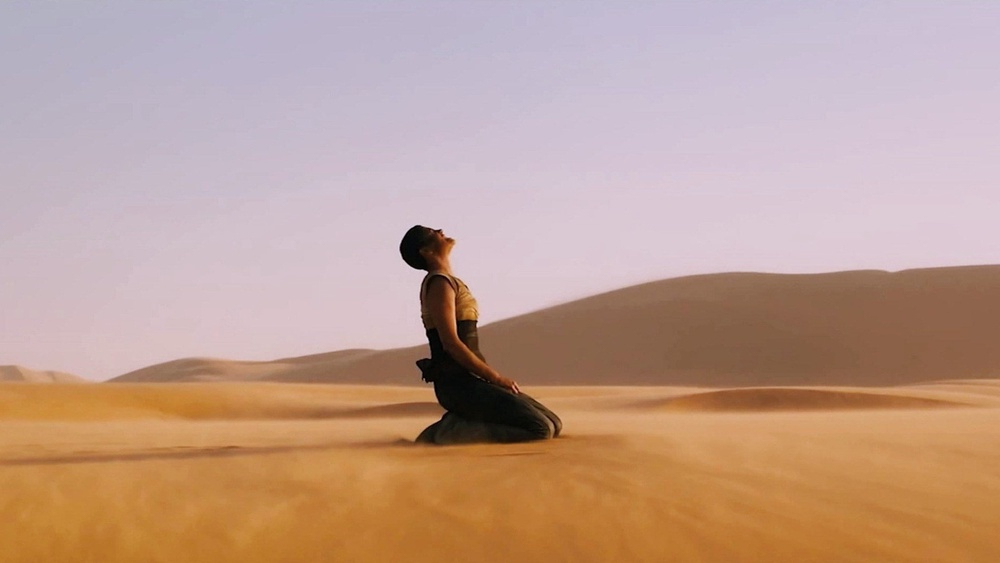
    There is no paradise to which one can return; even if there was, there wouldn’t be room for just one: it’ll have to be all or none. It’s a simple premise. A group of diverse characters must band together and share in the only instinct afforded to them in the desert wasteland of George Miller’s creation, that is, to survive, as Max establishes in the film’s opening soliloquy. Surviving until surviving feels like something more. Unparalleled visual poetry on an impossible scale. Yet still with such a precise and graceful hand, this movie speaks universally to life in the West (all of the characters we follow can be diegetically traced back to some notion of west–sex slaves, soldiers, and blood bags alike). The West, where life is constantly accelerating ever faster toward no future at all. Thus, the only one way to progress beyond hierarchical systems is to constantly stay ahead of them. A process of deterritorialization that must outpace an opponent that is more machine than man. It’s funny, I almost felt bad for the lone tree getting uprooted, but the tree is dead. It’d been dead. Rip out its roots and pull yourself out of the sour mud. Rip out its roots and plant something new. Rip out its roots and destroy your past. It was never about hope (in the world of Mad Max, such a possibility bears no fruit), it’s about activating the utopian potentialities within the dystopian, unearthing them. The tree wasn’t just destroyed, it was leveraged, teleologically endowed with a purpose alternative to that assigned it in life. Even in death, a thing can save a life. Max’s vision of a girl he failed to protect causes him to flinch and shield his eyes, blocking an otherwise fatal crossbow bolt. In Fury Road, people are things, subjects collapsed into objects. You own the objects (water, gasoline, bullets), you own the people. Everything is a commodity. Miller offers two alternatives through Max and Furiosa. Furiosa ascends, bringing resources to the masses. Max vanishes into the crowd. The last look they share is recognition of the other’s role: Furiosa the strong leader and Max the guerrilla fighter. So, they are not mutually exclusive paths, but, in fact, two prongs of one attack to jumpstart the world out of its inertial stagnation. “An object at rest will stay at rest.” As said before, people are just objects. “Unless acted upon by an unbalanced force.” There is no velocity without first acceleration, without first an initial force. Furiosa imagines a better world for Immortan Joe’s breeders, motivated by nostalgia and escapism to return to the Green Place. Miller does not allow any such fantasy for his audience either, enduring criticisms that “they just go in a big circle.” On the contrary, they travel in a line. “I suggest we go back the way we came,” says Max. Every action has an equal and opposite reaction.

    6/4: Furiosa: A Mad Max Saga (2024, George Miller)

    Much better than the trailers made it seem. I wasn’t excited for this movie at all, until I rewatched Fury Road and remembered it’s one of the greatest movies within its respective genre and decade. In hindsight, this one is kinda just whatever.

    6/7: The 15:17 to Paris (2018, Clint Eastwood)

    No one loves the troops more than Clint Eastwood. I applaud what he’s trying to do, but overall, it’s understandable why this movie is regarded as such a dud. However, if you can’t look past nonprofessional actors and poor writing, grow up. That being said, I can understand why anyone would be turned off Eastwood’s antistyle. The complete lack of, or maybe even the negation of audiovisual and narrative flare, let alone spectacle. However, the scenes with the three leads as children struck me as a crystal clear mirror of what life is really like in a White American Christian household. Judy Greer is just a normal mother until she blurts out, “My God is bigger than your statistics,” to a teacher claiming her son could have ADD. Her middle-school-aged son has an armory of airsoft guns and a hunting rifle in his bedroom closet. He prays to God at night . He’s being raised in a single parent household. He gets in trouble at his restrictive Christian school. He wants to join the military because war looks fun. But for all 15:17’s stylelessness, I don’t think you can rightly say that Eastwood is just presenting things “as they are.” He’s still a conservative old guy who likes to make movies about American heroes. And I don’t know how to feel about his movies (formally, not politically). I was too focused on Alek Skarlatos looking like Chad Bo Burnham.

    6/?: Good Time (2017, Josh and Benny Safdie)

    6/9: Yeezus (2013, Kanye West); Weathering with You (2019, Makoto Shinkai)

    6/11: Peeping Tom (1960, Michael Powell)

    This should’ve been one of my favorite things ever and it wasn’t. Need to give another shot.

    6/12: Yesterday Girl (1966, Alexander Kluge), Om Shanti Om (2007, Farah Khan)

    6/19: Le joli mai (1963, Chris Marker and Pierre Lhomme); Borat (2006, Larry Charles); From a Distant Gaze (1964, Jean Ravel)

    6/22: Blue Collar (1978, Paul Schrader)

    6/25: Evil Does Not Exist (2023, Ryusuke Hamaguchi); I Saw the TV Glow (2024, Jane Schoenbrun); Enter the Void (2009, Gaspar Noé)

    I Saw the TV Glow did NOT make me feel good about working at a movie theater.

    Digital filmmaking to surveillance to death to transcendence, but forced back into the cycle, like a neverending bootloop. Like a moth, the camera is drawn to light, leading to free associative editing—a world where a fetus can become a model volcano. The best parts are with no characters or voiceover, not even any scenes, just wandering. Consciousness is montage. I also don’t know how I didn’t realize until I was sitting in the theater that every Noé film has a gimmick. But all of that aside, some of the finest child acting ever put to screen. The aftermath of the car crash is heartbreaking to watch.

    6/29: Submarine (2024, The Marias); Kinds of Kindness (2024, Yorgos Lanthimos); Velvet Goldmine (1995, Todd Haynes); Citizen Kane (1944, Orson Welles)

    Books and TV Shows

    6/1: “Steel” from Twilight Zone (1963, Rod Serling)

    6/9–6/11: Attack on Titan: The Final Season, Part One

    6/11–6/12: Attack on Titan: The Final Season, Part Two

    Nothing is a coincidence; it’s all planned out, but it doesn’t matter. It still fails—Eren and Isayama. Impossibly monumental work of fiction only made more interesting by the fact its ending doesn’t land for everyone.

    6/23-Ongoing: The Boys: Season Four

  • I don’t wish you were here, but I do wish you well.

    What is to be done with bridges after they’ve burned? To rebuild is to admit defeat. Even in the smoldering mess of my own making, I don’t want to mend: matches still in my hand. That bridge had people on it. What would you see if you looked at my eyes now? I don’t think I’m recognizable, I probably don’t deserve more than an averted glance. When I moved away, I thought my parents would resent me and my friends would be proud of me, but my friends resent me and my parents are proud of me. It’ll all end horribly or not at all. Best to leave it alone. I’ll build some new bridges, and hopefully, they’ll last a little longer.

    I had to do something.

    No one told me that my parents were gonna get old. Away indefinitely for over a year now and I realize my father won’t always be forty for me. Going back home is a reminder of death. The only thing that brings me close to tears anymore is the thought of the old dying. They deserve it least of all.

    I’ve become and always have been a cliche.

    I only had the little ink that was left in a single engraved pen. I’m tired of metaphors. Why is it that I can’t write about myself? I want to be a robot on an assembly line, tuning parts and fitting them together—all day, everyday. I want to be a robot, all the desire excised from my body. Then, I wouldn’t want to be a robot.

    I have feelings I can’t express.

    A woman, a truly wonderful, life-changing, devastatingly beguiling woman, only seems to come once every couple years. I think there’s been four so far. It might be too early to call it. But, does anything ever change? It’s the same every time. Maybe it’s the women who can never love you that change you the most.

  • Middleman

    I lick the boot that feeds me.
    What a waste,
    Like good features
    On a bad face.