
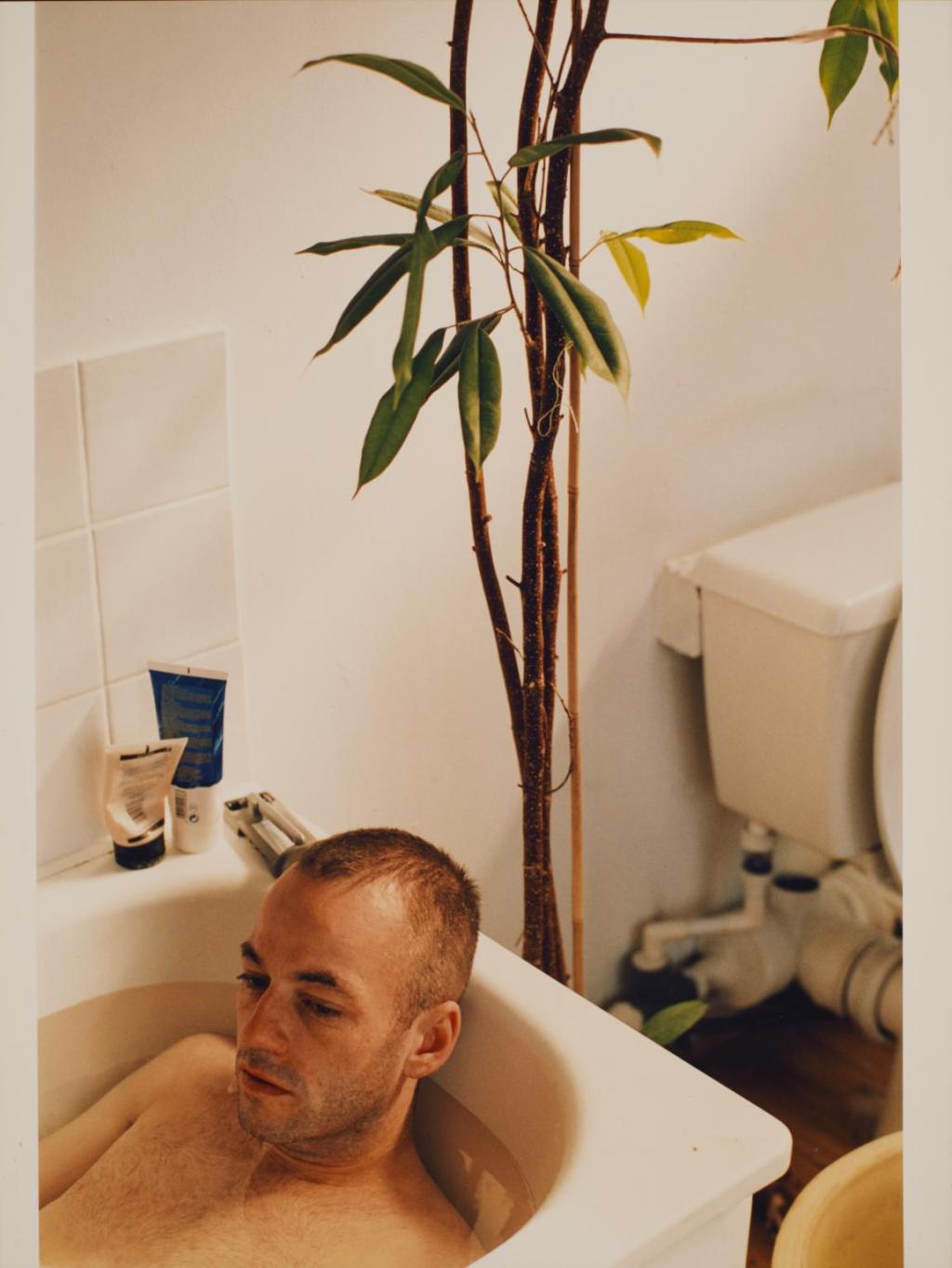
When I die, I’d like it to be in the bathtub. Why is it that water is associated with death? It could be the innate mammalian fear of drowning or the association of anti-consciousness with the amniotic fluid whence we were conceived. It could be mythological or ritualistic, the ancient Egyptians believing souls were ferried across a river of death while their physical bodies were washed and purified before mummification. The source of this union could be etymological, derived from the proto-Indo-European root *wed-, containing within it the noun water as well as the verb to well (that is, to dig a hole into the ground to obtain water). Well cognatively links to will, introducing connotations of desire and choice while recalling the future tense and the inevitability of things that have not yet come to pass: as in, you will die. All in all, no one is really sure and water has more or less always just kinda been water; like time or death, it has always been there with us.
But it is being in the tub, either standing or sitting, that situates one in an overdetermined site of ritual and allows one to confront death in one’s own tiled sensory deprivation chamber. As soon as the warm water hits your skin and the concurrent wave of pleasure has enveloped your senses, your mind dissociatively absorbs into your body. Here, all the things you should have said or the things you should have never said flood your mind or you formulate conversations that have never and never will happen. Paradoxically, it is also here you find the compulsion to keep your eyes always open for fear of an attacker appearing on the other side of the curtain. And so, it is being in water for an extended period of time that makes the tub the perfect site of death, as the past and the future converge within you, all the while acutely aware of the naked vulnerability of living.
However, we know now that death is never so permanent. We can’t let the water run forever, forced to eventually return to the chill on the other side of the vinyl barrier. Man created plastic to defy death. You have to rip it back, ending your appointment with death, yet ironically returning to the domain in which it will likely claim you. Sometimes, after being submerged for far too long, well after my fingers have started to prune, I’ll find myself overflowing with too many ideas. As I dry off, I’ll repeat mnemonic phrases from each over and over in my head for the next fifteen minutes of my nightly routine, in order to not forget them before I can make it to the bedroom and write them down. Not all of them make it that far. It seems almost poetic that in the shower one’s skin begins to prune and wrinkle, as if the body is beginning to accelerate toward its own end. It is the reminder of death, the reminder that there is still work to be done that causes the eternal ritual of death to give way to the defiant, powerless, anachronistic one of preservation.
The man in the tub, like the fly in ointment, the fire in the water. The Proto-Indo-Europeans believed in an ancient deity, *H₂epom Nepōts (or Descendant of the Waters), known by such a contradictory symbol as the latter. This mythological entity thus suggests the proximity toward death—whenever consciousness is submerged or showered in water—as not only defiant but divine. The aforementioned paradox between mind and body and life and death is thereby maintained. It is from this deity that the early Eurasians derived the root *h₂ep- (“body of water”), a passive configuration of the active root *wed- (simply “water”). To slip into the shower, it is a surrender to water and to death in order to create something, to give birth. In the shower, in death, you can be anyone, but you have to get out of the water.


Leave a Reply