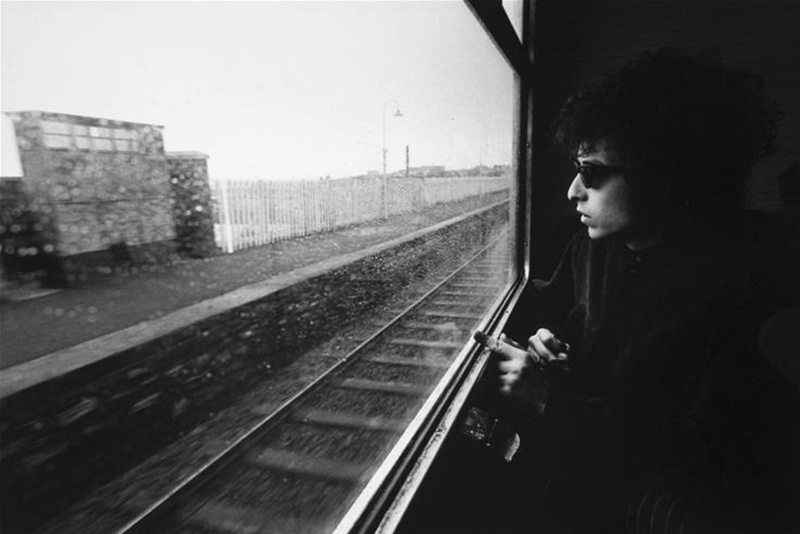
“I was young when I left home / And I’ve been out rambling ’round / And I never wrote a letter to my home” —“I Was Young When I Left Home” (1961, Bob Dylan) If I didn’t have an elderly grandmother I swear to God I would’ve stuck to the plan. I would’ve left without saying anything, except when opportunistically and absolutely necessary. I do really think she is the thread that I’m hanging on by. I only told her I was leaving the afternoon before my bus was scheduled to depart. She had no idea that, when I came into her room and tried my best not to break down, my bags were already packed in the other room and the ticket had been purchased days before. I only told her I was leaving just hours before two friends came to pick me up, to spend the night with before they drove me to the station the next morning. Grandma promised not to tell my dad outright, but if he called and asked about me, she would not lie.
As it turns out, he called me with impeccable timing, having just arrived at my destination. I had just gotten out of the shower. In an upstate New York suburban home only minutes from Lake Ontario, meeting for the first time my future first roommate, whom I had found through one of those roommate-finding apps that never seem to work for anyone. The phone is still ringing and he goes to voicemail before I can answer. I had a second phone and a brand new SIM card, I could’ve made the switch anytime over the past two days and thousand-plus miles. I could’ve continued to delay accountability, but that would be antithetical to the reason for moving away. I made a promise to myself and I was going to see it through. I said I wasn’t gonna look back, and that I was, in fact, prepared to do, but I did pick up the phone. The first crack in the myth I was trying to make for myself.
Now, still transfixed on this sort of ridiculous nonsense that I feel most people never even think twice about, I cannot help but feel I should’ve committed one way or the other. I did both half-assed: instead of leaving it all behind and creating something new for myself like the dutiful mythologizing individualist I wish so desperately I wasn’t, I cut people out and feel obligated to get them back since I hear they’re upset I left without saying goodbye. Yet, even now, this is mythology I want to live by, but maybe that’s my whole problem, aside from these juvenile obsessions that I unrealistically want to uplift myself toward in the first place (all because they got a nice ring to them). It’s mythology, it’s a story that I’ve made up to be told around a campfire, to entertain, to make people feel some kind of way. I left the warmth of a perfectly good fire to whittle at kindling, in the hopes that I could build something even better, and then everyone would want to be around my bonfire, congratulating me on what a great flame I built all on my own. But, I’d only want them to want to be around it. It doesn’t matter since I have neither heat nor light. No one told me it was always gonna rain.
Bob Dylan’s “I Was Young when I Left Home,” coming from early in his catalogue, is a nostalgic lament, in which its narrator ostensibly wants nothing more than to return home. Hearing news of all the familial tragedies that he missed since his departure, it is a song that sees the narrator grappling with his regret and his own (past) self-conviction.
The original folk tune from a fresh-faced Dylan employs various forms of repetition within and between lines and across verses to establish a thoroughly nostalgic tone. More specifically, Dylan creates a closed circuit of nostalgic narcissism, as lines are often preceded by anaphora (e.g., “Not a shirt on my back / Not a penny to my name” or succeeded with epistrophe (e.g., “Gonna make me a home out in the wind / In the wind, Lord in the wind / Make me a home out in the wind).” In the anaphoric verse, the narrator only repeats himself twice, before further indulging himself with epizeuxis and a self-pitying outcry: “Well I can’t go home thisaway / Thisaway, Lord, Lord, Lord / And I can’t go home thisaway.” On the other hand, the epiphoric verse is the greatest example of uninterrupted repetition with three successive lines. Therefore, despite bemoaning the loss of his previous domestic life, whether already unconsciously convinced or currently trying to convince himself, the narrator has made his decision and will live with it, even if the reader can practically picture the lonesome traveler holding his head in his hands as he laments his self-imposed exile from home.
Further, the song hinges on one of the most oft-repeated phrases, “thisaway,” a masterful double entendre in its own right. The polyvalent phrasing of the line (“But I can’t go home thisaway”) expresses both figurative and physical connotations of the narrator’s current state. Firstly, he is overwhelmed by feelings of inadequacy, considering himself unworthy to return home until he has made something of himself. And so, his reaction: to repeat—both formally and psychologically (that is, to fixate on the past); the young Dylan crafting here a formidable form-follows-function. And secondly, in the more literal sense, he cannot go back home by continuing to live away from home. However, also, in the same line, the same lyrics nonetheless convey steadfast reluctance in his reasons for leaving home: that is, he can’t just go-home away his problems. Thus, in the same breath, he recognizes that nostalgia will get him nowhere physically, but also especially in that aforementioned figurative sense.
Even in the deepest drunken stupor of nostalgia, as you passively retreat into fantasy, it projected before you on the ceiling, pleading to relive the past, you’re still looking for any excuse to break free of its addiction, even if, in this very moment, you are unable to pull yourself away.
With this vacation, I returned to the grounds of the fire that had warmed me, and there was no one left. All this talk (I guess, really thought) over the last few years—of the posthuman, the digital, the nostalgia of neoliberalism, anti-individualism, anonymity— is how I compensate for an unshakably selfish nature. Consider this my resignation.
I had forgotten what it’s like to sleep without socks on and how much the people in my family love to talk. For the first time, in one year’s time, I took a vacation. I went back to a few of the places I come from and I stayed with my wise, wonderful ol’ grandmother. These are just some of things that I wanted to record in the couple weeks I left behind.
“They’re particularly gay in this one.” —My grandma, making me watch my first episode of Queer Eye
“Guess what’s coming out?” —My grandma, turning her phone around to show me a Facebook post about a fake Shawshank Redemption sequel
There’s a Trader Joe’s that just opened up in my unincorporated community of a hometown sometime in my absence. At checkout, I notice someone I recognized in the line behind us: a kid I met in elementary school. We became friends in middle school, and then became removed from each other by high school. In tenth grade, he spread the nudes of one girl he was talking to. Justifiably and hilariously, she called him a “pencil-dicked curry muncher.” Of course, being in high school, you make fun of the whole situation amongst friends, but by yourself—by myself—I just remember feeling horribly sorry for her. I remember her being in my first period physics and second period driver’s ed. She was always nice to me. He’s in considerably worse shape and balding now, so I guess that’s his just deserts. I wonder how often I, she, those days cross his mind.
“Walking is the reason I’m also not on life support.” Shortly after my grandma told me this, her best friend Nancy died. Nancy who went to UMN with Bob Dylan, smoked like a chimney, and loved the ocean. In the days after her passing, I heard several stories from her and my dad about this woman whom I had only superficially interacted with as a child and teenager. One story goes that one of Nancy’s sorority sisters even dated Dylan. “She was ready to go.” “I outlived them all.”
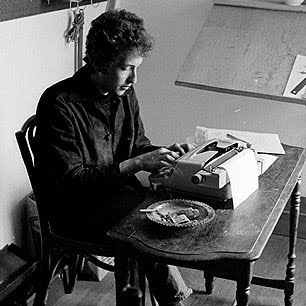
The Caine Mutiny was on while she got the news about Nancy. I wasn’t much use at all when it came to comforting her. I was mostly transfixed by how much May Wynn looked like my grandma as a young woman. I thought back to the photograph on my bedroom wall back in New York. When I first moved into my grandma’s condo after my post-graduation lease ended, she was in Virginia staying with family. There were patterned boxes on the floor next to the head seat at the dining room table. All alone in her house, one of the first things I did was take the time to look through every single printed memory. (At this point, the unshakable idea that I had to move up, and on my own without telling a soul, was almost at its peak: it had never felt more attainable.) I found a photograph with a duplicate, “ / 1957 / Ind. U” written on the back of only one. That’s the one I keep and take with me. That’s the picture that looks like May Wynn, smiling as she looks up from her typewriter. In my grandpa’s old room, the one that I moved into, I find a transparent Kodachrome slide lying in a woven basket. It’s a photo of him and a little girl who’s holding a striped cat: “Christmas 62.” Here, he reminds me of Robert Francis, if he had a more coy, reticently devilish grin that liked to creep out from behind a stoic exterior every now and then. No one knows I took either of these tokens for my self.
It almost pains me to write it, but I was feeling nostalgic. I’ve tried to live life like I would never have any regrets at all, but it didn’t work. I’ve just about removed the last threads of Camus’s existentialism that weaves itself into the minds of annoying, less-than-extraordinary 20-year-old men, unspooling itself until it becomes a twisted, knotted mess of intellectual machismo and melancholic superiority. It was time to cut the cord and let the spool fall where it may. I suppose I agree with Orson Welles now: “I can’t imagine not having a regret about almost everything.” The chance to see your self in a completely different life; to treat your life as one big what-if. But almost contrary to expectation, being back in the past makes me think about the people who only know me now. It’s funny to think that they met a dried husk of that former young man. God, I used to be so cool. I used to write well and have unprotected sex with crazy women. Only kidding. I don’t really wanna go back (and I’m not too cool for Camus).
After the first stop on my Grand Apology/Reunion tour, an extended breakfast with the last two people I saw before I left home, I come back to a clogged toilet. All my old shit is coming back up and I can feel the panic begin to rise inside me as the soiled water inside the bowl rises almost to the top, stopping right before it would spill over onto my grandmother’s white tiles. One flush isn’t gonna wash anything away, it takes a little effort, maybe even getting a little shit on your hands. I don’t know what the plunger would be in this analogy. I don’t know why I’m suddenly going for these rather straightforward conceits, that doesn’t seem very like me. Nevertheless, I carefully got the toilet unclogged and it was all flushed down the pipe in an instant.
“People always go away, so they can forget where they were.” —Martin, to Christina before she leaves Pittsburgh forever, from Martin (1977, George A. Romero)
“I’ve had one man. Why would I want another?” —Grandma, filling me in on her septuagenarian neighbor getting a new boyfriend and offering her two cents
“I always thought I was adequate. Maybe that’s the best way to be.” Grandma tells me that there is a pivotal moment in someone’s life that breaks them and they never quite bounce back from it. At least that’s how she sees it in my family, particularly among her male children. My uncle cut from the Texas Rangers, my father failing to make his middle school basketball team. She swears that’s what did it. That last one didn’t make sense to me at first, that it’d be something so seemingly minor and childish; yet, I think it’s those little letdowns that lead to the most devastating what-ifs. It got me thinking about what my one moment would be—the greatest singular disappointment internalized into an all-encompassing, haunting personal failure. Which one would be it? I’ll tell you exactly what it was. It was the incomplete production of a micro-budget short called Dark Chamber. Before we had a chance to finish shooting, I moved in with Grandma, then I moved away. I still have half a movie around here somewhere. Back “home” I had promise, everyone would come to me for anything related to film or writing. I get to New York and there are thousands just like me. I don’t lament the shattered illusion of my uniqueness (although my first time at Anthology Film Archives was a wake-up call on that front)—no!—I see myself reflected back in all these young people who were the brightest minds from their own shitty suburbs or small towns. They had potential too, and everyone left behind believed they’d make it. Now all I have is waste.
“Everyone has one flaw, and that’s yours!” —Grandma, on my not being a pet lover
“The sky is trembling and I must leave fast” —Bob Dylan (1965, “Farewell, Angelina”) I think they say two weeks is the perfect length for a vacation, that way you can begin to miss home, ready to return to the routine recently refreshed. It was sometime in the second week that the trip down memory lane stopped being a fun carnival ride and started becoming a crushing weight, as the staggering heights of the entire amusement park above started to collapse on top of me. Floating through the Tunnel of Love on a heart-shaped bed unable to move, my gaze unable to point anywhere but up, as skyscraper confections and steel beams crash through the smoke and mirrors into the lazy river around me. My mattress raft, slowly going under from the load, is swirled and spat out the end of the stream onto desert sand, just moments before I would’ve been fully submerged. In the smoldering pile of rubble, I can finally move. I don’t know what to do or what to think. I spin around to flee, and it’s Bob Dylan, the Shadow King, who’s there to catch me—off-guard. He stares into the evacuated hearts of fevered eyes and refuses to speak. As my head races with questions and pleas for help or advice or comfort, my mind feels like it’s tearing itself away from my body. He keeps staring with an ambiguous glare. I go to speak, but cut myself off before any sound touches the air. A mercurial apparition, what I take to be my mind, temperamentally hovers and surges about my frame like a solar flare, as if eager to abstract itself from its tether. He leans forward, ever so slightly, hiding his eyes in his brow and giving me his ear. I’d just like to ask him one thing.
For the greater half of this last year, I did not have a fully functioning computer. I was forced to make due with the Surface Pro 3 that I brought with me to New York. I originally bought the thing in high school with the first thousand dollars I ever saved. But as time went on, the type cover stopped typing, the lower half of its touchscreen didn’t respond to touch, in addition to the expectation of manufactured obsolescence after a protracted seven years.
I don’t know why people do this, it’s fucking awful. Absolutely no one cares, but some of these dates are certainly wrong and I am certainly forgetting about some of the things I watched.This exercise honestly might still be a success, because I will never recordkeep the dogshit I consume ever again. I have stopped doing it altogether, as of this new year. This is beyond ridiculous; however, I had to see it through.
7/2: Au revoir les enfants (1987, Louis Malle)*; Fireworks (1947, Kenneth Anger)*; Rabbit’s Moon (1950–70, Kenneth Anger); Eaux d’artifice (1953, Kenneth Anger); Scorpio Rising (1963, Kenneth Anger); Kustom Kar Kommandos (1965, Kenneth Anger)
7/3: Don Quxiote (1605, Miguel de Cervantes)—Finished; The Coming (1996, Busta Rhymes)
7/7: Brat (2024, Charli xcx); Closer (1980, Joy Division)*
7/8: Uncut Gems (2019, Josh and Benny Safdie)*
7/13: Blow Out (1981, Brian De Palma); Special Effects (1984, Larry Cohen)
7/17: Cléofrom 5 to 7 (1962, Agnès Varda)
7/25: Sherlock Jr. (1924, Buster Keaton)
7/29: Le Doulos (1962, Jean-Pierre Melville) 24 Hours in the Life of a Clown (1946, Jean-Pierre Melville); Le silence de la mer (1949, Jean-Pierre Melville)
8/2: Monsieur Hulot’s Holiday (1953, Jacques Tati)
8/3: Trap (2024, M. Night Shyamalan)
8/20: Trick Baby(1972, Larry Yust)
8/22: Shaft (1971, Gordon Parks)*
9/2: Afraid (2024, Chris Weitz)
9/3: New Morning (1970, Bob Dylan)*; Smile (2022, Parker Finn)*
9/4: Army of Shadows (1969, Jean-Pierre Melville); Daughters of the Dust (1991, Julie Dash)*
9/9: Blink Twice (2024, Zoë Kravitz); High Fidelity (2000, Stephen Frears)
9/10: Blade (1998, Stephen Norrington)*; 27 Dresses (2008, Anne Fletcher)
9/11: Southland Tales: The Cannes Cut (2006, Richard Kelly)
9/12: In Utero (1993, Nirvana)*; Bleach (1989, Nirvana)*; What a Way to Go! (1964, J. Lee Thompson)
9/16: Scooby-Doo, Where Are You! “What a Night for a Knight!” and “Hassle in the Castle” (1969); Aloha, Scooby-Doo! (2005, Tim Maltby)*
9/17: The First Band on the Moon (1996, The Cardigans)*
9/18: Wings at the Speed of Sound (1976, Wings); Beetlejuice, Beetlejuice (2024, Tim Burton)
9/19: Close Your Eyes (2023, Víctor Erice); Blade II (2002, Guillermo del Toro)*
9/20: Mama’s Gun (2000, Erykah Badu)
9/23: Klute (1971, Alan J. Pakula); Blade: Trinity (2004, David S. Goyer); Ghost Rider (2007, Mark Steven Johnson)*
9/29: The Devil, Probably (1977, Robert Bresson); Moonlighting(1985)—”Read the Mind… See the Movie,” “The Next Murder You Hear,” “Brother, Can You Spare a Blonde?”; Tenspeed and Brown Shoe(1980)—”Tenspeed and Brown Shoe: Part 1″
9/30: The Greatest Backflip of All Time (2023, Enrico Drago); Megalopolis (2024, Francis Ford Coppola)
10/2: Weekend (1967, Jean-Luc Godard)*; Mona Lisa (1986, Neil Jordan)
10/3: My Dinner with Andre (1981, Louis Malle); The Driller Killer (1979, Abel Ferrara)*
10/9: Chan Is Missing (1982, Wayne Wang); The Passion of Joan of Arc (1928, Carl Theodor Dreyer)
10/13: Saturday Night (2024, Jason Reitman)
10/15: Joker: Folie à Deux (2024, Todd Phillips)
10/16: The Devil, Probably (1977, Robert Bresson)*
10/18: All about Lily Chou-Chou (2001, Shunji Iwai)*; Breathe (2001, Lily Chou-Chou)
10/20: The Searchers (1956, John Ford)
10/21: Bride of Chucky (1998, Ronny Yu); The Exorcist III (1990, William Peter Blatty)
10/22: Lancelot du Lac (1974, Robert Bresson); The Blair Witch Project (1999, Daniel Myrick and Eduardo Sánchez)*
10/23: Book of Shadows: Blair Witch 2 (2000, Joe Berlinger); Smile 2(2024, Parker Finn)
10/25: Anora (2024, Sean Baker); Gummo (1997, Harmony Korine); The Conversation (1974, Francis Ford Coppola)
10/26: Hubie Halloween (2020, Steven Brill)
10/27: In Rainbows (2007, Radiohead)
10/28: In Rainbows (2007, Radiohead)*
10/29: The Sacrifice (1986, Andrei Tarkovsky)
10/31: Normal People—“Episodes 3–5” (2020); Final Exam (1981, Jimmy Huston)
11/1: Normal People—“Episode 6–11” (2020); Mixtape Pluto (2024, Future)
11/2: Normal People—“Episode 12” (2020, Hettie Macdonald); Sex in the City—“The Real Me,” “Defining Moments”(2001)
11/3: Modern Times (1936, Charlie Chaplin); Here (2024, Robert Zemeckis); Conclave (2024, Edward Berger); Juror #2 (2024, Clint Eastwood)
11/5: The Apprentice (2024, Ali Abbasi)
11/6: The Fan (1996, Tony Scott)
11/10: Il grido (1957, Michelangelo Antonioni)
11/13: Naked and Afraid of Love—“The Accidental Erection” (2021); Fade to Black (1980, Vernon Zimmerman); Sex and the City (2008, Michael Patrick King)
11/15: Raising Arizona (1987, Joel and Ethan Coen)
11/16: Frasier—“The Candidate,” “Adventures in Paradise” (1994)
11/17: The Lo-Fis (2020, Steve Lacy)*
11/18: Cheers—“Endless Slumper” (1982)
11/20: The Lodger: A Story of the London Fog (1927, Alfred Hitchcock)
11/21: Fear City (1984, Abel Ferrara); Tulsa King—“Go West, Old Man” and “Center of the Universe” (2022); Dirty Work (1998, Bob Saget)
11/22: Lost—”Tabula Rasa,” “Walkabout,” “White Rabbit,” “House of the Rising Sun,” “The Moth,” “Confidence Man” (2004)*
11/26: Double Indemnity (1944, Billy Wilder)*
11/28: Lost—”Man of Science, Man of Faith,” “Adrift,” “Orientation,” “Everybody Hates Hugo,” “…And Found,” “Abandoned,” “The Other 48 Days,” “Collision,” “What Kate Did,” “The 23rd Psalm” (2005–2006)*
11/30: Very Important People—“Hayes Steele” (2024)
12/2: A Real Pain (2024, Jesse Eisenberg)
12/4: Fullmetal Alchemist: Brotherhood*—Finished
12/6: Live at Reading (2009, Nirvana); 10 Things I Hate about You(1999, Gil Junger)*; My Cousin Vinny (1992, Jonathan Lynn)
12/8: Joker: Folie à Deux (Music from the Motion Picture)(2024, Joaquin Phoenix and Lady Gaga)
12/10: Babygirl (2024, Halina Reijn); The Umbrellas of Cherbourg (1964, Jacques Demy)*
This post is so ridiculously delayed. I don’t really feel like going back and trying to conjure up the initial thoughts and feelings I had to each of these works. So, for the most part, I am electing not to fill in the gaps that I never finished, leaving it as is. I just cannot be bothered anymore.
Albums and Movies
6/1: Real Steel(2011, Shawn Levy)*
Does not hit as hard when you’re not a child.
6/2: Immortals(2011, Tarsem Singh Dhandwar)
Returning digital video back to painting in order to properly imbue ancient gods and heroes with the mythic significance and scale that they deserve. Stunning. I had never seen a Tarsem movie, so I cannot speak to his other works, however, in Immortals, the man is a dedicated tenebrist. It probably was mostly due to talking throughout, but shit is hard to follow, or maybe paying attention isn’t the point at all.
6/4: Mad Max: Fury Road (2015, George Miller)*
You know, hope is a mistake. If you can’t fix what’s broken, you’ll go insane.
“There’s high ground just beyond that thing” MAD MAX: FURY ROAD REVIEW
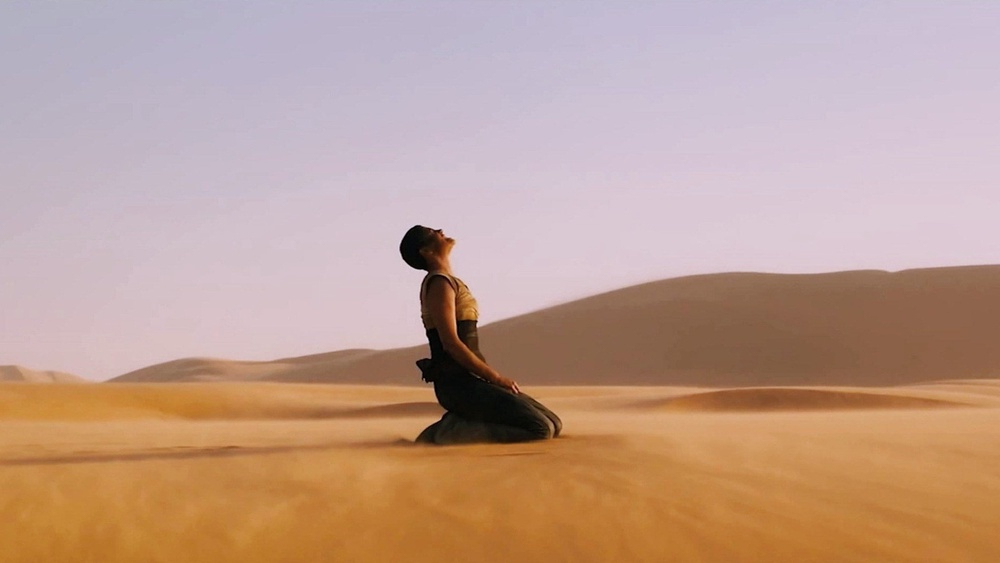
There is no paradise to which one can return; even if there was, there wouldn’t be room for just one: it’ll have to be all or none. It’s a simple premise. A group of diverse characters must band together and share in the only instinct afforded to them in the desert wasteland of George Miller’s creation, that is, to survive, as Max establishes in the film’s opening soliloquy. Surviving until surviving feels like something more. Unparalleled visual poetry on an impossible scale. Yet still with such a precise and graceful hand, this movie speaks universally to life in the West (all of the characters we follow can be diegetically traced back to some notion of west–sex slaves, soldiers, and blood bags alike). The West, where life is constantly accelerating ever faster toward no future at all. Thus, the only one way to progress beyond hierarchical systems is to constantly stay ahead of them. A process of deterritorialization that must outpace an opponent that is more machine than man. It’s funny, I almost felt bad for the lone tree getting uprooted, but the tree is dead. It’d been dead. Rip out its roots and pull yourself out of the sour mud. Rip out its roots and plant something new. Rip out its roots and destroy your past. It was never about hope (in the world of Mad Max, such a possibility bears no fruit), it’s about activating the utopian potentialities within the dystopian, unearthing them. The tree wasn’t just destroyed, it was leveraged, teleologically endowed with a purpose alternative to that assigned it in life. Even in death, a thing can save a life. Max’s vision of a girl he failed to protect causes him to flinch and shield his eyes, blocking an otherwise fatal crossbow bolt. In Fury Road, people are things, subjects collapsed into objects. You own the objects (water, gasoline, bullets), you own the people. Everything is a commodity. Miller offers two alternatives through Max and Furiosa. Furiosa ascends, bringing resources to the masses. Max vanishes into the crowd. The last look they share is recognition of the other’s role: Furiosa the strong leader and Max the guerrilla fighter. So, they are not mutually exclusive paths, but, in fact, two prongs of one attack to jumpstart the world out of its inertial stagnation. “An object at rest will stay at rest.” As said before, people are just objects. “Unless acted upon by an unbalanced force.” There is no velocity without first acceleration, without first an initial force. Furiosa imagines a better world for Immortan Joe’s breeders, motivated by nostalgia and escapism to return to the Green Place. Miller does not allow any such fantasy for his audience either, enduring criticisms that “they just go in a big circle.” On the contrary, they travel in a line. “I suggest we go back the way we came,” says Max. Every action has an equal and opposite reaction.
6/4: Furiosa: A Mad Max Saga (2024, George Miller)
Much better than the trailers made it seem. I wasn’t excited for this movie at all, until I rewatched Fury Road and remembered it’s one of the greatest movies within its respective genre and decade. In hindsight, this one is kinda just whatever.
6/7: The 15:17 to Paris (2018, Clint Eastwood)
No one loves the troops more than Clint Eastwood. I applaud what he’s trying to do, but overall, it’s understandable why this movie is regarded as such a dud. However, if you can’t look past nonprofessional actors and poor writing, grow up. That being said, I can understand why anyone would be turned off Eastwood’s antistyle. The complete lack of, or maybe even the negation of audiovisual and narrative flare, let alone spectacle. However, the scenes with the three leads as children struck me as a crystal clear mirror of what life is really like in a White American Christian household. Judy Greer is just a normal mother until she blurts out, “My God is bigger than your statistics,” to a teacher claiming her son could have ADD. Her middle-school-aged son has an armory of airsoft guns and a hunting rifle in his bedroom closet. He prays to God at night . He’s being raised in a single parent household. He gets in trouble at his restrictive Christian school. He wants to join the military because war looks fun. But for all 15:17’s stylelessness, I don’t think you can rightly say that Eastwood is just presenting things “as they are.” He’s still a conservative old guy who likes to make movies about American heroes. And I don’t know how to feel about his movies (formally, not politically). I was too focused on Alek Skarlatos looking like Chad Bo Burnham.
6/?: Good Time (2017, Josh and Benny Safdie)
6/9: Yeezus (2013, Kanye West); Weathering with You (2019, Makoto Shinkai)
6/11: Peeping Tom (1960, Michael Powell)
This should’ve been one of my favorite things ever and it wasn’t. Need to give another shot.
6/12: Yesterday Girl (1966, Alexander Kluge), Om Shanti Om (2007, Farah Khan)
6/19: Le joli mai (1963, Chris Marker and Pierre Lhomme); Borat (2006, Larry Charles); From a Distant Gaze (1964, Jean Ravel)
6/22: Blue Collar (1978, Paul Schrader)
6/25: Evil Does Not Exist (2023, Ryusuke Hamaguchi); I Saw the TV Glow (2024, Jane Schoenbrun); Enter the Void (2009, Gaspar Noé)
I Saw the TV Glow did NOT make me feel good about working at a movie theater.
Digital filmmaking to surveillance to death to transcendence, but forced back into the cycle, like a neverending bootloop. Like a moth, the camera is drawn to light, leading to free associative editing—a world where a fetus can become a model volcano. The best parts are with no characters or voiceover, not even any scenes, just wandering. Consciousness is montage. I also don’t know how I didn’t realize until I was sitting in the theater that every Noé film has a gimmick. But all of that aside, some of the finest child acting ever put to screen. The aftermath of the car crash is heartbreaking to watch.
6/29: Submarine (2024, The Marias); Kinds of Kindness (2024, Yorgos Lanthimos); Velvet Goldmine (1995, Todd Haynes); Citizen Kane (1944, Orson Welles)
Books and TV Shows
6/1: “Steel” from Twilight Zone (1963, Rod Serling)
6/9–6/11: Attack on Titan: The Final Season, Part One
6/11–6/12: Attack on Titan: The Final Season, Part Two
Nothing is a coincidence; it’s all planned out, but it doesn’t matter. It still fails—Eren and Isayama. Impossibly monumental work of fiction only made more interesting by the fact its ending doesn’t land for everyone.
First time at Williamsburg Cinemas. I don’t know anything about Julio Torres, but thinking back on this debut, he seems pretty annoying. When I was watching it, I could mostly stomach his and Tilda Swinton’s quirky and grating humor, but I cannot see myself ever wanting to rewatch Problemista. Something that I would’ve liked to see more of is the figure of the maze—in the form of a staircase of cubicles. It felt more like an afterthought rather than a fleshed out detail of much importance, only appearing twice. On the other hand, I did like how the movie showcased what it’s like to live in Bushwick and turning to Craigslist, personified as some queer deity, during desperate times. When all is said and done, this movie did get me to ride the Roosevelt Island tram, which was cool.
5/2: Places and Spaces (1975, Donald Byrd)
Recommended by a friend. Yeah, jazz-funk fucking rips. Everyone say, “thank you, black people.”
El Topo is an insane film. The lone gunslinger wandering the desert is reborn and accepts his role as a monastic guide for the disenfranchised. Surrealist cinema at its best.
Darktown Revue played before Body and Soul as an accompanying short during Film Forum’s Micheaux retrospective, which sadly was not held over for an extra week, I assume because no one came to watch any of them. His first sound film, Darktown Revue was surprisingly funny, especially given its invocation of minstrelsy, in which a black preacher in blackface delivers a sermon comprised of mostly nonsense. Micheaux always seems to have been a provocateur, criticizing aspects of black culture for breeding complacency amidst poverty, speaking from his perspective as a black homesteader and promoting the upliftment of the individual through hard work and commitment to a craft. While I don’t necessarily agree fully, Micheaux was all about offering alternatives when not many were available.
I could not follow the plot of Body and Soul and even after its “cop-out” ending was still left puzzled. It is revealed that the whole thing was a dream, Paul Robeson’s diabolical reverend character didn’t really kill the dreaming mother’s only daughter, Isabelle. I don’t know if it was established earlier in the film or it’s just one of those Micheaux sudden endings that wraps up everything too neatly right at the very end, but Robeson was playing twin brothers the entire time and Isabelle marries the long-lost sibling, Sylvester. I think? It doesn’t really matter, because I was more invested in Julia Theresa Russell’s performance as Isabelle. She’s beautiful in a demure, waif sort of way. Her eyes seemingly always about to overflow with tears, like a woman burdened by too many secrets, always appearing as if she has just seen a ghost. Every time her face is onscreen, I can’t take my eyes off this woman I’ve never seen before. Herself, a ghost: not much is known about her and she never appeared in another film. There’s something deathly and tragic about her mousy appearance. This must’ve been how Bazin felt about Bogart.
~5/4: Pussy Whipped (1993, Bikini Kill)
Kathleen Hanna’s voice is so attractive.
5/6: Dune: Part Two (2024, Denis Villeneuve); good kid, m.A.A.d city (2012, Kendrick Lamar)
After watching Dune 2, I thought the movie was cool, but it didn’t really make me feel much. Yet, leaving the theater I felt oddly invigorated and confident. So, I’ve come to the conclusion that this movie is crack for average white guys who haven’t achieved anything. I ended up watching it for free at work, after dragging my feet for two months and never going to AMC Lincoln Square to watch it in IMAX 70mm. I just needed to get it over with. I’m tired of seeing Timothée Chalamet and Zendaya everywhere, they just don’t have the sauce that Hollywood is still trying to convince us they have.
I’ve been in a pretty rock heavy phase of music listening for the past year and a half, but this album really brought hip hop back into the fold for me.
5/7: Swing!(1938, Oscar Micheaux); Underworld(1937, Oscar Micheaux); To Pimp a Butterfly (2015, Kendrick Lamar)
Every time a couple of characters would kiss or intimately embrace, Micheaux fades to black before cutting to the next scene. I still don’t know what exactly this could mean in relation to Swing!, but it’s a noteworthy device. No one quite intercuts like Micheaux either, often asking the audience to draw parallels between extensive cabaret numbers and emotionally vulnerable conversations between two characters. Truly the first Black auteur. Really enjoyed this film.
Out of all the Micheaux films I saw at Film Forum during the festival’s week-long run, I would say Underworld might be the most entertaining. Sol Johnson plays the naive pushover who wants to do the right thing expertly, Bee Freeman as the manipulative and conspiring villain steals the show, and ever since I first saw her in Birthright years ago, Ethel Moses has always reminded me of Setsuko Hara. Throw in a gangster plot on top of that with the classic Micheaux last-minute reveal that saves the hero and you got yourself a really fun race film.
I get it now. Kendrick Lamar is a Bob Dylan level talent. His beef with Drake seemed like as good a time as any to finally get around to listening through his albums. “Wesley’s Theory” is the strongest album opener I’ve heard since “Serve the Servants“.
5/8: untitled unmastered. (2016, Kendrick Lamar); DAMN. (2017, Kendrick Lamar); Ten Minutes to Live (1932, Oscar Micheaux)
I liked untitled unmastered. but by the very nature of it, I haven’t gone back to listen to specific tracks, like I have with DAMN. “LUST” is the song I listen to most off the album.
Ten Minutes to Live is definitely a film I need to go back and rewatch, as I feel I would have a lot more thoughts. There’s just so much good stuff going on and my memory is failing me right now.
5/13: The Last of the Mohicans (1992, Michael Mann); The Amazing Spider-Man 2 (2014, Marc Webb)*
First time at Roxy, really liked how moody it was and that it’s only one theater. Saw Last of the Mohicans on 35 with a friend, which was the first time I’ve actually seen a film on film in New York. It was like watching a Romantic painting come to life. We watched the theatrical cut, so this ending did not have Chingachgook’s final monologue, proclaiming that one day there will be no more frontier left and new peoples will come along. While I haven’t seen this scene in full context of the Director’s Definitive Cut, I think it might say too much. I love the tragedy of the last Mohican declaring himself thusly and leaving it at that. In my mind, the rest is unspoken. The breathtaking soundtrack and photography do the rest. My parents were in town visiting me and my dad insisted that I had to accept the invite to go watch The Last of the Mohicans.
Amazing Spider-Man 2 might be my favorite moviegoing experience to date. We flipped a coin, which dictated that we rush to Prospect Park Nitehawk (another first) to miss only the first bit of this movie. Also projected on 35mm (and only finding out after the fact that it was actually shot on that format as well), this film looks incredible. It’s a disaster, but it’s great. I hadn’t seen it since high school probably when I watched it on a laptop or something, back when I knew even less than I did now and watched slop pop-criticism like ScreenJunkies and New Rockstars. The character design of Electro is actually super inventive and his final fight with Spider-Man is insanely creative. And then, on the other hand, Dane DeHaan’s Green Goblin looks repulsive and uninspired and is such a huge miss in a film with such tremendous high points in terms of costume design. I suppose I can applaud trying to do something new across the board. Of course, the scenes with Gwen and Peter have off-the-charts chemistry and you can’t help but smile, as Andrew Garfield and Emma Stone somehow elevate what is mostly trash dialogue. To add, Sally Fields is great as Aunt May and her scenes with Garfield are just as emotional and heartfelt. All around this movie is phenomenonally acted for absolutely no reason. And when you’re not invested in the onscreen tension between love interests, you can laugh alongside everyone else in the theater as a sad Peter Parker puts in earbuds and listens to Philip Philips’s “Gone, Gone, Gone.” This movie is the most comic book movie in every sense, for better and for worse.
5/14: Mr. Morale & the Big Steppers (2022, Kendrick Lamar); Challengers (2024, Luca Guadagnino)
I am not a big Luca Guadagnino fan, but Challengers is the film of his that I’ve enjoyed the most (so far and based on the few I’ve seen). For me, it’s not movie of the year or as awesome as I was promised it to be, but I like it more than I dislike it. However, while not getting me to go out and find a racket and someone to play with, it did inspire me to get a gym membership since every character is insanely in-shape and hot. It actually got me to change something in my life, which is more than I can say for most movies. The acting for the most part was just fine, I’m still not a Zendaya fan and something about Mike Faist’s performance seems off somehow (which maybe I kinda like?), but Josh O’Connor as Patrick was really the highlight of it all.
5/15: Rise of the Planet of the Apes (2011, Rupert Wyatt)*; Dawn of the Planet of the Apes (2014, Matt Reeves)*; War for the Planet of the Apes (2017, Matt Reeves)*
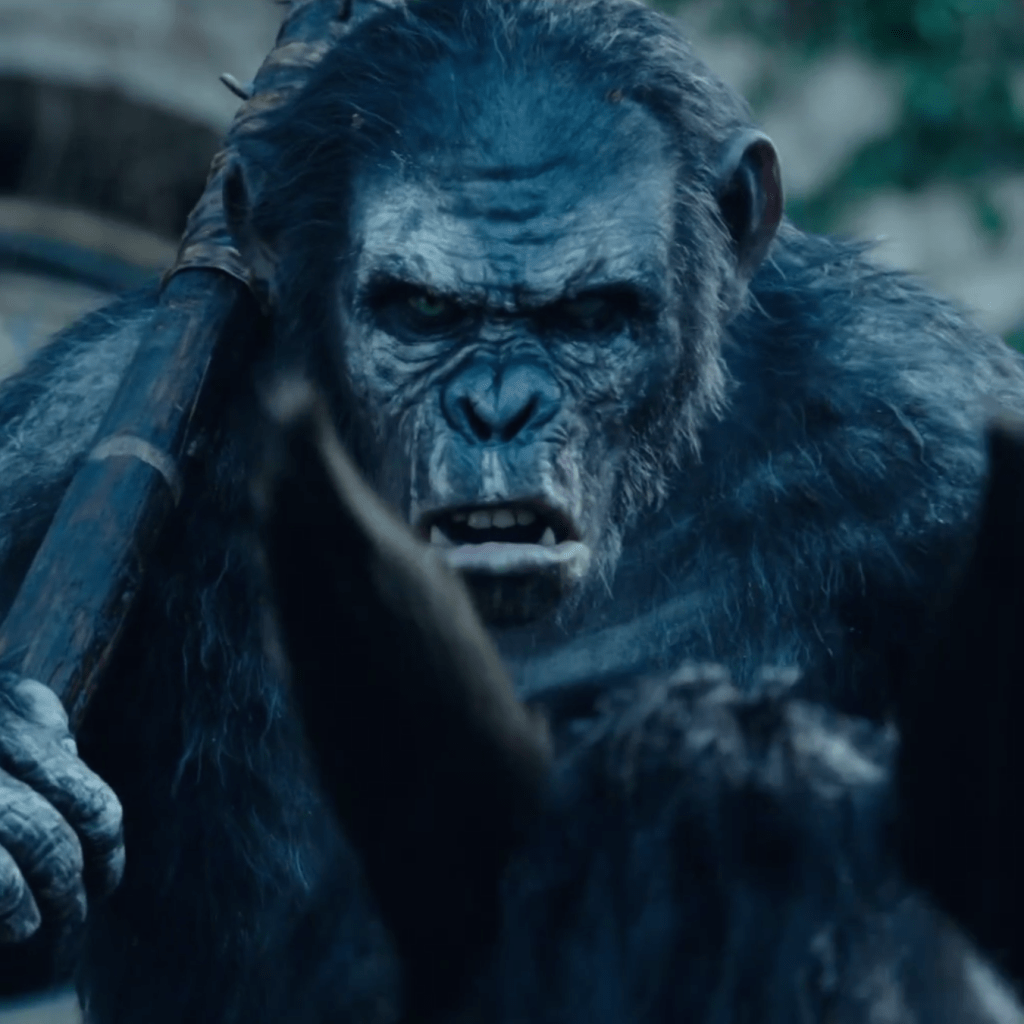
Like the state giving itself the authority to execute who it pleases, Caesar, fittingly named after the one man statesman, unilaterally decides that the only way to unify the fractured ape community, split over the Human Question, is to kill his rival Koba. In doing so, he breaks one of his commandments (“ape shall not kill ape”) by conveniently declaring that Koba is not an ape, for he killed an ape first. By its conclusion, Dawn undoes all the diplomatic undertakings instigated by the Jason Clarke character toward Caesar and the apes. Caesar has the opportunity to try the diplomatic approach ape-to-ape, but it’s never even considered. Caesar doesn’t seem to learn anything and I wish this hypocrisy would’ve been explored more in War, or Kingdom for that matter. I do really enjoy the tortured king who has to do what he must (and Serkis kills it), but this ending severely undercuts what could’ve been a much more bold and groundbreaking characterization in my eyes. It’s nothing new to say that post-apocalyptic stories in their imagining of a world beyond the human end up recreating the same conditions that led to catastrophe, building back the same society with the same inequities in a world where it’s already been proven that all rules are off and new modes of living could now be explored, ones more sustainable and decent for everyone. Yet, it seems that even genetically enhanced apes still have too much human nature in them. Interestingly, Dawn posits digital technologies as perhaps the one tool above all which defines the modern human. When Malcolm’s group gets the dam up and running and power is returned back at the settlement, Dreyfus’s iPad turns on and he finds family photos. This technology serves as an extension of his memory, unlocking that which he has repressed. The same applies to Caesar. Returning to his childhood home from Rise, he returns to his former attic sanctuary, where he finds a video camera that had documented a touching moment between human father and ape son. (Side note: Reeves seems pretty preoccupied with having characters and the audience watch events through the mechanism of video: Batman looking through Catwoman’s eyes via contact lenses, the entire structure of Cloverfield, plus Dreyfus and Caesar here.) So, it would seem that Caesar accepts his humanity, as it were, yet still decides to kill Koba. He urges the apes to forgive Malcolm’s group’s transgressions and calls him a good man worthy of his trust. So, why doesn’t he take that same attitude and try to negotiate with the human-hating Koba, his friend and officer?
War might be my favorite of the trilogy. It’s really fun how this series became these neat genre pieces once Reeves took over: Dawn, a war movie, and War, a prison escape movie. I think that speaks to how strong and open-ended a template Rise is—a reputable first entry that would allow one to take the series in any number of directions. Woody Harrelson is better than I initially remembered and gave him credit for. Steve Zahn puts his heart and soul into playing Bad Ape. I wish actors scrambled to play mocap suit monkeys the way they pledge allegiance to the slowly deteriorating Marvel empire.
5/17: Kingdom of the Planet of the Apes (2024, Wes Ball)
I didn’t want to have to say it, but this one is a dud. Wes Ball just does not have it. The opening sequence is trying to hard to be Avatar 2 (of which I am not a fan), fully immersing you in this sublime computer imagery, but it’s just boring and goes on for way too long. Kingdom has plenty of interesting ideas that it never expands on: it squanders its already lengthy runtime. Proximus trying to break into the fallout bunker, William H. Macy as a (criminally underused) academic or historian that educates Proximus about humanity’s heyday, and the different interpretations of Caesar’s teachings and actions are all good ideas that never go anywhere, and then, the movie ends. That being said, I am interested to see more from this next trilogy and the wonderful Kevin Durand.
5/19: Blood on the Tracks (1975, Bob Dylan)
I’d heard over and over that this is classic Dylan (on top of his game, return to form, etc., etc.) and as the album progressed that assessment became increasingly apparent. “Lily, Rosemary and the Jack of Hearts” still runs through my head.
5/24: The Amazing Spider-Man (2012, Marc Webb)*; Pass the Distance (1971, Simon Finn); Spider-Man (2002, Sam Raimi)*
With his Amazing Spider-Man series, Webb turns a hero that could be anyone into a hero that can only be one. In doing so, the hero’s journey is transformed into one big conspiracy. Peter’s father introduced his blood into the super spiders, making his son the only viably possible candidate for Spider-Man. I don’t know if I like or dislike this change. I’d probably like it more if it was executed better, that is, the idea that Peter never really had as big a choice as Tobey Maguire Spider-Man. His decision to become Spider-Man is less meritorious maybe, but it also further deifies him even more than the myth of the exceptional individual at the basis of all superhero movies. I don’t know it that makes sense. This movie is just kinda bland anyway. Like comic book movies new and old, anyone who tries to expose the corruption and contradictions of civilized society must be a homicidal maniac. Doc Ock, the Lizard, Reeves’s Riddler, Nolan’s Joker, etc. Connors wants to imagine a world where everyone is equal, which gets twisted into he wants everyone to be a lizard. Like Doc Ock in Spider-Man 2, curing ills becomes about achieving perfection, some perverted form of it. (Perhaps, perfection is always perverted?) Either way, it’s a straw man of any vaguely egalitarian perspective.
First introduced to “Jerusalem” years ago, thanks to the Spotify algorithm, I finally took the time to give the entire album a listen. Already having listened to its high point, the rest still has the same frantic and mescaline sound that “Jerusalem” takes to the extreme. Pass the Distance sounds like a nervous breakdown, you can practically hear Finn writhing on the floor as he wails and groans in anguish, passing through every stage of grief before your ears.
5/27: 24 Hour Party People (2002, Michael Winterbottom)
I love that 24 Hour Party People affirms how digital video allows one to insert oneself into history and control its flows, rendering history an open spacetime of play and possibility. Steve Coogan is undeniable as Tony Wilson, and so is Andy Serkis as Martin Hannett. A two-hour experiment in mythmaking that feels even longer, but you don’t want it to end.
5/30: Spider-Man 2.1 (2004, Sam Raimi)*; Spider-Man 3 (2007, Sam Raimi)*
Not sure if 2.1 is the version I’ve seen during any of my several watches, but I’ll still mark it as a rewatch. The last time I watched the Raimi Spider-Mans in high school, the first ended up being my favorite, but the second easily sweeps it this time around. It rises above the rest of its comic book ilk, despite having all the same not-so-unconscious political prescriptions and blockbuster format. Allegorizing the ideological workings of the blockbuster, ever wary of abstraction, Doc Ock tells Peter, “Nothing is as bad as uncertainty.” Additionally, the nuclear mad scientist only wanted to provide clean, cheap electricity for the entire planet, before he goes crazy. (Norman Osborne, on the other hand, was creating expressly military technology before his powers got the best of his psyche.) But even, then he doesn’t simply go from a noble cause to a homicidal one: under the influence of the AI metal arms, he wants to try again, this time on a larger scale. It becomes two exceptional individuals taking it into their own hands whether to pull the plug on a world-changing event. An event, mind you, that could cause the earth to collapse into itself. Spider-Man thwarts Doc Ock’s all-consuming force of nature by revealing his identity and appealing to his humanity; however, the blockbuster’s exploitation of gravity is not so easily dispatched. Doc Ock isn’t lying when he says he can’t stop it. And so, he sinks his miniature sun by dragging it to the bottom of the ocean, gravity succumbs to gravity. Is this a way out or merely fantasy? Working within the blockbuster framework, Raimi delivers a film that questions its very phenomenological foundation, all the while delivering an impeccable story and touching character moments. Yeah, the fixation on personal choice and responsibility is incredibly par for the course in the New Hollywood blockbuster, but it’s a great movie nonetheless. I love the moments between Peter and Aunt May. It’s genuinely heartbreaking when she gives him money for his birthday even after Peter finds out she is behind on her mortgage payments, or when she thanks him for finally telling the truth about not stopping Uncle Ben’s murderer. Not only is his aunt (or very much reminds me of my own grandmother) is support system, but the city itself—literally and socially—as perfectly exemplified in the runaway train sequence.
Unfortunately, I just cannot get behind Spider-Man 3. In a little over ten minutes, we’re introduced to three villains and Peter is so annoying. I was already turned off well before they happened, but none of the big emotional moments (e.g., the Sandman stuff, Peter hitting Mary Jane, Harry dying in his friends’ arms) impacted me. Still, it was cool to see the theater I work at onscreen, Peter standing out from under the marquee as he looks up at the very recognizable apartment building across the street, spying Mary Jane through one of the top windows. However, I do like that it ends like all the others plus a little something extra to tie them all together. The first ends with a shot of Peter alone, the second of Mary Jane, the third, the two of them in an embrace.
Books and TV Shows
Don Quixote (1605, Miguel de Cervantes, trans. J. M. Cohen)—Currently Reading
If I don’t finish this book by the end of June, I’m killing myself.
The Temptation of Saint Anthony (1874, Gustave Flaubert, trans. Lafcadio Hearn)—Paused
I’m getting really tired of having to keep up with these monthly updates. It is keeping me writing, sure, but I’m not channeling the limited free time I have into the essays that could actually be good. Yet, I am getting new ideas. I need to write my thoughts here immediately rather than leaving them strewn about on Post-it notesthat take up space or sitting in my mind. Everything takes up space. I’ll get better about staying on top of things.Let’s get this over with.
Albums and Movies
4/2: Bad Lieutenant(1992, Abel Ferrara)
4/4: MAGDALENE (2019, FKA twigs)
My favorite FKA twigs project so far. “fallen alien” is the standout song and the “cellophane” music video is nothing short of stunning.
4/6: Section.80(2011, Kendrick Lamar)
4/9: Catch Me If You Can(2002, Steven Spielberg)
I do not like Tom Hanks and I cannot explain why.
4/10: Le Samouraï(1967, Jean-Pierre Melville)
The coolest movie of all time is not what I expected. Having seen plenty of those works that it inspired, this film is a lot more formally restrained and meditative than I had imagined.
4/14: Jaws (1975, Steven Spielberg)*; The Circus(1928, Charlie Chaplin)
I hadn’t seen Jaws since being a child who was only half paying attention, and while not, in my mind, one of the best films ever made, it is nonetheless incredibly well-crafted and enjoyable. I have many, many more thoughts that I have already started organizing into an essay. As a piece of film history and a cultural text that reflects the changing socioeconomic makeup of American (and global) society in the precarious transition from New Dealing to Reaganomics, it’s fascinating and rife for interpretation and discussion.
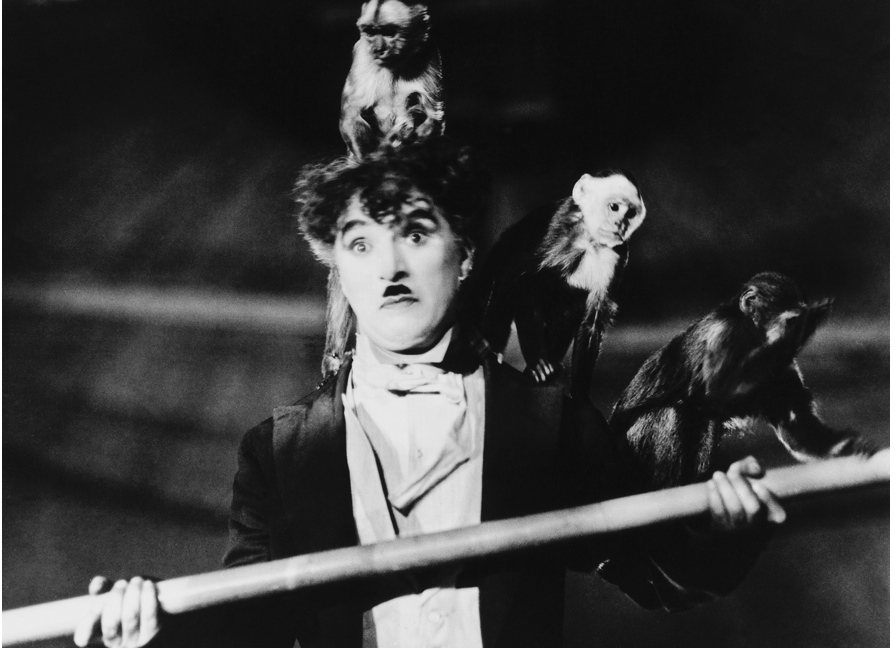
The Circus has one of the most powerful endings ever put to film. The final silent adventure of one of the greatest movie characters, emphasized by a monumental ending score that reverberates with notes of career triumph and bittersweet acceptance. And so, the Tramp willingly steps aside and looks on as the circus caravan leaves him in its dust. In its wake, the circumference of the big top tent remains indexed at his feet. He stands, turning his back to us, walking out of the circle traced in dirt. Heading toward the highway, the iris of the camera tightens around Chaplin’s Tramp, the viewer’s gaze begging the Tramp to stay, ironically closing the world around him until there’s no room for him either. We’re not ready for him to disappear, but he takes his leave anyway. He doesn’t look back. The circus, the cinema goes on without the Tramp, without Chaplin. But this is hardly the last time we’ll be hearing from the greatest clown who ever lived. In fact, the next time will be the first.
4/16: Tommaso (2019, Abel Ferrara); Classe tous risques(1960, Claude Sautet)
I’m so glad there’s someone like Abel Ferrara out there who’s making movies like Tommaso. It’s weird, it’s autobiographical, it’s meandering, he and Willem Dafoe are an unstoppable force that I’ve become enamored by ever since watching New Rose Hotel in Film Noir and the Western. I don’t have particularly strong or rehearsed feelings about Tommaso, but I like that it exists. I like that I don’t know exactly how to feel about it.
I did not expect Classe tous risques to be as big of a drag as it was. I went in for Jean-Paul Belmondo and came away with him as the sole highlight. Toward the beginning of the film, Lino Ventura’s character watches his wife get gunned down by the police in front of him and not once do you believe that was something he, in fact, witnessed. Once Belmondo is introduced, his magnetic charm and lovable boyishness redeem an otherwise middle-of-the-road genre film.
4/17: Nostalghia(1983, Andrei Tarkovsky)
I can only describe watching Nostalghia on a big screen as a religious experience. It’s the type of two-hour film that feels like four and is all the better for it. Tarkovsky envisions nostalgia as an otherworld that entraps all desires, at once a landscape literal and wholly internal. Anytime there will be a Tarkovsky playing in theaters, I will be there.
4/22: Elevator to the Gallows(1958, Louis Malle)
This was a film I was so excited to be able to watch for the first time in a theater—my first time at Metrograph. However, after all the years of waiting to watch it, it was just fine. Nonetheless, the ending scene with Jeanne Moreau in the dark room really saved an otherwise mediocre addition to the canon of film noir. The score by Miles Davis—created by him essentially just riffing over the final cut of the film—is powerful in its tendency toward letting silence be silent. Like Classe tous risques, I can appreciate its impact on cinema and on the specific films it would help usher in that I enjoy watching and discussing much more. Feelings aside, there needs to exist a supercut of scenes in which Jeanne Moreau is wandering and pouting her way through modern European cities. She’s the best to ever do it. I love her. It’s about time I rewatch La Notte.
4/23: Cloverfield(2008, Matt Reeves)
Cloverfield rules. The concept of having the entire movie exist as on a single videotape is my kind of thing. Having the monster attack be recorded on top of previously shot footage of a romantic Coney Island day between two friends-to-lovers is an incredibly inventive way to establish character and introduce “flashbacks” as these accidental, unannounced formal intrusions, plus it’s just a beautiful, succinct way to bookend this movie.
4/27: The Visit(2015, M. Night Shyamalan)
I liked The Visit, but it suffers from the same problems I have with his other movies that I’ve watched over the past couple months. He cannot help himself but to overexplain his symbolism and metaphors. For example, in the climax between the two siblings and the escaped-asylum-inmates-turned-grandparent-imposters, brother and sister and husband and wife are separated. The germaphobe, OCD boy gets a shitty diaper slapped in his face, which is hilarious and shocking and disgusting, but I immediately knew that it would obviously cut back to his sister being terrorized upstairs and have her face her fear of the mirror. It feels clumsy and heavyhanded, but I don’t necessarily not like it, but it did take me out (not that that’s always a bad thing). And I don’t know what it is but the way Shyamalan directs children is extraordinary and light-years beyond any of his contemporaries. They’re funny without being annoying and feel so natural.
4/28: Monkey Man (2024, Dev Patel)
I went into Monkey Man hearing it wasn’t that great and was a bit of an unfocused, bloated mess, but came out blown away by the world it was able to create. The action was awesome, there were several shots that made me think “wow, I’ve never seen this before,” and Dev Patel’s performance is a strong anchor in his directorial debut. I appreciated the transgender representation brought in through Alpha and the hijra warriors—who are very much a part of Indian culture whether ultranationalists want to acknowledge it or not—which never felt belittling or pandering. They’re there and that’s that. They were interesting, they kicked ass, and that whole section in their temple demonstrates that those left behind or cast aside or forgotten by society at large are those who are best equipped to demonstrate a mode of living outside of or subversive to the accepted order, a new way of life organized around collective care for the (in)visible.
Books and TV Shows
Don Quixote (1605, Miguel de Cervantes, trans. J. M. Cohen)—Currently Reading
The Temptation of Saint Anthony (1874, Gustave Flaubert, trans. Lafcadio Hearn)—Paused
4/10: Klara(2010, Klara Lidén)
This was just some book I saw on one of the bargain shelves outside of the Strand that looked interesting because of its all black front cover (except for the title in white typewritten font in the bottom right corner) and the repetition of weird photographs when I flipped through it. It’s an interesting look into a contemporary Swedish artist that I had never heard of. A good chunk of the book feels a bit like nonsense, but it’s an interesting conceptual framework for a book, at least I haven’t encountered anything like it previously.
3/3: Planet Waves (1974, Bob Dylan); M3GAN (2022, Gerard Johnstone)
I want there to be a Meg and M3GAN crossover, so they can call it The M3G. Other than that, this movie’s critique of AI is weak as hell. Around the time I watched this movie, I read “Will AI Remember the Days of Slavery?” in the latest issue of e-flux Journal, which raises the much more interesting question of what happens to machines of labor . Popular science fiction almost never highlights this class of artifical intelligence, instead opting to project its technological anxieties onto those that have more domestic uses. The productive robots, the ones that make the robots that will wipe your ass in some la-la land Star Trek future, have already been displacing human labor for decades offscreen. M3GAN ends with what is supposed to be a sinister and cautionary handheld long take of its diegetic version of Alexa, but ends up being ridiculous and obvious. We are not told anything new about the further encroachment of AI into human life. To go off of Mudede’s convincingly argued point in his article, supply-side machines turning against mankind in some sort of sci-fi, Y2K singularity event would be leaps and bounds more terrifying and have much more dire consequences far beyond the more commonplace what-if-Roomba-was-evil.
3/4: Heat (1995, Michael Mann)*; The Dark Knight (2008, Christopher Nolan)*; The Batman (2022, Matt Reeves)*
I really spent nine hours watching movies and every single one was a rewatch. Heat is one of the best movies ever. The Dark Knight is too long and is boring and when you’ve outgrown liking Batman, it’s just a movie that’s way too long with insane politics. Not saying anything new there. The Batman just fucking sucks. This is the first time I’ve seen it since its theatrical release: I was lukewarm toward it then, but it’s downright horrible to me now. Firstly, the characters are almost unanimously miscast across the board, aside from maybe Penguin and Catwoman. Robert Pattinson is okay, Andy Serkis is a horrible Alfred, Paul Dano is poorly directed, Jon Turturro is flat and not credible, Jeffery Wright only ever says, “What are you saying?” or “What does that mean?” over and over, and the needle has swung toward “hard pass” on the question of Barry Keoghan Joker. Stylistically, the overuse of shallow/rack focus in this movie and any other still irritates me, but whatever I get it, no one knows what’s going on in the movie, so I guess I’m not allowed to see what the fuck is going on either. Just a really obnoxious bokeh effect going on. Seems like a waste of the Gothic architecture (shooting on location in London was kinda genius). The Batman feels like it crafted a world where you can believe superheroes and supervillains exist, but the characters do not fill the shoes. The ending is still laughably corny and I still firmly believe that Bruce giving up the mantle of Batman to be with Catwoman would have saved the movie for me. That seems like the best thing that could’ve happened after he finds out that he and the Riddler are the same, motivated by vengeance. I don’t care, it’s a stupid movie, it’s not for me, I don’t like cape shit anymore.
3/5: Dune (2021, Denis Villeneuve)*; The Beekeeper (2024, David Ayer)
I want to like Kurt Wimmer, but Equilibrium and The Beekeeper are just bad scripts. Before its release, this movie struck me as a weird QAnon, one-man-army fantasy, but it had Jason Statham, so I had to see it. Nothing much of mention here aside from Josh Hutcherson giving a fun and memorable performance as a slimy loser failson.
3/8: Kung Fu Panda 4(2024, Mike Mitchell)
It seems extremely fitting, bordering on almost self-aware, that the villain of the unnecessary sequel to the Kung Fu Panda trilogy, which resurrects all the series’ past villains, is a chameleon. My problems with this one are the same as with the second: underdeveloped villain played by a legendary actor. But, Ian McShane as Tai Lung still hits so hard.
3/10: This Is Me… Now (2024, Dave Meyers); Hail to the Thief (2003, Radiohead); Crank (2006, Mark Neveldine and Brian Taylor)
Radiohead is still on fool’s notice ever since I listened to Hail to the Thief. Did not enjoy a single song and then was surprised when I heard one I sounded promising to me, but turns out that was the last song right before the album ended. Made me really reflect on how I feel about the band. Kind of annoy me, but Amnesiac is still great. At some point in the near future, I’ll keep the chronological discography deep dive going.
How have I never seen Crank until this point? It has everything I like: Jason Statham, shitty digital video(tape) cinematography, a playful post-end-of-cinema nihilism, and liberal use of slurs. A man who cannot stop or he’ll die surmises the affect of living in the aftermath of the Digital/Neoliberal Revolution. One of the greatest movies in my mind. Will be writing more on it in the future: the ending fall from the helicopter as Hito Steyerl’s vertical perspective.
3/12: Crank: High Voltage (2009, Mark Neveldine and Brian Taylor); Hancock (2008, Peter Berg); Inside Man (2006, Spike Lee)
Inside Man was a fun watch—Clive Owen captivates your attention in every scene and the heist unfolds masterfully—but something about it feels off. The film wraps up almost too neatly. It’s too clever. Can’t put my finger on it. I watched this based on recommendation from Todd McGowan’s discussion with Anna Kornbluh on her new Immediacy book that I need to read still, in which they believe this film to be the point after which Spike Lee’s artistic output began to take a nosedive.
3/18: Ring (1998, Hideo Nakata)
I do not care how beloved or influential it is, this movie is bad. I like it, but it’s just not good. We only find out at the very final scene that if you just double it and give it to the next person, you can save yourself from the videotape’s curse. It’s randomly revealed that the husband is apparently psychic just like the girl from the tape. With an admittedly small sample size to pull from, J-horror films are a mess oftentimes, and sometimes it works and sometimes it doesn’t. They present images and scenarios quite unlike anything you’ve ever seen before but in such a clunky way. An approach to horror that confounds and depresses rather than frightens. There’s something to be said about the videotape freezing its victims within the frame of the film (a thoroughly filmic convention), this movie being shot on film yet meditating heavily on video, and how that relates to film and its relationship to video. I’ll think about it and maybe come back to write down my thoughts. People who engage with video are punished filmically? Yeah, no, I don’t know.
3/20: The Zone of Interest (2023, Jonathan Glazer)
An incredibly powerful ending that wonderfully concludes this one-hundred-minute long conceptual experiment. Höss pauses at the threshold of darkness; workers preserving the artifacts from the greatest human atrocity; he starts down the stairs again, his descent into Hell. I loved the abstract color fields and overtures dispersed throughout. Zone of Interest is just a precisely, masterfully constructed work of art all around. It employs its digital dullness to underscore the already uneasy, nauseating effect that Glazer and sound designer Johnnie Burn worked to create. Really, really great. I’m Jonathan’s glazer.
3/21: Cure (1997, Kiyoshi Kurosawa); Civil War (2024, Alex Garland)
A film I had been dying to see for years—ever since watching Pulse, one of my favorites—but could not find a copy online, was playing at Film Forum. I was so excited to be able to watch it in a theater setting, but I was fighting a losing battle with sleep. And now, I don’t go out to watch movies at night anymore. Can’t really say much about it because I was drifting in and out during the middle section. Goddammit.
Civil War is a laughably terrible movie that makes me question whether Ex Machina is actually that great of a movie. The actors are asleep as they deliver some of the most heinous dialogue in recent memory. And so, unsurprisingly, this movie is incredibly boring and has nothing to say about the ethics of war photography or what it means to make movies in the political climate of 2020s America. Then, Civil War shifts from a plodding, boring piece of shit into a sludgy, washed out video game as the Western Forces somehow overpower the National Guard and storm the White House and successfully kill President Nick Offerman, but not before Kirsten Dunst’s character dies in one of the lamest and funniest ways imaginable. I was able to see this trash before it was officially released in the US because of an early screening held by the owner of the theater I work at, which turned out to be the best way to watch it, crying from laughter alongside my coworkers as Stephen McKinley Henderson dramatically bleeds out in the backseat of a car amidst a swarm of embers or when Wagner Moura silently screams for the camera once his colleague kicks the bucket after arriving at the military encampment. How did people like this? Jesse Plemons is the only shred of anything redeemable or worth salvaging, as his one scene is legitimately unnerving and suspenseful. At least, we can rest easy knowing that Alex Garland won’t be putting his grubby British fingers on a camera anytime soon, or so he says.
3/22: Mike Recine: I’m Normal (2024, Jason Katz)
3/25: Everything Sucks (1996, Descendents); Pure Mania (1977, The Vibrators); Taxi Driver (1976, Martin Scorsese)*
Descendents make punk rock for nice guys, and I love it. In terms of early British punk, the Vibrators do not have the same penchant for memorable hits as the Sex Pistols or the Buzzcocks. “Into the Future…” stays on the rotation though, such a catchy song. Other than that, most of the rest of the album was just alright.
I have never heard anything quite like FKA twigs. It’s erotic, it’s arrhythmic, it’s melancholic, it’s ambient, it’s dance. The music video for “Papi Pacify” is stunning. (Steven Shaviro of all people finally got me to give her music a listen.) “Two Weeks” is my favorite track from these three projects, I think.
3/28:Welcome to New York (2014, Abel Ferrara)
3/29: M3LL155X(2015, FKA twigs)
3/30: Snatch(2000, Guy Ritchie)
Creating a two shot by framing the second character in closeup on a CCTV monitor placed behind the first character is absolutely genius. The hyperbolized, stylistic, and kinetic editing juxtaposes the relatively slow pacing of the story—moving fast but going nowhere, perhaps? A lot happens but the film doesn’t feel like it goes anywhere, like running in place. It didn’t seem like the film really commented on the “end of cinema” trend going on at the turn of the century. Ritchie jumps between film and video aesthetics without any judgment. Ritchie has the frame doing somersaults and barrel rolls, allowing the viewer to see the frame as nothing but surface, even if it is filmic with a material basis. It can’t stay that way. The film entitles itself with such a gesture. Video is just one more toy to play with in the sandbox of the moving image; however, Ritchie is clearly aware of the implications of the former toward surveillance and how this top-down digitization of the gaze does not affect everyone equally. For example, the heist in the beginning sees the crew pretend to be Hassids, where they shed off these identities as quickly as they adopted them. Ironically, they steal the diamond MacGuffin from real Jews. They are successful in the robbery because to them everything is just an appearance to be shed off. Any criticisms of this film as “style over substance” completely misunderstand or fail to take into account the larger era of cinema and its fraught relationship with video, and what video signaled socially, culturally, cinematically. Ritchie depicts it masterfully. And so, to prove this, Ritchie sees the two Black criminals pulled over and caught with a dead body in their trunk. Surveillance doesn’t so much have blind spots as it has its specific targets. Video brings everything to the surface. That is, until it doesn’t. After managing to get their revenge and getting paid handsomely for it in the final boxing match, the pikeys go into hiding and disappear: to set up camp somewhere else. Ritchie illustrates that there are still avenues by which to subvert the surveillance state. The film, through Turkish, introduces all the players and their motivations and backstories at the outset; the audience is situated like the surveillance apparatus, yet even then, we (like the English characters in the film) do not foresee the scheme laid out by the pikey Irish Travellers until it’s already been pulled off. In the near future, I’m super excited to go back and watch Lock, Stock and Two Smoking Barrels and rewatch Snatch. I think I’m onto something here.
3/31: Animal (Expanded Edition) (2010, Kesha)
It felt so gay to walk down the street at night listening to “Boots and Boys,” but in the best way possible. This album is so good. Maybe the 2010s weren’t all bad.
Books and TV Shows
Don Quixote (1605, Miguel de Cervantes, trans. J. M. Cohen)—Currently Reading
3/23–25: Death of a Salesman (1949, Arthur Miller)
3/26: The Temptation of Saint Anthony (1874, Gustave Flaubert, trans. Lafcadio Hearn)—Started
I’m back on my monk shit.
3/26: The Sayings of the Desert Fathers: The Alphabetical Collection (1975, trans. Benedicta Ward)—”Foreword,” “Translator’s Preface,” “Prologue,” “Anthony the Great”
I repeat: the St. Anthony phase is not over. I don’t know exactly what yet, but I’m researching for something.
This is the first film I saw for free since I started working at a movie theater. Honestly, I feel next to nothing about this movie. I liked the black-and-white, fish-eye tracking shots in the first third more than anything that came after. I don’t know what I was supposed to get out of this movie and felt its critique of class stratification was weak. My main motivation for watching the movie besides being a fan of Lanthimos’s previous films (having seen everything from Dogtooth to present) was so I could read the piece about it published in e-flux Notes. I liked that essay more than the film itself. The movie beats you over the head with its lame critique of capitalism, I don’t know what I’m supposed to get out it. It does make me question how much I used to like Lanthimos; I still feel like Sacred Deer probably still holds up well though.
2/6: The Meg (2018, Jon Turteltaub)
I enjoyed this movie so much I went back to the library the next day to also borrow the sequel. I have been converted hence to the action-star sublimity of Jason Statham, combining the domineering presence of Arnold or Stallone in their prime with the grim and gruff emotional economy of Clint Eastwood. The will-they-won’t-they between Jonas and Suyin is not only convincing against all odds but is just so fun to watch, with Statham being the father who stepped up adding another nice touch. And somehow, Meg 2 tops the first in almost every department, adding Chinese action hero Wu Jing (who I’m familiar with from Wolf Warrior 2 and The Wandering Earth); however, the lack of Suyin was a bit disappointing, as she dies between Meg 1 and 2 to explain Li Bingbing leaving production for undisclosed reasons. Yet, the jetski battle between Statham and a giant shark, concluding with him impaling it with a helicopter blade probably makes up for it. Now, these movies do have that same ugly digital sheen of gray that coats most recent CGI-heavy releases, but for both of these movies it somehow works for me. I was studying the characters’ faces during closeups and seeing the ways in which the digital camera was adding this swirly, painterly quality to their skin. Then, I started to spot it in every scene, but maybe it was just my TV. When The Meg came out, I was in high school and would continually joke about how amazing the stupid shark movie was despite never having seen it, but now, having finally seen it, I was right all along: these movies rock.
2/8: All Things Must Pass (1970, George Harrison); Amnesiac (2001, Radiohead); Meg 2: The Trench (2023, Ben Wheatley)
All Things Must Pass did not wow me like I expected it to when I first listened. I definitely heard the Dylan influence, but felt like I would rather just listen to New Morning. However, revisiting sections of the album since then, I enjoy it a lot more and the songs I wasn’t feeling have grown on me. “Isn’t It a Pity” is one of the most beautiful songs I’ve ever heard, it reminds me of my grandma.
I’ve enjoyed the previous three Radiohead albums, I think they’re good, but none of them have gripped me in the way that Amnesiac has. I wouldn’t really call myself a Radiohead fan, I like their music and listen to it sometimes, although many people my age have found themselves fanatically drawn to the band in a way that kind of eludes me. (When did this happen? I was out of the loop on music until a year and a few months ago.) I do think Mark Fisher has a point when he says in one blog post, “there was something too easy, too tasteful, about Radiohead’s move from stadium angst into a sound that often felt like Experimental™.” There is a pretension about their music and the following that they have amassed that itches at the back of my mind, unconsciously bothering me. No matter! An album that begins, “After years of waiting / Nothing came”—I mean, there was no way I wasn’t gonna be into it after that. The lament for the death of the future ironically coupled with the dawn of the new millenium is delivered as vividly as any of the best films from this era on the same subject. An album speaking to lost futures and fighting the impulse to retreat into the past concludes with “Life in a Glasshouse,” a track that ends with a bittersweet jazz trumpet, wherein Yorke sings, “We are hungry for lynching.” This line sung over elements of jazz stuck out to me for its obvious racial connotations. Radiohead links the end of history of White postmodernity to the Black artistic tradition of jazz, implying this genre informed and shaped and adhered to the project of modernity, and thus, its “spiritual successor” as well. What Yorke and company do expertly well is identify that White postmodernity has only just now begun to catch up to the centuries-old reality of Black diaspora, that is, Black people are the first post/modern people. (Aside: The full-length version of this song that includes the trumpet solo is even better and I wonder why that section was removed for the album.) As Mark Fisher asks in his “Metaphysics of Crackle” essay, “Who were the first victims of future shock if not the African slaves?” (50). He goes on: “time being out of joint is the defining feature of the Black Atlantic experience.” As I listened for the first time, Amnesiac struck me as almost hauntological (I’m not sure if it could actually be labeled as such sonically, but it seems to me to certainly touch upon the same anxieties and sentiments lyrically. “I might be wrong, I might be wrong / I could have sworn I saw a light coming on / I used to think, I used to think / There was no future left at all / I used to think.” “Think about the good times and never look back.” “I want you to know / He’s not coming back.”
2/9: Hackers (1995, Iain Softley)
Young Angelina Jolie with a boy haircut. That’s the number one reason to watch this movie. Overall, it’s a lot of fun, everyone in it is super hot, and I really enjoyed the visualization of cyberspace as an actual space, where skyscraper-like structures and streets divide and organize the data of these global corporations. Interestingly enough, Softley opted to forgo CGI for these sequences, believing digital processes would not lend themselves as well to a three-dimensional imaging of cyberspace. In this sense, the simulation is just as real or concrete as the life that goes on offscreen (in the film and our own lives). “There is no right and wrong. There’s only fun and boring.” I think that perfectly sums up the Computer Age, and the only attitude that can survive within it, inundated with hyperreal simulations to forget the desert of the real. Everything that came before simply does not matter: it isn’t matter.
2/12: Dazed and Confused (1993, Richard Linklater)
2/13: The Golem: How He Came into the World (1920, Paul Wegener and Carl Boese)
In one scene, Rabbi Löw walks upscreen to the stationary tableau camera to demonstrate his placing the life-giving word into the amulet, rather than the obvious cutting to closeup that most films would have opted for—a stylistic choice I really appreciated, especially in combination with the washed-out lighting, overexposed frame, and aggressive green tint, turning his eyes cat-like and softening his features. That right there is Expressionism at its finest, if you ask me. Also, we need more directors acting as the lead in their own films, doesn’t seem to be as common anymore. Just off the top of my head, Chaplin, Eastwood, Wegener have all delivered captivating performances in remarkable films; we’ll see what Dev Patel does with Monkey Man.
I have nothing really to say about Unforgiven besides that it’s an amazing film and Clint Eastwood looks so much like my grandpa in it. His performance is so wooden and reserved and could certainly be called “bad” acting by his detractors, but man, he’s so good in this movie. Still not sure how I feel about him as a director—the jury is still out.
Everyone seems up in arms over Saltburn, at least they were for like the two weeks after it hit streaming. I don’t care enough about it. I had a good time watching it when I wasn’t thinking about it, I kinda gave up on trying to make the movie make sense. I was trying to fit it into the capitalism-bad movies that have grown in popularity in the past five years. Then, you learn that doesn’t work because Emerald Fennell is an old money rich lady, which also might explain the unsatisfying ending to Promising Young Woman where the police save the day. Needless to say, the best part of this movie is the ending long take with Barry Keoghan dancing naked through the estate he has just inherited. More of that.
2/20: Lush (2012, Mitski); Schindler’s List (1993, Steven Spielberg); The Texas Chain Saw Massacre (1974, Tobe Hooper); Old (2021, M. Night Shyamalan)
I only just now learned that there is a dedicated fanbase and critical reappraisal around Shyamalan after shitting on him was the cool thing to do for the past decade-and-a-half. After watching Old, and then Knock at the Cabin, I feel like his penchant desire to overexplain his twists removes a good deal of abstraction and ambiguity that was built, in the first two acts of Old in particular. These two COVID movies essentially posit that we should just embrace family values in order to overcome social isolation and come together, which is really fucking stupid. To say that, now, is insane to me. I find it interesting that Old has as its villain a pharmaceutical company who uses the geographic anomaly of this beach that accelerates the aging process to test new miracle drugs. Don’t really know what to make of that. Is his problem that he thinks his scripts are so smart that he has to make sure we don’t miss anything or does he not have enough faith in them to let the contradictions continue to marinate in our minds after the credits? I feel like when a movie has a good twist, you wanna talk it out and interpret and reinterpret it over and over, creating readings that cancel each other out or could exist simultaneously, but I don’t feel that way about his films. I think, “oh, that was fun,” and that’s about it. He doesn’t let you feel frustrated, at least, not in the way that I like. But, come on, it is awesome in Old to finally see the camera that’s been recording these characters from afar and Shyamalan is the one behind it.
2/21: First Blood (1982, Ted Kotcheff); Retired from Sad, New Career in Business (2013, Mitski); Bury Me at Makeout Creek (2014, Mitski); Puberty 2 (2016, Mitski); Be the Cowboy (2018, Mitski); Knock at the Cabin (2023, M. Night Shyamalan); Trainspotting (1997, Danny Boyle)*
First Blood is a very bad movie. I do not understand what was going through the minds of people who produced it and watched it. Probably nothing.
The Mitski marathon continues. I feel like I understand the Gen Z female mind so much more after having listened to Mitski, or at least, I have been elucidated on, granted access into the minds of my female peers. As I was not there or even really aware of it at that time, I do not know, but I do wonder if Mitski is in large part responsible for this online female culture or if she was merely one of its biggest exports. Either way, the entire aesthetic package of Bury Me at Makeout Creek was the final piece of the puzzle that explains so many of my interactions with female friends and past romantic interests. By this type of culture, I am referring to the romanticization of your own suffering and/or mental illnesses (more often than not, attributed to the hands of a male lover), the seemingly incessant desire to wallow in your own sadness and status as scorned lover, the Instagram poetry (also probably written to a past lover who will never read it), wanting to stay a girl forever, etc. In a sense, it annoys me, (1) because it is annoying and (2) because I’ve kinda done the same shit, but I respect the vulnerability. There are songs that would make me want to brace myself like I was about to get punched they were that affecting, like I shouldn’t even be listening to this—it’s too personal. My two favorite albums are Lush and Puberty 2, Lush for its songwriting, and Puberty 2, for its more experimental sound. When I first listened to Lush to begin my chronological deep dive in order to prepare for the Mitski concert that I was invited to attend on the 24th, I was floored by it. The next couple albums didn’t hit that hard for me or evoke that same intense reaction, although I generally still enjoyed them. Of course, I like the big songs off those albums, and on the later albums as well, post-Puberty 2, I enjoyed the albums as a cohesive project even less than the 2013 and 2014 albums. The 80s, synth-heavy sounds of Laurel Hell is not great, which started in Be the Cowboy. The latest album is alright, I like it more than the last two, but I could take or leave about half the songs on there. One thing that sorta bugs me is that many of her songs feel like half a song, a good idea that didn’t have enough time to mature into something stronger and more robust, but then again, sometimes it really works, like on “My Love Mine All Mine.” Plus, her album cover game is pretty weak. However, at the concert, I did enjoy that all her older material now had a bit of that same Americana feel that she was exploring on The Land Is Inhospitable, no doubt thanks to the enormous band that accompanied her. That being said, at the concert, I did end up enjoying the songs I was less partial too, but her biggest songs are her biggest songs for a reason. All in all, I need to listen to more female artists.
Because of Trainspotting, I have been developing an ongoing and very specific list of movies that could be considered “perfect” although they are not necessarily my personal favorite movies, a sort of everyone should watch these style of list. Here’s what I got so far: 1. Trainspotting 2. Heat 3. Fight Club 4. The Raid 2 5. Crank 6. The Gold Rush 7. Raiders of the Lost Ark
2/22: Laurel Hell (2022, Mitski); The Land Is Inhospitable and So Are We (2023, Mitski)
Books and TV Shows
~2/15: It’s Always Sunny in Philadelphia(2005–present, Rob McElhenney)—Finished This show got so ugly and so much less consistently funny into the later seasons. Shooting it in HD and 16:9 makes the actors, who are already aging, look like shit. It became hard to watch because the resolution was so crisp and everything seemed so bright and blinding. How is making everything sterile and clean good for comedy? I’ve never had an affinity for television in the same way I do for cinema, in fact, I much prefer the latter, and I think I’ve finally figured out why. Watching TV turns entertainment into a chore, especially because of streaming. Sixteen seasons all in one place makes it hard to say no. You get sucked into an unproductive vacuum, which feels even worse when the show has ceased to be entertaining (The Sopranos had a similar effect where I was getting irritated by it and called it quits after the third season). With a series you have to power through or just throw in the towel; however, with a movie, if you don’t like it, you can see exactly when it’s gonna end if you’d like, you can know exactly how much time you’re gonna spend before you even hit play. I like the confinement. More than anything, I just feel relieved that I got through It’s Always Sunny, so I can go back to not watching TV. Although, “The Nightman Cometh,” “Mac Finds His Pride,” seasons one and six, and Charlie Day still stand as highlights regardless.
Don Quixote (1605, Miguel de Cervantes, trans. J. M. Cohen)—Currently Reading I’m about halfway through—just started Part Two, although I’ve had to stop bringing the book on the commute to work because the cover is almost ripped off—and I have so many ideas about the character that I will work out more thoroughly as I finish the second half.
I have been terribly lazy and bad about keeping up with any sort of writing, this past month in particular. I’m taking this idea from Steven Soderbergh’s blog, as in my own personal diaries where I have been documenting the movies and music I have been watching and listening to since the start of last year. I have plenty of thoughts on several of the things I watch and listen to, but oftentimes, these go nowhere and just kinda sit around in my mind. Perhaps, this space will give me some space to expand upon them or just to record some basic reflections on what I’ve seen (even if only to help me better remember what I’ve seen/read/listened to) or to just let bad ideas be bad ideas without any sort of expectation.
Albums and Movies
1/2: Boarding Gate (2007, Olivier Assayas) Assayas is a weird director for me. In theory, I should love his films and how he handles and thematizes post-classical aesthetics. Yet, I just cannot help but feel that there’s just something missing (for me) whenever I finished Irma Vep, Demonlover, and now, Boarding Gate. I love thinking through his films and find that a more enjoyable experience than watching the films themselves. Perhaps, this lack is carefully crafted, not that it matters, but it is always there. Never quite revealing itself, keeping right below the surface of feeling or sensation. Engaging with criticism about the film, namely Steven Shaviro’s Post-Cinematic Affect (my main motivation for watching this film), helps me intellectualize my own response and make sense of my own inability to grapple with Assayas-as-auteur. His films are unsatisfying because their very form embodies the untethered, mobile, and unstable nature of life in the late 20th/early 21st century, maybe?
1/4: Frailty (2023, Jane Remover)
1/5: The Human Centipede (First Sequence) (2009, Tom Six) This movie is so nauseating to look at, its sterile cinematography and poor color grading probably contributing more to my headache while watching it than any of the body horror depicted onscreen. That being said, I think the film’s ugliness as a result of its low budget works in its favor, producing a nauseating and uneasy e/affect. I cannot stand it when people write off any sort of production or project on the basis of its economic limitations. This-movie-looks-terrible-therefore-it-is-terrible sort of logic is uncritical and lazy and excludes you from engaging with the work as a cultural text. Please, just take one second to think how this one aspect that does not please your senses might still serve the greater whole. This problem persists from the more casual “movie nerd” with their pop culture palette and desire for escapism to the most hardcore analog film bro who still clings to the idea of cinematic truth via film as this contained medium with transcendental potential. As Sergio Leone once said, “When I was young, I believed in three things: Marxism, the redemptive power of cinema, and dynamite. Now I just believe in dynamite.” Anyway, I haven’t yet decided to visit the subsequent entries in this series, and I’m not in any hurry to do so, although I’m sure I will eventually at some point. But above all else, Human Centipede’s greatest accomplishment is the creation of two of the most annoying female characters of all time.
1/6: El Mariachi (1992, Robert Rodriquez) This movie is great, plain and simple. Charming in its performances, cinematography, editing, music, action setpieces, ADR, love story, etc. The more you learn about its production, the more you enjoy it. I’d love to rewatch it with director’s commentary. I don’t think there’s any person alive who could watch this film and not want to go out and make a movie of their own. This is Rodriquez’s greatest gift.
1/7: Desperado (1995, Robert Rodriquez) So disappointing. What the fuck happened? I was so excited to watch the followup to El Mariachi, but the casting change from Carlos Gallardo to Antonio Banderas is such a miss. The gentle masculinity and boyish charisma of the neo-Western hero has been “upgraded” to a hypersexually aggressive parody of himself. The character feels completely different. I thoroughly enjoyed the Steve Buscemi cold open, who is great but criminally underused in this film. The sex scene between Banderas and Hayek is laughably horrible: electric guitar solo, liberal use of dissolves, dozens of candles, uncomfortable closeups, gratuitous female nudity. To be fair, this whole movie is gratuitous and ridiculous in comparison to the relative restraint of the first, of which I am stylistically much more fond of and impressed by. But now that I have experienced and can expect the tonal whiplash, I have to go ahead and watch Once upon a Time in Mexico, don’t I?
1/8: New Morning (1970, Bob Dylan)*; Pat Garrett & Billy the Kid (1973, Bob Dylan); Dylan (1973, Bob Dylan); I Love You (2023, Teen Jesus and the Jean Teasers); The Bends (1995, Radiohead)*; Jackass Number Two (2006, Jeff Tremaine)*; Jackass 3D (2010, Jeff Tremaine) Jackass Number Two easily deserves its newly earned spot as one of my favorite movies. It had been years since I had (re)watched it, but there’s something timeless and universal about the comedy of Jackass, and this entry into the series is easily the best, pound-for-pound, in terms of laughs. A man getting hit in the dick will never not be funny. These guys deserve to be enshrined among the all-time comedy greats right up there next to Charlie Chaplin and the lot. The most elaborate of Number Two’s pranks, like the finale staged kidnapping of a fake terrorist with a beard made out of pubes and ass hair, elicits just as big a laugh from me as a short insert of Bam Margera skateboarding down a ramp into a sheet of plexiglass directly in front of the camera. This movie improved upon the lightning-in-a-bottle of the first that I feel the next two sequels could not hope to top.
1/9: Jackass Forever (2022, Jeff Tremaine)
1/10: mid90s (2018, Jonah Hill); Kids (1995, Larry Clark) The standout scene of mid90s for me was the scenes between Stevie and Estee during the house party. I was immediately pulled in when I heard Nirvana’s “Where Did You Sleep Last Night?” play softly underneath their conversation in the kitchen, as this older teenage girl flirts with and seduces this 13-year old kid. She knows he’s bullshitting and turns it against him. “I don’t kiss and tell. I’m a gentleman.” “That’s good to know.” She knows she won’t be considered a predator, not even to the child victim who most certainly will spin the tail to impress his cool older friends. The whole scene is heartbreaking and hard to watch. The wailing of the cello off this cut from the Unplugged album as she leads him to the bedroom lends the scene its mundanely sinister and melancholic, haunting air. Cobain belts the first verse for the final time from the other side of the closed door after Estee asks Stevie to undress her, as if desperately trying to warn this misguided little boy that he doesn’t have to go through with anything. “It’s okay, don’t be nervous,” she assures him. “My girl, my girl, don’t lie to me,” Cobain protests over Stevie’s silence. The song fades, Stevie admits he’s not sure about this, but she goes in to kiss him again anyway. Shutting him up under the guise of passion, charity. “He’s gonna worship you for the rest of his fucking life.” It’s a masterfully executed, terrifying scene that I was completely emotionally unprepared for, making my stomach sink into the floor with how acutely it captures the dread of being in what feels like a helpless encounter, one in which you think maybe your only way out is through. The 90s adolescence double feature concluded with Kids, which I had been meaning to watch for a long time due to its controversial status in the film world. I thought it was great. I appreciated how detached it was; it did not moralize the abhorrent abuses committed by its two lead characters and their friends. Protagonists Telly and Jasper are disgusting and reprehensible teenagers and I felt no sympathy toward them, but all you can do is look in on their lives over the course of one New York City day, in which they smoke, steal, and rape. Of course, the idea of the fly-on-the-wall, D. A. Pennebaker style of documentary that this film is indebted to is ultimately a fiction. We know there is no such thing as a wholly detached observer or a mere window into another world when it comes to cinema. We know that montage shapes how the audience interprets events and characters onscreen. I learned that bell hooks takes issue with this film and dismisses it as reactionary garbage. She states that a Black man getting beaten close to death in the film is emblematic of its problematic racial politics; however, I think I might disagree. Where hooks thinks the film is unaware of its race problem, I found that to be exactly its point when I watched it. These kids are diabolical, racist, misogynistic, and get away with every crime they commit. The filmmakers don’t punish them because the world doesn’t. It is neither endorsement nor condemnation. It’s the horrifying reality. The kids are not alright. I would like to rewatch it with her arguments in mind and see if I lean more toward her view, paying particular attention to montage, but I definitely want to check out Larry Clark’s other work.
1/16: Wonka (2023, Paul King); Willy Wonka & the Chocolate Factory (1971, Mel Stuart)*; Charlie and the Chocolate Factory (2005, Tim Burton)* I watched all three of these movies after feeling compelled to watch Wonka to see if a hunch I had about it, based on its end credits, was correct. I’ve already compiled most of my thoughts on that movie in my last post. So, I went back and watched the other two Willy Wonka movies afterward, more as a why-not than anything else. I like the Gene Wilder movie, mostly for his performance and the music. For some reason whenever my brother and I would spend time with my grandpa in his room, we would surf channels in search of Willy Wonka & the Chocolate Factory. I don’t know why my grandpa insisted on looking for this movie in particular. Maybe we had stumbled upon it the first time by accident and enjoyed it so much that we wanted to see if we could find it playing again by sheer dumb luck every other time. I remember one time we found Charlie and the Chocolate Factory instead. Rewatching that film, I couldn’t stand it; however, I find myself respecting the film all the more for it. But, my god, was this film grating to sit through. I saw Depp’s Wonka as Burton’s avatar. “Candy has no point. That’s why it’s candy,” sums up the point of this movie for me. In the years right before the industrial shift from film to digital, Wonka/Burton says there’s no point, so he can feel free to insert his retarded ideas into a beloved cult property and combine it with established film history and pop culture imagery as he pleases within his approach to the blockbuster form. Mike Teavee is shrunken down and inserted into a television playing the prehistoric opening of 2001: A Space Odyssey. There’s probably something to unpack there about Burton’s blockbuster and what he’s saying about this dominant form and the effects of mass media on his characters/audience with his choice to include 2001, a sort of proto-blockbuster, a necessary precursor for its existence. Burton is his Wonka. If the ’71 Wonka is God, Burton’s is the Devil.
1/19: Penalty of Leadership (2024, Nicholas Craven and Boldy James)
Books and Series
??/??–~1/6: The Orphanage (2021, Serhiy Zhadan)—Finished
~12/22–~1/6: Post-Cinematic Affect (2010, Steven Shaviro) Brilliant. Shaviro blends vulgar autuerism and academic rigor in one of the finest pieces of moving image criticism that I have ever read without ever falling into either’s trap of coming across as annoying or pretentious. I cannot praise the imagination of these essays enough.
1/11–~30: Silas Marner (1861, George Eliot)
1/21–22: Fleabag (2016–2019, Phoebe Waller-Bridge) The mental image of the police banging on the front door in the middle of night because my dad put out a missing persons report to the NYPD because no one’s texts were getting through to my broken phone while I’m just in my room watching Fleabag with headphones on is so fucking funny.
~1/27: It’s Always Sunny in Philadelphia (2005-present, Rob McElhenney)—Started
~1/30: Don Quixote (1605, Miguel de Cervantes, trans. J. M. Cohen)—Started
Won’t you please let me go? These words lie inside, they hurt me so And I’m not the kind that likes to tell you Just what I want to do I’m not the kind that needs to tell you Just what you want me to
I saw you this morning I thought that you might like to know I received your message in full a few days ago I understood every word that it said And now that I’ve actually heard it You’re going to regret And I’m not the kind that likes to tell you Just what you want me to You’re not the kind that needs to tell me About the birds and the bees
Do you find this happens all the time? Crucial point one day becomes a crime And I’m not the kind that likes to tell you Just what I want to do I’m not the kind that needs to tell you, ooh
Lost you, I’ve lost you, I’ve lost you, I’ve lost you, I’ve lost you Lost you, I’ve lost you, I’ve lost you, I’ve lost you, I’ve lost you Lost you, I’ve lost you, I’ve lost you, I’ve lost you, I’ve lost you
The above lyrics are taken from this wonderful piece of songwriting from one of my favorite musical groups at the moment. The italics are mine, to distinguish between the two distinct timbres of Bernard Sumner’s singing, to be addressed momentarily.
I am living by a new rule where I stop giving a shit about people who don’t give a shit about me to combat the creeping exhaustion I feel (emotionally, physically). I invest too much in other people’s shit: fix your own problems! leave me be! I am in the midst of a great uprooting: my 30-day notice signaling the end of my rental agreement at the end of this month, my two-week notice marks my exit from my job with my last day being tomorrow, I have way too many projects going on right now: an essay/collection of related essays/book I wanna start researching/outlining/writing, two short-form videos both started but not finished, a public art experiment, my short movie, an impromptu feature-length movie of sorts that needs to be stitched together, and I have no phone—it’s at a new friend’s house (I have been spending a considerable amount of time with her because I enjoy her company and conversation, it’s hard for me to find people I actually find funny and charming and worthy of respect) and I don’t have transportation or time to go get it (not that I particularly need it; wait, yes I kinda do, I gotta call my grandma to tell her I plan on taking her up on her offer to live at her house for the remainder of the summer), so day three without a phone begins tomorrow. No matter.
I was reminded of someone who was at the foreground of my mind some months ago (go back and see for yourself) today. I had been sticking to my new rule, but today was such a good day, although I can think of absolutely no particularly discernible reason why, so after I walked home from the bus stop in the rain, I decided to perform a dreaded check-in—a 21st-century digital phenomena wherein a rejected party masochistically, and therefore, often routinely, keeps tabs on the person(s) who have turned them away. It has been about two months probably since I told myself to finally cut that shit out, and in my stubborn resolve, I stuck to it rigidly and absolutely. It was this person too that came to mind when I listened to the first song off my first playthrough of New Order’s Power, Corruption and Lies (May 26th). As I kept returning to the song in the following days and weeks, the two intonations of the vocals struck a chord within me. Now, the more I mull it over, the more I think this is such an obtuse observation, but I see the two timbres—one high and strained, one low and tired—as a man and a woman, the complementing objects of the song. But, they are not having a conversation. Each of their respective verses like a telegraph through time to the other, not even certain if the other will hear it, let alone respond—sent out into the ether to be picked up, only if they happen to stumble on the right digital crater, that is, if the breadcrumbs were followed correctly. It’s a game, simple sign exchange, word=play, and the best part, you don’t even know if they’re even playing at all.
Yet, what I am also just now realizing is the vocalizations at the end of the song are sung in the higher-pitched voice. Across space-time, the response of his lover is lost, made blurred and indistinct by the distance, “further all the time.” Curtis’s choice of further instead of farther denotes the distance as a metaphorical one, bridged by a technological (in)capability that compresses physical space into modulated waves, a relationship of re-/delayed mediation.1 Stretched too thin. Are they cries? shouts? elation? guilt? anger? or symbolic of everything left unsaid? An understanding, yes.
Oh, and so what did I find on this walk through the museum gallery of the digital Other? Words that I take as written only for me. They found me and plucked all the same chords, so they are only for me. And once more, their words inspired me to action, stirred an idea that had been brewing internally, now poured out into the ether. Read my thoughts. Who knows if I’ll get back to you—when? Two months later, my bad idea got its proper conclusion after only two weeks, as it turned out, unbeknownst to me. You see, it was after my message was received in full that I made my rule to get my shit together. I knew it wasn’t a bad idea: it was absolutely necessary.
The beauty of the excruciating situation of the song and the events recalled to me tonight? None of it was meant for me. It means absolutely nothing. The song can be interpreted according to any number of readings, as one voice or two or entirely otherwise, all at once. The message I found carefully framed on the wall could be about me or anyone else. How brilliant! You write poetry, I write nonsense. I feel so much better. It’s not even a question.
You sly dog, you do think about me! Did you check in?! I’m calling it there, that’s what I’m telling myself. Look how much fun this is. It is beautiful.
Hello?
Do you read me?
Huh, guess no one’s home.
Note
The alternative meaning of further as adjective (i.e., moreover, furthermore) not shared by farther manifests that the “touching” is happening “all the time” precisely because of the “distance”—the constant contiguity of techno-mediation. It’s just digital screens instead of analog radios.