Television

  • Desensitized Young Man

    As far as I know, 9/11 may very well be the first thing I ever saw on television. My father has told me on an occasion or two that I was sitting on his knee, an infant having only known consciousness for mere months, in front of the screen as the World Trade Center crashed into the streets below. I’ll never know if it went exactly like that, but it might as well have.

    As children, my brother and I weren’t permitted to watch TV, save on Fridays when we’d veg out after school on Nickelodeon or Cartoon Network. Luckily, when The Clone Wars aired, it was on a Friday night, where it quickly became a weekly tradition for the three of us. That same day President Bush bails out Wall Street for 700 billion dollars.

    When I was born my grandma made for me a time capsule from that year with artifacts: a red-white-and-blue Beanie Baby, a US Mint proof set, an issue of National Geographic. Every time I rediscovered it, the item that fascinated me more than any other was a videotape—along its spine: “September 11, 2001.”

    I graduated from college in December and went back to visit my father and stepmother. The top shelf of the closet in a bedroom that is no longer mine still had the cardstock box that grandma had curated for me. I fished out the tape for when I returned from my final winter break.

    It was while on a second date—where we first stopped to borrow a DVD from the library—that I saw the perfect opportunity to finally watch the tape on the only VCR around. Images I have lived the effects of that I had never actually sat down to take in in themselves. I inserted the tape into the slot at the bottom of the small box. No matter if wound forward or back, the display only remained blue. Somewhere in between two decades, it had been wiped. Things don’t exist in themselves.

    Pandora’s box had already been opened. The images unconsciously burned onto the hivemind of a nascent generation. A digital Ludovico technique early in the stages of psychosexual or prenatal development. And ever since, those same kids have been chasing the cultural contact high of the greatest cinematic event in human history. The Holocaust wasn’t so lucky as to have video cameras, live broadcast, or satellite TV, and is thus ineligible.

    The Holocaust was a hole in history, a blindspot. For Godard, the monumental failure of the moving image. The cinema did nothing to prevent the extermination of millions. However, this failure to represent and thus reckon with the greatest human atrocity was only one of cinema’s many trumpeted deaths. It would also later be killed at the hands of the television set.

    As it unfolded, the Holocaust did not have the inundating novel forms that would come to epitomize the era surrounding the birth of the new millenium, like massively multiplayer online gaming or reality TV. The big bang of the global century was characterized by the overabundance, the over(re)production, the replayability of the traumatic image and from every angle and at every time slot. In case you even thought about it, they made sure you never had the chance to forget.

    And so, while it took several decades for a new tragedy to come along and be added to the pantheon of those worthy enough to never be forgotten, it took exponentially less for the events of September 11 to be scrutinized, ridiculed: its plot full of holes, its shock value diminished. Like any other, it just became one more thing that just was. It was the butt of a constantly running joke, like on a date with a friend of a friend of a friend asked out over Instagram—blissfully unaware that we were really only ever in pursuit of that first hit.

    After a certain age, the taboo of TV wore off in my household. My parents were still playing by the rules of their own generation and that of their parents, failing to recognize that the box in the living room had lost its awe for us. The television hardly took center stage at sleepovers either, unless it was Project X or The Wolf of Wall Street or Zoey 101 reruns on Nick at Nite, but even so, we watched them so many times until they dissolved into quotable background noise.

    On nights spent with the kid across the street we’d look up pictures of naked girls on our 3DSs or his mom’s iPad 1, and be baffled at why it was so difficult to find any that were our age. Around that time he introduced my brother and I to his friend in the neighborhood across from us. That first time was my introduction to Omegle and Chatroulette: two preadolescents awake before anyone else, me and the boy across the street and a laptop, treading a sea of dicks to ask grown women if we could see their boobs, and somehow with moderate success. My first sexual experience.

    Back at my house, we finally bought our first laptops. On the nights spent over there, we ventured into Lemon Party, Meatspin, Blue Waffle, Tub Girl, 1 Man 1 Jar, 1 Man 1 Screwdriver, and gagging at the infamous 2 Girls 1 Cup, intermittently slamming the Lenovo clamshell shut before returning like it was nothing to song parodies and Jerry Springer clips on YouTube or inviting our Club Penguin girlfriends back to our iggys. Just more fodder for lunch table debriefs with my school friends.

    As we matured and honed our skills in the Hyperbolic Time Chamber of chatroom cyberspace, the game evolved. One could asl their way into titty pics from some teenage girl a few years older by moving from anonymous online chatting to Kik instant messaging. It felt like landing a fish, and in these cases we really were catfishing. And it often was required to have first swindled a grown man out of his dick pics to lend credibility to the aims of the primary sock account. All’s fair in love and war. It was a sport, played for the love of the game and the admiration of your fellow athlete.

    At any gathering of enough boys it’s only a matter of time before pornography makes an appearance. Typing random phrases (like “night vision” or “monkey costume”) into Google then adding “porn” before hitting enter, or flipping channels until stumbling upon the finale hot tub scene of a porn film underscored by a song, sounding like a bizarre parody of Kanye’s “Flashing Lights,” called “Bouncing Boobies.” You can imagine our reaction when we came across the same film channel surfing another night.

    In high school, now going steady with my school friends, ISIS beheadings watched in a Discord call on a $2,000 gaming PC were more la prise du jour. I’d had enough of T&A—that stuff was for kids—watching Muslims obliterate town squares or Asians eat bowls of live baby mice was now where it was at. We simply weren’t interested in girls like that anymore.

    In less than a decade and a half I’d seen more disturbing things than my father had in his almost four and a half, and with him none the wiser. I never felt any kinda way about it. I remember the big stink one morning when I casually admitted to having just watched Not Another Teen Movie on my laptop. What’s the big deal? I’ve already seen the world.

    Yet we pretend like all this did not happen. The latchkey generation don’t want to take the blame, but that just won’t do to satisfy the vindictive bloodlust of the digital natives. As if exhuming the crimes of those who came before will wipe our own slate clean. All the devils are here. In this generational cold war, neither can bring themselves to confess. And at this point, what would even be the point? You can’t unsee what has already been seen; you can’t unrape a childhood.

    The moral panic over media violence was always a wash. Neither side can hope to pin down the other. Media figures and industry reps could debate concerned parents and psychologists over onscreen violence all the live long day on TV, while back at home the computer had already usurped each of their social functions, silently replacing both flesh and plasma.

    We never stood a chance; there was never a choice. There is no more undiscovered country through which to transgress. The romantic hero of old remains a trace within his memetic variant, the sensitive young man of today, a man no less violently impressionable or romantically inclined or socially alien than a Hamlet or Young Werther, but now plagued by the banal anhedonia of a boy who’s already seen everything there is to see, and in all that expanse, glimpsed nothing sacred.

    , , ,
  • “Hello, YOU”

    I’ve found I quite enjoy a thing after everyone already else has. There’s no pressure to like or dislike it; I can take it as it is more or less. I’ve also found that my more snob-like tendencies are becoming a bit too pronounced for my taste, so it seemed about time to bring myself down to earth—away from the rep theaters, away from prestige miniseries, away from the film schoolers—which, as it turns out, delivered me to You. After an impulsive thought to watch a show that first streamed to massive popularity seven years ago, I watched the first four episodes of the first season last night. Maybe it was in part to my remembering the woman who lived in the dorm next to me freshman year of college, who told me I reminded her of Penn Badgley’s obsessive/delusional Joe Goldberg but in a good way. (Does that say more about how weird and offputting I was or her taste in men? Looking back, both claims are certainly valid.) The other half of this impetus likely lies where it always does for me: Steven Shaviro. In one blog post from 2003, he attacks the “high-minded backlash” of what he calls Anti-Harry Potter-ism: more broadly, in this case, the obnoxious, pretentious, classist tendency of academic/intellectual types to decry the actually existing consumptive habits of the average person outside the ivory tower. Anyway, I gotta say, the court of public taste was onto something with this Lifetime/Netflix original series. The premise alone and the complications/contradictions that arise because of it are entertaining and rife with interesting ideas to think over.

    I will have to keep watching the show to see how my thoughts toward it develop, but so far, You (as centered around the lead character, Joe) seems to adopt a bit of that snobbish tone discussed above. However, it takes this stance not toward pop culture media writ large (although it does take its fair share of shots), but toward digital communications technologies—namely, social media. Yet, its attitude is not a hard stanced, uncomplicated one. Joe, the manager of an independent bookstore disavows social media in favor of what he calls the “real thing.” For him, real life is epitomized by books. For example, when Beck asks to know the real Joe in episode four, he takes her into the climate-controlled box in the basement of Mooney’s Bookstore, home to the rare and collectible books (and former prison/murder site to Joe’s first victim in Beck’s ex-lover, Benji). Joe’s anti-technology tone is ironic and hypocritical in his navigation of this dialectic he has unrealistically established, certainly played for laughs all the while complicating his already unreliable narration (in the form of voiceover monologue). The object of his obsession is the unbelievably boring Guinevere Beck (but I feel this actor/character shortcoming only highlights and hyerbolizes Joe’s delusional fantasies). In addition to his usual stalking and breaking and entering, he pickpockets her phone after saving her from an oncoming train. Thanks to the convenience of the cloud and Beck’s poor password protection, Joe receives all her messages in real time, in addition to access to all her log-ins. And so, with the cognitive dissonance that defines his character, Joe nonetheless insists upon his avoidance of social media. The series cleverly depicts the impossibility of being a recluse from the digital, unable to free oneself from the demanding entanglements of network society. Thus, Joe still stays up late stalking potential lovers online, worries about the subtext of a text message, and of course, posts (even if through the Twitter account of the imprisoned/deceased Benji; it’s all the same.) Rather than being unimpeachable or uninvolved due to his reduced digital footprint, Joe is inescapably complicit, in fact, he epitomizes the very lifestyle he postures himself in opposition to. However, on the other hand, according to his status as a force of surveillance via social networking applications, I suppose he really thinks he is above it all.

    ,
  • For the greater half of this last year, I did not have a fully functioning computer. I was forced to make due with the Surface Pro 3 that I brought with me to New York. I originally bought the thing in high school with the first thousand dollars I ever saved. But as time went on, the type cover stopped typing, the lower half of its touchscreen didn’t respond to touch, in addition to the expectation of manufactured obsolescence after a protracted seven years.

    I don’t know why people do this, it’s fucking awful. Absolutely no one cares, but some of these dates are certainly wrong and I am certainly forgetting about some of the things I watched. This exercise honestly might still be a success, because I will never recordkeep the dogshit I consume ever again. I have stopped doing it altogether, as of this new year. This is beyond ridiculous; however, I had to see it through.

    7/2: Au revoir les enfants (1987, Louis Malle)*; Fireworks (1947, Kenneth Anger)*; Rabbit’s Moon (195070, Kenneth Anger); Eaux d’artifice (1953, Kenneth Anger); Scorpio Rising (1963, Kenneth Anger); Kustom Kar Kommandos (1965, Kenneth Anger)

    7/3: Don Quxiote (1605, Miguel de Cervantes)—Finished; The Coming (1996, Busta Rhymes)

    7/7: Brat (2024, Charli xcx); Closer (1980, Joy Division)*

    7/8: Uncut Gems (2019, Josh and Benny Safdie)*

    7/13: Blow Out (1981, Brian De Palma); Special Effects (1984, Larry Cohen)

    7/17: Cléo from 5 to 7 (1962, Agnès Varda)

    7/25: Sherlock Jr. (1924, Buster Keaton)

    7/29: Le Doulos (1962, Jean-Pierre Melville) 24 Hours in the Life of a Clown (1946, Jean-Pierre Melville); Le silence de la mer (1949, Jean-Pierre Melville)

    8/2: Monsieur Hulot’s Holiday (1953, Jacques Tati)

    8/3: Trap (2024, M. Night Shyamalan)

    8/20: Trick Baby (1972, Larry Yust)

    8/22: Shaft (1971, Gordon Parks)*

    9/2: Afraid (2024, Chris Weitz)

    9/3: New Morning (1970, Bob Dylan)*; Smile (2022, Parker Finn)*

    9/4: Army of Shadows (1969, Jean-Pierre Melville); Daughters of the Dust (1991, Julie Dash)*

    9/9: Blink Twice (2024, Zoë Kravitz); High Fidelity (2000, Stephen Frears)

    9/10: Blade (1998, Stephen Norrington)*; 27 Dresses (2008, Anne Fletcher)

    9/11: Southland Tales: The Cannes Cut (2006, Richard Kelly)

    9/12: In Utero (1993, Nirvana)*; Bleach (1989, Nirvana)*; What a Way to Go! (1964, J. Lee Thompson)

    9/16: Scooby-Doo, Where Are You! “What a Night for a Knight!” and “Hassle in the Castle” (1969); Aloha, Scooby-Doo! (2005, Tim Maltby)*

    9/17: The First Band on the Moon (1996, The Cardigans)*

    9/18: Wings at the Speed of Sound (1976, Wings); Beetlejuice, Beetlejuice (2024, Tim Burton)

    9/19: Close Your Eyes (2023, Víctor Erice); Blade II (2002, Guillermo del Toro)*

    9/20: Mama’s Gun (2000, Erykah Badu)

    9/23: Klute (1971, Alan J. Pakula); Blade: Trinity (2004, David S. Goyer); Ghost Rider (2007, Mark Steven Johnson)*

    9/24: The Substance (2024, Coralie Fargeat); Alien: Resurrection (1997, Jean-Pierre Jeunet

    9/25: Fullmetal Alchemist: Brotherhood (2009–2010, Yasuhiro Irie)*—Started

    9/28: Trancers (1984, Charles Band)

    9/29: The Devil, Probably (1977, Robert Bresson); Moonlighting (1985)—”Read the Mind… See the Movie,” “The Next Murder You Hear,” “Brother, Can You Spare a Blonde?”; Tenspeed and Brown Shoe (1980)—”Tenspeed and Brown Shoe: Part 1″

    9/30: The Greatest Backflip of All Time (2023, Enrico Drago); Megalopolis (2024, Francis Ford Coppola)

    10/2: Weekend (1967, Jean-Luc Godard)*; Mona Lisa (1986, Neil Jordan)

    10/3: My Dinner with Andre (1981, Louis Malle); The Driller Killer (1979, Abel Ferrara)*

    10/9: Chan Is Missing (1982, Wayne Wang); The Passion of Joan of Arc (1928, Carl Theodor Dreyer)

    10/13: Saturday Night (2024, Jason Reitman)

    10/15: Joker: Folie à Deux (2024, Todd Phillips)

    10/16: The Devil, Probably (1977, Robert Bresson)*

    10/18: All about Lily Chou-Chou (2001, Shunji Iwai)*; Breathe (2001, Lily Chou-Chou)

    10/20: The Searchers (1956, John Ford)

    10/21: Bride of Chucky (1998, Ronny Yu); The Exorcist III (1990, William Peter Blatty)

    10/22: Lancelot du Lac (1974, Robert Bresson); The Blair Witch Project (1999, Daniel Myrick and Eduardo Sánchez)*

    10/23: Book of Shadows: Blair Witch 2 (2000, Joe Berlinger); Smile 2 (2024, Parker Finn)

    10/25: Anora (2024, Sean Baker); Gummo (1997, Harmony Korine); The Conversation (1974, Francis Ford Coppola)

    10/26: Hubie Halloween (2020, Steven Brill)

    10/27: In Rainbows (2007, Radiohead)

    10/28: In Rainbows (2007, Radiohead)*

    10/29: The Sacrifice (1986, Andrei Tarkovsky)

    10/31: Normal People“Episodes 3–5” (2020); Final Exam (1981, Jimmy Huston)

    11/1: Normal People“Episode 6–11” (2020); Mixtape Pluto (2024, Future)

    11/2: Normal People“Episode 12” (2020, Hettie Macdonald); Sex in the City“The Real Me,” “Defining Moments” (2001)

    11/3: Modern Times (1936, Charlie Chaplin); Here (2024, Robert Zemeckis); Conclave (2024, Edward Berger); Juror #2 (2024, Clint Eastwood)

    11/5: The Apprentice (2024, Ali Abbasi)

    11/6: The Fan (1996, Tony Scott)

    11/10: Il grido (1957, Michelangelo Antonioni)

    11/13: Naked and Afraid of Love“The Accidental Erection” (2021); Fade to Black (1980, Vernon Zimmerman); Sex and the City (2008, Michael Patrick King)

    11/15: Raising Arizona (1987, Joel and Ethan Coen)

    11/16: Frasier“The Candidate,” “Adventures in Paradise” (1994)

    11/17: The Lo-Fis (2020, Steve Lacy)*

    11/18: Cheers“Endless Slumper” (1982)

    11/20: The Lodger: A Story of the London Fog (1927, Alfred Hitchcock)

    11/21: Fear City (1984, Abel Ferrara); Tulsa King“Go West, Old Man” and “Center of the Universe” (2022); Dirty Work (1998, Bob Saget)

    11/22: Lost—”Tabula Rasa,” “Walkabout,” “White Rabbit,” “House of the Rising Sun,” “The Moth,” “Confidence Man” (2004)*

    11/26: Double Indemnity (1944, Billy Wilder)*

    11/28: Lost—”Man of Science, Man of Faith,” “Adrift,” “Orientation,” “Everybody Hates Hugo,” “…And Found,” “Abandoned,” “The Other 48 Days,” “Collision,” “What Kate Did,” “The 23rd Psalm” (2005–2006)*

    11/30: Very Important People“Hayes Steele” (2024)

    12/2: A Real Pain (2024, Jesse Eisenberg)

    12/4: Fullmetal Alchemist: Brotherhood*—Finished

    12/6: Live at Reading (2009, Nirvana); 10 Things I Hate about You (1999, Gil Junger)*; My Cousin Vinny (1992, Jonathan Lynn)

    12/8: Joker: Folie à Deux (Music from the Motion Picture) (2024, Joaquin Phoenix and Lady Gaga)

    12/10: Babygirl (2024, Halina Reijn); The Umbrellas of Cherbourg (1964, Jacques Demy)*

    12/12: Tulsa King“Caprice,” “Visitation Place” (2022)

    12/13: Gladiator (2000, Ridley Scott)*; Gladiator II (2024, Ridley Scott)

    12/17: Y2K (2024, Kyle Mooney)

    12/19: Flow (2024, Gints Zilbalodis); Jackass: The Movie (2002, Jeff Tremaine)*; Silent Night, Deadly Night Part 2 (1987, Lee Harry)

    12/27: Play Time (1967, Jacques Tati)

    12/31: De Retour (1988, Henri)

    , ,
  • The current image has no alternative text. The file name is: l-intro-1694902797-252320892-859704371-e1735160480400.jpg

    This post is so ridiculously delayed. I don’t really feel like going back and trying to conjure up the initial thoughts and feelings I had to each of these works. So, for the most part, I am electing not to fill in the gaps that I never finished, leaving it as is. I just cannot be bothered anymore.

    Albums and Movies

    6/1: Real Steel (2011, Shawn Levy)*

    Does not hit as hard when you’re not a child.

    6/2: Immortals (2011, Tarsem Singh Dhandwar)

    Returning digital video back to painting in order to properly imbue ancient gods and heroes with the mythic significance and scale that they deserve. Stunning. I had never seen a Tarsem movie, so I cannot speak to his other works, however, in Immortals, the man is a dedicated tenebrist. It probably was mostly due to talking throughout, but shit is hard to follow, or maybe paying attention isn’t the point at all.

    6/4: Mad Max: Fury Road (2015, George Miller)*

    You know, hope is a mistake. If you can’t fix what’s broken, you’ll go insane.

    “There’s high ground just beyond that thing” MAD MAX: FURY ROAD REVIEW

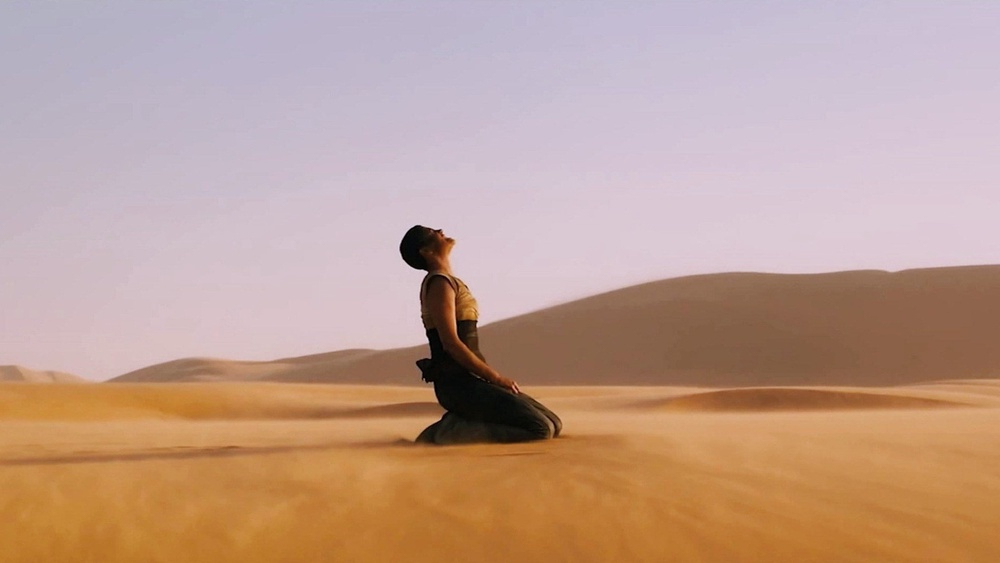
    There is no paradise to which one can return; even if there was, there wouldn’t be room for just one: it’ll have to be all or none. It’s a simple premise. A group of diverse characters must band together and share in the only instinct afforded to them in the desert wasteland of George Miller’s creation, that is, to survive, as Max establishes in the film’s opening soliloquy. Surviving until surviving feels like something more. Unparalleled visual poetry on an impossible scale. Yet still with such a precise and graceful hand, this movie speaks universally to life in the West (all of the characters we follow can be diegetically traced back to some notion of west–sex slaves, soldiers, and blood bags alike). The West, where life is constantly accelerating ever faster toward no future at all. Thus, the only one way to progress beyond hierarchical systems is to constantly stay ahead of them. A process of deterritorialization that must outpace an opponent that is more machine than man. It’s funny, I almost felt bad for the lone tree getting uprooted, but the tree is dead. It’d been dead. Rip out its roots and pull yourself out of the sour mud. Rip out its roots and plant something new. Rip out its roots and destroy your past. It was never about hope (in the world of Mad Max, such a possibility bears no fruit), it’s about activating the utopian potentialities within the dystopian, unearthing them. The tree wasn’t just destroyed, it was leveraged, teleologically endowed with a purpose alternative to that assigned it in life. Even in death, a thing can save a life. Max’s vision of a girl he failed to protect causes him to flinch and shield his eyes, blocking an otherwise fatal crossbow bolt. In Fury Road, people are things, subjects collapsed into objects. You own the objects (water, gasoline, bullets), you own the people. Everything is a commodity. Miller offers two alternatives through Max and Furiosa. Furiosa ascends, bringing resources to the masses. Max vanishes into the crowd. The last look they share is recognition of the other’s role: Furiosa the strong leader and Max the guerrilla fighter. So, they are not mutually exclusive paths, but, in fact, two prongs of one attack to jumpstart the world out of its inertial stagnation. “An object at rest will stay at rest.” As said before, people are just objects. “Unless acted upon by an unbalanced force.” There is no velocity without first acceleration, without first an initial force. Furiosa imagines a better world for Immortan Joe’s breeders, motivated by nostalgia and escapism to return to the Green Place. Miller does not allow any such fantasy for his audience either, enduring criticisms that “they just go in a big circle.” On the contrary, they travel in a line. “I suggest we go back the way we came,” says Max. Every action has an equal and opposite reaction.

    6/4: Furiosa: A Mad Max Saga (2024, George Miller)

    Much better than the trailers made it seem. I wasn’t excited for this movie at all, until I rewatched Fury Road and remembered it’s one of the greatest movies within its respective genre and decade. In hindsight, this one is kinda just whatever.

    6/7: The 15:17 to Paris (2018, Clint Eastwood)

    No one loves the troops more than Clint Eastwood. I applaud what he’s trying to do, but overall, it’s understandable why this movie is regarded as such a dud. However, if you can’t look past nonprofessional actors and poor writing, grow up. That being said, I can understand why anyone would be turned off Eastwood’s antistyle. The complete lack of, or maybe even the negation of audiovisual and narrative flare, let alone spectacle. However, the scenes with the three leads as children struck me as a crystal clear mirror of what life is really like in a White American Christian household. Judy Greer is just a normal mother until she blurts out, “My God is bigger than your statistics,” to a teacher claiming her son could have ADD. Her middle-school-aged son has an armory of airsoft guns and a hunting rifle in his bedroom closet. He prays to God at night . He’s being raised in a single parent household. He gets in trouble at his restrictive Christian school. He wants to join the military because war looks fun. But for all 15:17’s stylelessness, I don’t think you can rightly say that Eastwood is just presenting things “as they are.” He’s still a conservative old guy who likes to make movies about American heroes. And I don’t know how to feel about his movies (formally, not politically). I was too focused on Alek Skarlatos looking like Chad Bo Burnham.

    6/?: Good Time (2017, Josh and Benny Safdie)

    6/9: Yeezus (2013, Kanye West); Weathering with You (2019, Makoto Shinkai)

    6/11: Peeping Tom (1960, Michael Powell)

    This should’ve been one of my favorite things ever and it wasn’t. Need to give another shot.

    6/12: Yesterday Girl (1966, Alexander Kluge), Om Shanti Om (2007, Farah Khan)

    6/19: Le joli mai (1963, Chris Marker and Pierre Lhomme); Borat (2006, Larry Charles); From a Distant Gaze (1964, Jean Ravel)

    6/22: Blue Collar (1978, Paul Schrader)

    6/25: Evil Does Not Exist (2023, Ryusuke Hamaguchi); I Saw the TV Glow (2024, Jane Schoenbrun); Enter the Void (2009, Gaspar Noé)

    I Saw the TV Glow did NOT make me feel good about working at a movie theater.

    Digital filmmaking to surveillance to death to transcendence, but forced back into the cycle, like a neverending bootloop. Like a moth, the camera is drawn to light, leading to free associative editing—a world where a fetus can become a model volcano. The best parts are with no characters or voiceover, not even any scenes, just wandering. Consciousness is montage. I also don’t know how I didn’t realize until I was sitting in the theater that every Noé film has a gimmick. But all of that aside, some of the finest child acting ever put to screen. The aftermath of the car crash is heartbreaking to watch.

    6/29: Submarine (2024, The Marias); Kinds of Kindness (2024, Yorgos Lanthimos); Velvet Goldmine (1995, Todd Haynes); Citizen Kane (1944, Orson Welles)

    Books and TV Shows

    6/1: “Steel” from Twilight Zone (1963, Rod Serling)

    6/9–6/11: Attack on Titan: The Final Season, Part One

    6/11–6/12: Attack on Titan: The Final Season, Part Two

    Nothing is a coincidence; it’s all planned out, but it doesn’t matter. It still fails—Eren and Isayama. Impossibly monumental work of fiction only made more interesting by the fact its ending doesn’t land for everyone.

    6/23-Ongoing: The Boys: Season Four

    , , ,
  • I’m getting really tired of having to keep up with these monthly updates. It is keeping me writing, sure, but I’m not channeling the limited free time I have into the essays that could actually be good. Yet, I am getting new ideas. I need to write my thoughts here immediately rather than leaving them strewn about on Post-it notes that take up space or sitting in my mind. Everything takes up space. I’ll get better about staying on top of things. Let’s get this over with.

    Albums and Movies

    4/2: Bad Lieutenant (1992, Abel Ferrara)

    4/4: MAGDALENE (2019, FKA twigs)

    My favorite FKA twigs project so far. “fallen alien” is the standout song and the “cellophane” music video is nothing short of stunning.

    4/6: Section.80 (2011, Kendrick Lamar)

    4/9: Catch Me If You Can (2002, Steven Spielberg)

    I do not like Tom Hanks and I cannot explain why.

    4/10: Le Samouraï (1967, Jean-Pierre Melville)

    The coolest movie of all time is not what I expected. Having seen plenty of those works that it inspired, this film is a lot more formally restrained and meditative than I had imagined.

    4/14: Jaws (1975, Steven Spielberg)*; The Circus (1928, Charlie Chaplin)

    I hadn’t seen Jaws since being a child who was only half paying attention, and while not, in my mind, one of the best films ever made, it is nonetheless incredibly well-crafted and enjoyable. I have many, many more thoughts that I have already started organizing into an essay. As a piece of film history and a cultural text that reflects the changing socioeconomic makeup of American (and global) society in the precarious transition from New Dealing to Reaganomics, it’s fascinating and rife for interpretation and discussion.

    The Circus has one of the most powerful endings ever put to film. The final silent adventure of one of the greatest movie characters, emphasized by a monumental ending score that reverberates with notes of career triumph and bittersweet acceptance. And so, the Tramp willingly steps aside and looks on as the circus caravan leaves him in its dust. In its wake, the circumference of the big top tent remains indexed at his feet. He stands, turning his back to us, walking out of the circle traced in dirt. Heading toward the highway, the iris of the camera tightens around Chaplin’s Tramp, the viewer’s gaze begging the Tramp to stay, ironically closing the world around him until there’s no room for him either. We’re not ready for him to disappear, but he takes his leave anyway. He doesn’t look back. The circus, the cinema goes on without the Tramp, without Chaplin. But this is hardly the last time we’ll be hearing from the greatest clown who ever lived. In fact, the next time will be the first.

    4/16: Tommaso (2019, Abel Ferrara); Classe tous risques (1960, Claude Sautet)

    I’m so glad there’s someone like Abel Ferrara out there who’s making movies like Tommaso. It’s weird, it’s autobiographical, it’s meandering, he and Willem Dafoe are an unstoppable force that I’ve become enamored by ever since watching New Rose Hotel in Film Noir and the Western. I don’t have particularly strong or rehearsed feelings about Tommaso, but I like that it exists. I like that I don’t know exactly how to feel about it.

    I did not expect Classe tous risques to be as big of a drag as it was. I went in for Jean-Paul Belmondo and came away with him as the sole highlight. Toward the beginning of the film, Lino Ventura’s character watches his wife get gunned down by the police in front of him and not once do you believe that was something he, in fact, witnessed. Once Belmondo is introduced, his magnetic charm and lovable boyishness redeem an otherwise middle-of-the-road genre film.

    4/17: Nostalghia (1983, Andrei Tarkovsky)

    I can only describe watching Nostalghia on a big screen as a religious experience. It’s the type of two-hour film that feels like four and is all the better for it. Tarkovsky envisions nostalgia as an otherworld that entraps all desires, at once a landscape literal and wholly internal. Anytime there will be a Tarkovsky playing in theaters, I will be there.

    4/22: Elevator to the Gallows (1958, Louis Malle)

    This was a film I was so excited to be able to watch for the first time in a theater—my first time at Metrograph. However, after all the years of waiting to watch it, it was just fine. Nonetheless, the ending scene with Jeanne Moreau in the dark room really saved an otherwise mediocre addition to the canon of film noir. The score by Miles Davis—created by him essentially just riffing over the final cut of the film—is powerful in its tendency toward letting silence be silent. Like Classe tous risques, I can appreciate its impact on cinema and on the specific films it would help usher in that I enjoy watching and discussing much more. Feelings aside, there needs to exist a supercut of scenes in which Jeanne Moreau is wandering and pouting her way through modern European cities. She’s the best to ever do it. I love her. It’s about time I rewatch La Notte.

    4/23: Cloverfield (2008, Matt Reeves)

    Cloverfield rules. The concept of having the entire movie exist as on a single videotape is my kind of thing. Having the monster attack be recorded on top of previously shot footage of a romantic Coney Island day between two friends-to-lovers is an incredibly inventive way to establish character and introduce “flashbacks” as these accidental, unannounced formal intrusions, plus it’s just a beautiful, succinct way to bookend this movie.

    4/27: The Visit (2015, M. Night Shyamalan)

    I liked The Visit, but it suffers from the same problems I have with his other movies that I’ve watched over the past couple months. He cannot help himself but to overexplain his symbolism and metaphors. For example, in the climax between the two siblings and the escaped-asylum-inmates-turned-grandparent-imposters, brother and sister and husband and wife are separated. The germaphobe, OCD boy gets a shitty diaper slapped in his face, which is hilarious and shocking and disgusting, but I immediately knew that it would obviously cut back to his sister being terrorized upstairs and have her face her fear of the mirror. It feels clumsy and heavyhanded, but I don’t necessarily not like it, but it did take me out (not that that’s always a bad thing). And I don’t know what it is but the way Shyamalan directs children is extraordinary and light-years beyond any of his contemporaries. They’re funny without being annoying and feel so natural.

    4/28: Monkey Man (2024, Dev Patel)

    I went into Monkey Man hearing it wasn’t that great and was a bit of an unfocused, bloated mess, but came out blown away by the world it was able to create. The action was awesome, there were several shots that made me think “wow, I’ve never seen this before,” and Dev Patel’s performance is a strong anchor in his directorial debut. I appreciated the transgender representation brought in through Alpha and the hijra warriors—who are very much a part of Indian culture whether ultranationalists want to acknowledge it or not—which never felt belittling or pandering. They’re there and that’s that. They were interesting, they kicked ass, and that whole section in their temple demonstrates that those left behind or cast aside or forgotten by society at large are those who are best equipped to demonstrate a mode of living outside of or subversive to the accepted order, a new way of life organized around collective care for the (in)visible.

    Books and TV Shows

    Don Quixote (1605, Miguel de Cervantes, trans. J. M. Cohen)—Currently Reading

    The Temptation of Saint Anthony (1874, Gustave Flaubert, trans. Lafcadio Hearn)—Paused

    4/10: Klara (2010, Klara Lidén)

    This was just some book I saw on one of the bargain shelves outside of the Strand that looked interesting because of its all black front cover (except for the title in white typewritten font in the bottom right corner) and the repetition of weird photographs when I flipped through it. It’s an interesting look into a contemporary Swedish artist that I had never heard of. A good chunk of the book feels a bit like nonsense, but it’s an interesting conceptual framework for a book, at least I haven’t encountered anything like it previously.

    4/23: Command Z (2023, Steven Soderbergh)

    Note: * indicates a rewatch, relisten, or reread

    , , ,
  • Albums and Movies

    The current image has no alternative text. The file name is: img_7274.jpg

    2/1: Poor Things (2023, Yorgos Lanthimos)

    This is the first film I saw for free since I started working at a movie theater. Honestly, I feel next to nothing about this movie. I liked the black-and-white, fish-eye tracking shots in the first third more than anything that came after. I don’t know what I was supposed to get out of this movie and felt its critique of class stratification was weak. My main motivation for watching the movie besides being a fan of Lanthimos’s previous films (having seen everything from Dogtooth to present) was so I could read the piece about it published in e-flux Notes. I liked that essay more than the film itself. The movie beats you over the head with its lame critique of capitalism, I don’t know what I’m supposed to get out it. It does make me question how much I used to like Lanthimos; I still feel like Sacred Deer probably still holds up well though.

    2/6: The Meg (2018, Jon Turteltaub)

    I enjoyed this movie so much I went back to the library the next day to also borrow the sequel. I have been converted hence to the action-star sublimity of Jason Statham, combining the domineering presence of Arnold or Stallone in their prime with the grim and gruff emotional economy of Clint Eastwood. The will-they-won’t-they between Jonas and Suyin is not only convincing against all odds but is just so fun to watch, with Statham being the father who stepped up adding another nice touch. And somehow, Meg 2 tops the first in almost every department, adding Chinese action hero Wu Jing (who I’m familiar with from Wolf Warrior 2 and The Wandering Earth); however, the lack of Suyin was a bit disappointing, as she dies between Meg 1 and 2 to explain Li Bingbing leaving production for undisclosed reasons. Yet, the jetski battle between Statham and a giant shark, concluding with him impaling it with a helicopter blade probably makes up for it. Now, these movies do have that same ugly digital sheen of gray that coats most recent CGI-heavy releases, but for both of these movies it somehow works for me. I was studying the characters’ faces during closeups and seeing the ways in which the digital camera was adding this swirly, painterly quality to their skin. Then, I started to spot it in every scene, but maybe it was just my TV. When The Meg came out, I was in high school and would continually joke about how amazing the stupid shark movie was despite never having seen it, but now, having finally seen it, I was right all along: these movies rock.

    2/8: All Things Must Pass (1970, George Harrison); Amnesiac (2001, Radiohead); Meg 2: The Trench (2023, Ben Wheatley)

    All Things Must Pass did not wow me like I expected it to when I first listened. I definitely heard the Dylan influence, but felt like I would rather just listen to New Morning. However, revisiting sections of the album since then, I enjoy it a lot more and the songs I wasn’t feeling have grown on me. “Isn’t It a Pity” is one of the most beautiful songs I’ve ever heard, it reminds me of my grandma.

    I’ve enjoyed the previous three Radiohead albums, I think they’re good, but none of them have gripped me in the way that Amnesiac has. I wouldn’t really call myself a Radiohead fan, I like their music and listen to it sometimes, although many people my age have found themselves fanatically drawn to the band in a way that kind of eludes me. (When did this happen? I was out of the loop on music until a year and a few months ago.) I do think Mark Fisher has a point when he says in one blog post, “there was something too easy, too tasteful, about Radiohead’s move from stadium angst into a sound that often felt like Experimental.” There is a pretension about their music and the following that they have amassed that itches at the back of my mind, unconsciously bothering me. No matter! An album that begins, “After years of waiting / Nothing came”—I mean, there was no way I wasn’t gonna be into it after that. The lament for the death of the future ironically coupled with the dawn of the new millenium is delivered as vividly as any of the best films from this era on the same subject. An album speaking to lost futures and fighting the impulse to retreat into the past concludes with “Life in a Glasshouse,” a track that ends with a bittersweet jazz trumpet, wherein Yorke sings, “We are hungry for lynching.” This line sung over elements of jazz stuck out to me for its obvious racial connotations. Radiohead links the end of history of White postmodernity to the Black artistic tradition of jazz, implying this genre informed and shaped and adhered to the project of modernity, and thus, its “spiritual successor” as well. What Yorke and company do expertly well is identify that White postmodernity has only just now begun to catch up to the centuries-old reality of Black diaspora, that is, Black people are the first post/modern people. (Aside: The full-length version of this song that includes the trumpet solo is even better and I wonder why that section was removed for the album.) As Mark Fisher asks in his “Metaphysics of Crackle” essay, “Who were the first victims of future shock if not the African slaves?” (50). He goes on: “time being out of joint is the defining feature of the Black Atlantic experience.” As I listened for the first time, Amnesiac struck me as almost hauntological (I’m not sure if it could actually be labeled as such sonically, but it seems to me to certainly touch upon the same anxieties and sentiments lyrically. “I might be wrong, I might be wrong / I could have sworn I saw a light coming on / I used to think, I used to think / There was no future left at all / I used to think.” “Think about the good times and never look back.” “I want you to know / He’s not coming back.”

    2/9: Hackers (1995, Iain Softley)

    Young Angelina Jolie with a boy haircut. That’s the number one reason to watch this movie. Overall, it’s a lot of fun, everyone in it is super hot, and I really enjoyed the visualization of cyberspace as an actual space, where skyscraper-like structures and streets divide and organize the data of these global corporations. Interestingly enough, Softley opted to forgo CGI for these sequences, believing digital processes would not lend themselves as well to a three-dimensional imaging of cyberspace. In this sense, the simulation is just as real or concrete as the life that goes on offscreen (in the film and our own lives). “There is no right and wrong. There’s only fun and boring.” I think that perfectly sums up the Computer Age, and the only attitude that can survive within it, inundated with hyperreal simulations to forget the desert of the real. Everything that came before simply does not matter: it isn’t matter.

    2/12: Dazed and Confused (1993, Richard Linklater)

    2/13: The Golem: How He Came into the World (1920, Paul Wegener and Carl Boese)

    In one scene, Rabbi Löw walks upscreen to the stationary tableau camera to demonstrate his placing the life-giving word into the amulet, rather than the obvious cutting to closeup that most films would have opted for—a stylistic choice I really appreciated, especially in combination with the washed-out lighting, overexposed frame, and aggressive green tint, turning his eyes cat-like and softening his features. That right there is Expressionism at its finest, if you ask me. Also, we need more directors acting as the lead in their own films, doesn’t seem to be as common anymore. Just off the top of my head, Chaplin, Eastwood, Wegener have all delivered captivating performances in remarkable films; we’ll see what Dev Patel does with Monkey Man.

    2/14: I Might Be Wrong (2001, Radiohead)

    2/17: Sully (2016, Clint Eastwood); Unforgiven (1992, Clint Eastwood); Promising Young Woman (2020, Emerald Fennell)

    I have nothing really to say about Unforgiven besides that it’s an amazing film and Clint Eastwood looks so much like my grandpa in it. His performance is so wooden and reserved and could certainly be called “bad” acting by his detractors, but man, he’s so good in this movie. Still not sure how I feel about him as a director—the jury is still out.

    2/18: Coney Island Baby (1975, Lou Reed)

    2/19: Singles Going Steady (1979, Buzzcocks); Spiral Scratch (1977, Buzzcocks); Saltburn (2023, Emerald Fennell)

    Everyone seems up in arms over Saltburn, at least they were for like the two weeks after it hit streaming. I don’t care enough about it. I had a good time watching it when I wasn’t thinking about it, I kinda gave up on trying to make the movie make sense. I was trying to fit it into the capitalism-bad movies that have grown in popularity in the past five years. Then, you learn that doesn’t work because Emerald Fennell is an old money rich lady, which also might explain the unsatisfying ending to Promising Young Woman where the police save the day. Needless to say, the best part of this movie is the ending long take with Barry Keoghan dancing naked through the estate he has just inherited. More of that.

    2/20: Lush (2012, Mitski); Schindler’s List (1993, Steven Spielberg); The Texas Chain Saw Massacre (1974, Tobe Hooper); Old (2021, M. Night Shyamalan)

    I only just now learned that there is a dedicated fanbase and critical reappraisal around Shyamalan after shitting on him was the cool thing to do for the past decade-and-a-half. After watching Old, and then Knock at the Cabin, I feel like his penchant desire to overexplain his twists removes a good deal of abstraction and ambiguity that was built, in the first two acts of Old in particular. These two COVID movies essentially posit that we should just embrace family values in order to overcome social isolation and come together, which is really fucking stupid. To say that, now, is insane to me. I find it interesting that Old has as its villain a pharmaceutical company who uses the geographic anomaly of this beach that accelerates the aging process to test new miracle drugs. Don’t really know what to make of that.
    Is his problem that he thinks his scripts are so smart that he has to make sure we don’t miss anything or does he not have enough faith in them to let the contradictions continue to marinate in our minds after the credits? I feel like when a movie has a good twist, you wanna talk it out and interpret and reinterpret it over and over, creating readings that cancel each other out or could exist simultaneously, but I don’t feel that way about his films. I think, “oh, that was fun,” and that’s about it. He doesn’t let you feel frustrated, at least, not in the way that I like. But, come on, it is awesome in Old to finally see the camera that’s been recording these characters from afar and Shyamalan is the one behind it.

    2/21: First Blood (1982, Ted Kotcheff); Retired from Sad, New Career in Business (2013, Mitski); Bury Me at Makeout Creek (2014, Mitski); Puberty 2 (2016, Mitski); Be the Cowboy (2018, Mitski); Knock at the Cabin (2023, M. Night Shyamalan); Trainspotting (1997, Danny Boyle)*

    First Blood is a very bad movie. I do not understand what was going through the minds of people who produced it and watched it. Probably nothing.

    The Mitski marathon continues. I feel like I understand the Gen Z female mind so much more after having listened to Mitski, or at least, I have been elucidated on, granted access into the minds of my female peers. As I was not there or even really aware of it at that time, I do not know, but I do wonder if Mitski is in large part responsible for this online female culture or if she was merely one of its biggest exports. Either way, the entire aesthetic package of Bury Me at Makeout Creek was the final piece of the puzzle that explains so many of my interactions with female friends and past romantic interests. By this type of culture, I am referring to the romanticization of your own suffering and/or mental illnesses (more often than not, attributed to the hands of a male lover), the seemingly incessant desire to wallow in your own sadness and status as scorned lover, the Instagram poetry (also probably written to a past lover who will never read it), wanting to stay a girl forever, etc. In a sense, it annoys me, (1) because it is annoying and (2) because I’ve kinda done the same shit, but I respect the vulnerability. There are songs that would make me want to brace myself like I was about to get punched they were that affecting, like I shouldn’t even be listening to this—it’s too personal. My two favorite albums are Lush and Puberty 2, Lush for its songwriting, and Puberty 2, for its more experimental sound. When I first listened to Lush to begin my chronological deep dive in order to prepare for the Mitski concert that I was invited to attend on the 24th, I was floored by it. The next couple albums didn’t hit that hard for me or evoke that same intense reaction, although I generally still enjoyed them. Of course, I like the big songs off those albums, and on the later albums as well, post-Puberty 2, I enjoyed the albums as a cohesive project even less than the 2013 and 2014 albums. The 80s, synth-heavy sounds of Laurel Hell is not great, which started in Be the Cowboy. The latest album is alright, I like it more than the last two, but I could take or leave about half the songs on there. One thing that sorta bugs me is that many of her songs feel like half a song, a good idea that didn’t have enough time to mature into something stronger and more robust, but then again, sometimes it really works, like on “My Love Mine All Mine.” Plus, her album cover game is pretty weak. However, at the concert, I did enjoy that all her older material now had a bit of that same Americana feel that she was exploring on The Land Is Inhospitable, no doubt thanks to the enormous band that accompanied her. That being said, at the concert, I did end up enjoying the songs I was less partial too, but her biggest songs are her biggest songs for a reason. All in all, I need to listen to more female artists.

    Because of Trainspotting, I have been developing an ongoing and very specific list of movies that could be considered “perfect” although they are not necessarily my personal favorite movies, a sort of everyone should watch these style of list. Here’s what I got so far:
    1. Trainspotting
    2. Heat
    3. Fight Club
    4. The Raid 2
    5. Crank
    6. The Gold Rush
    7. Raiders of the Lost Ark

    2/22: Laurel Hell (2022, Mitski); The Land Is Inhospitable and So Are We (2023, Mitski)

    Books and TV Shows

    ~2/15: It’s Always Sunny in Philadelphia (2005–present, Rob McElhenney)—Finished
    This show got so ugly and so much less consistently funny into the later seasons. Shooting it in HD and 16:9 makes the actors, who are already aging, look like shit. It became hard to watch because the resolution was so crisp and everything seemed so bright and blinding. How is making everything sterile and clean good for comedy? I’ve never had an affinity for television in the same way I do for cinema, in fact, I much prefer the latter, and I think I’ve finally figured out why. Watching TV turns entertainment into a chore, especially because of streaming. Sixteen seasons all in one place makes it hard to say no. You get sucked into an unproductive vacuum, which feels even worse when the show has ceased to be entertaining (The Sopranos had a similar effect where I was getting irritated by it and called it quits after the third season). With a series you have to power through or just throw in the towel; however, with a movie, if you don’t like it, you can see exactly when it’s gonna end if you’d like, you can know exactly how much time you’re gonna spend before you even hit play. I like the confinement. More than anything, I just feel relieved that I got through It’s Always Sunny, so I can go back to not watching TV. Although, “The Nightman Cometh,” “Mac Finds His Pride,” seasons one and six, and Charlie Day still stand as highlights regardless.

    Don Quixote (1605, Miguel de Cervantes, trans. J. M. Cohen)—Currently Reading
    I’m about halfway through—just started Part Two, although I’ve had to stop bringing the book on the commute to work because the cover is almost ripped off—and I have so many ideas about the character that I will work out more thoroughly as I finish the second half.

    Note: * indicates a rewatch, relisten, or reread

    , , ,
  • I have been terribly lazy and bad about keeping up with any sort of writing, this past month in particular. I’m taking this idea from Steven Soderbergh’s blog, as in my own personal diaries where I have been documenting the movies and music I have been watching and listening to since the start of last year. I have plenty of thoughts on several of the things I watch and listen to, but oftentimes, these go nowhere and just kinda sit around in my mind. Perhaps, this space will give me some space to expand upon them or just to record some basic reflections on what I’ve seen (even if only to help me better remember what I’ve seen/read/listened to) or to just let bad ideas be bad ideas without any sort of expectation.

    Albums and Movies

    1/2: Boarding Gate (2007, Olivier Assayas)
    Assayas is a weird director for me. In theory, I should love his films and how he handles and thematizes post-classical aesthetics. Yet, I just cannot help but feel that there’s just something missing (for me) whenever I finished Irma Vep, Demonlover, and now, Boarding Gate. I love thinking through his films and find that a more enjoyable experience than watching the films themselves. Perhaps, this lack is carefully crafted, not that it matters, but it is always there. Never quite revealing itself, keeping right below the surface of feeling or sensation. Engaging with criticism about the film, namely Steven Shaviro’s Post-Cinematic Affect (my main motivation for watching this film), helps me intellectualize my own response and make sense of my own inability to grapple with Assayas-as-auteur. His films are unsatisfying because their very form embodies the untethered, mobile, and unstable nature of life in the late 20th/early 21st century, maybe?

    1/4: Frailty (2023, Jane Remover)

    1/5: The Human Centipede (First Sequence) (2009, Tom Six)
    This movie is so nauseating to look at, its sterile cinematography and poor color grading probably contributing more to my headache while watching it than any of the body horror depicted onscreen. That being said, I think the film’s ugliness as a result of its low budget works in its favor, producing a nauseating and uneasy e/affect. I cannot stand it when people write off any sort of production or project on the basis of its economic limitations. This-movie-looks-terrible-therefore-it-is-terrible sort of logic is uncritical and lazy and excludes you from engaging with the work as a cultural text. Please, just take one second to think how this one aspect that does not please your senses might still serve the greater whole. This problem persists from the more casual “movie nerd” with their pop culture palette and desire for escapism to the most hardcore analog film bro who still clings to the idea of cinematic truth via film as this contained medium with transcendental potential. As Sergio Leone once said, “When I was young, I believed in three things: Marxism, the redemptive power of cinema, and dynamite. Now I just believe in dynamite.” Anyway, I haven’t yet decided to visit the subsequent entries in this series, and I’m not in any hurry to do so, although I’m sure I will eventually at some point. But above all else, Human Centipede’s greatest accomplishment is the creation of two of the most annoying female characters of all time.

    1/6: El Mariachi (1992, Robert Rodriquez)
    This movie is great, plain and simple. Charming in its performances, cinematography, editing, music, action setpieces, ADR, love story, etc. The more you learn about its production, the more you enjoy it. I’d love to rewatch it with director’s commentary. I don’t think there’s any person alive who could watch this film and not want to go out and make a movie of their own. This is Rodriquez’s greatest gift.

    1/7: Desperado (1995, Robert Rodriquez)
    So disappointing. What the fuck happened? I was so excited to watch the followup to El Mariachi, but the casting change from Carlos Gallardo to Antonio Banderas is such a miss. The gentle masculinity and boyish charisma of the neo-Western hero has been “upgraded” to a hypersexually aggressive parody of himself. The character feels completely different. I thoroughly enjoyed the Steve Buscemi cold open, who is great but criminally underused in this film. The sex scene between Banderas and Hayek is laughably horrible: electric guitar solo, liberal use of dissolves, dozens of candles, uncomfortable closeups, gratuitous female nudity. To be fair, this whole movie is gratuitous and ridiculous in comparison to the relative restraint of the first, of which I am stylistically much more fond of and impressed by. But now that I have experienced and can expect the tonal whiplash, I have to go ahead and watch Once upon a Time in Mexico, don’t I?

    1/8: New Morning (1970, Bob Dylan)*; Pat Garrett & Billy the Kid (1973, Bob Dylan); Dylan (1973, Bob Dylan); I Love You (2023, Teen Jesus and the Jean Teasers); The Bends (1995, Radiohead)*; Jackass Number Two (2006, Jeff Tremaine)*; Jackass 3D (2010, Jeff Tremaine)
    Jackass Number Two easily deserves its newly earned spot as one of my favorite movies. It had been years since I had (re)watched it, but there’s something timeless and universal about the comedy of Jackass, and this entry into the series is easily the best, pound-for-pound, in terms of laughs. A man getting hit in the dick will never not be funny. These guys deserve to be enshrined among the all-time comedy greats right up there next to Charlie Chaplin and the lot. The most elaborate of Number Two’s pranks, like the finale staged kidnapping of a fake terrorist with a beard made out of pubes and ass hair, elicits just as big a laugh from me as a short insert of Bam Margera skateboarding down a ramp into a sheet of plexiglass directly in front of the camera. This movie improved upon the lightning-in-a-bottle of the first that I feel the next two sequels could not hope to top.

    1/9: Jackass Forever (2022, Jeff Tremaine)

    1/10: mid90s (2018, Jonah Hill); Kids (1995, Larry Clark)
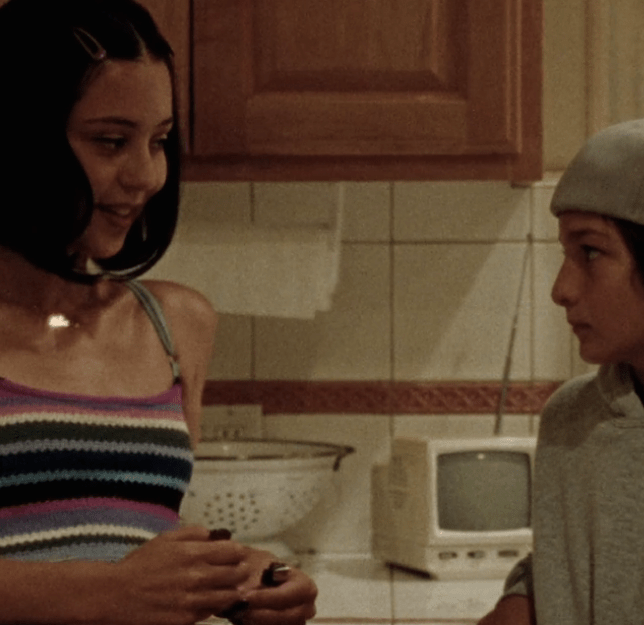
    The standout scene of mid90s for me was the scenes between Stevie and Estee during the house party. I was immediately pulled in when I heard Nirvana’s “Where Did You Sleep Last Night?” play softly underneath their conversation in the kitchen, as this older teenage girl flirts with and seduces this 13-year old kid. She knows he’s bullshitting and turns it against him. “I don’t kiss and tell. I’m a gentleman.” “That’s good to know.” She knows she won’t be considered a predator, not even to the child victim who most certainly will spin the tail to impress his cool older friends. The whole scene is heartbreaking and hard to watch. The wailing of the cello off this cut from the Unplugged album as she leads him to the bedroom lends the scene its mundanely sinister and melancholic, haunting air. Cobain belts the first verse for the final time from the other side of the closed door after Estee asks Stevie to undress her, as if desperately trying to warn this misguided little boy that he doesn’t have to go through with anything. “It’s okay, don’t be nervous,” she assures him. “My girl, my girl, don’t lie to me,” Cobain protests over Stevie’s silence. The song fades, Stevie admits he’s not sure about this, but she goes in to kiss him again anyway. Shutting him up under the guise of passion, charity. “He’s gonna worship you for the rest of his fucking life.” It’s a masterfully executed, terrifying scene that I was completely emotionally unprepared for, making my stomach sink into the floor with how acutely it captures the dread of being in what feels like a helpless encounter, one in which you think maybe your only way out is through.
    The 90s adolescence double feature concluded with Kids, which I had been meaning to watch for a long time due to its controversial status in the film world. I thought it was great. I appreciated how detached it was; it did not moralize the abhorrent abuses committed by its two lead characters and their friends. Protagonists Telly and Jasper are disgusting and reprehensible teenagers and I felt no sympathy toward them, but all you can do is look in on their lives over the course of one New York City day, in which they smoke, steal, and rape. Of course, the idea of the fly-on-the-wall, D. A. Pennebaker style of documentary that this film is indebted to is ultimately a fiction. We know there is no such thing as a wholly detached observer or a mere window into another world when it comes to cinema. We know that montage shapes how the audience interprets events and characters onscreen. I learned that bell hooks takes issue with this film and dismisses it as reactionary garbage. She states that a Black man getting beaten close to death in the film is emblematic of its problematic racial politics; however, I think I might disagree. Where hooks thinks the film is unaware of its race problem, I found that to be exactly its point when I watched it. These kids are diabolical, racist, misogynistic, and get away with every crime they commit. The filmmakers don’t punish them because the world doesn’t. It is neither endorsement nor condemnation. It’s the horrifying reality. The kids are not alright. I would like to rewatch it with her arguments in mind and see if I lean more toward her view, paying particular attention to montage, but I definitely want to check out Larry Clark’s other work.

    1/16: Wonka (2023, Paul King); Willy Wonka & the Chocolate Factory (1971, Mel Stuart)*; Charlie and the Chocolate Factory (2005, Tim Burton)*
    I watched all three of these movies after feeling compelled to watch Wonka to see if a hunch I had about it, based on its end credits, was correct. I’ve already compiled most of my thoughts on that movie in my last post. So, I went back and watched the other two Willy Wonka movies afterward, more as a why-not than anything else. I like the Gene Wilder movie, mostly for his performance and the music. For some reason whenever my brother and I would spend time with my grandpa in his room, we would surf channels in search of Willy Wonka & the Chocolate Factory. I don’t know why my grandpa insisted on looking for this movie in particular. Maybe we had stumbled upon it the first time by accident and enjoyed it so much that we wanted to see if we could find it playing again by sheer dumb luck every other time. I remember one time we found Charlie and the Chocolate Factory instead. Rewatching that film, I couldn’t stand it; however, I find myself respecting the film all the more for it. But, my god, was this film grating to sit through. I saw Depp’s Wonka as Burton’s avatar. “Candy has no point. That’s why it’s candy,” sums up the point of this movie for me. In the years right before the industrial shift from film to digital, Wonka/Burton says there’s no point, so he can feel free to insert his retarded ideas into a beloved cult property and combine it with established film history and pop culture imagery as he pleases within his approach to the blockbuster form. Mike Teavee is shrunken down and inserted into a television playing the prehistoric opening of 2001: A Space Odyssey. There’s probably something to unpack there about Burton’s blockbuster and what he’s saying about this dominant form and the effects of mass media on his characters/audience with his choice to include 2001, a sort of proto-blockbuster, a necessary precursor for its existence. Burton is his Wonka. If the ’71 Wonka is God, Burton’s is the Devil.

    1/19: Penalty of Leadership (2024, Nicholas Craven and Boldy James)

    Books and Series

    ??/??–~1/6: The Orphanage (2021, Serhiy Zhadan)—Finished

    ~12/22–~1/6: Post-Cinematic Affect (2010, Steven Shaviro)
    Brilliant. Shaviro blends vulgar autuerism and academic rigor in one of the finest pieces of moving image criticism that I have ever read without ever falling into either’s trap of coming across as annoying or pretentious. I cannot praise the imagination of these essays enough.

    1/11–~30: Silas Marner (1861, George Eliot)

    1/21–22: Fleabag (2016–2019, Phoebe Waller-Bridge)
    The mental image of the police banging on the front door in the middle of night because my dad put out a missing persons report to the NYPD because no one’s texts were getting through to my broken phone while I’m just in my room watching Fleabag with headphones on is so fucking funny.

    ~1/27: It’s Always Sunny in Philadelphia (2005-present, Rob McElhenney)—Started

    ~1/30: Don Quixote (1605, Miguel de Cervantes, trans. J. M. Cohen)—Started

    Note: * indicates a rewatch, relisten, or reread

    , , ,