
I’m getting really tired of having to keep up with these monthly updates. It is keeping me writing, sure, but I’m not channeling the limited free time I have into the essays that could actually be good. Yet, I am getting new ideas. I need to write my thoughts here immediately rather than leaving them strewn about on Post-it notes that take up space or sitting in my mind. Everything takes up space. I’ll get better about staying on top of things. Let’s get this over with.
Albums and Movies
4/2: Bad Lieutenant (1992, Abel Ferrara)
4/4: MAGDALENE (2019, FKA twigs)
My favorite FKA twigs project so far. “fallen alien” is the standout song and the “cellophane” music video is nothing short of stunning.
4/6: Section.80 (2011, Kendrick Lamar)
4/9: Catch Me If You Can (2002, Steven Spielberg)
I do not like Tom Hanks and I cannot explain why.
4/10: Le Samouraï (1967, Jean-Pierre Melville)
The coolest movie of all time is not what I expected. Having seen plenty of those works that it inspired, this film is a lot more formally restrained and meditative than I had imagined.
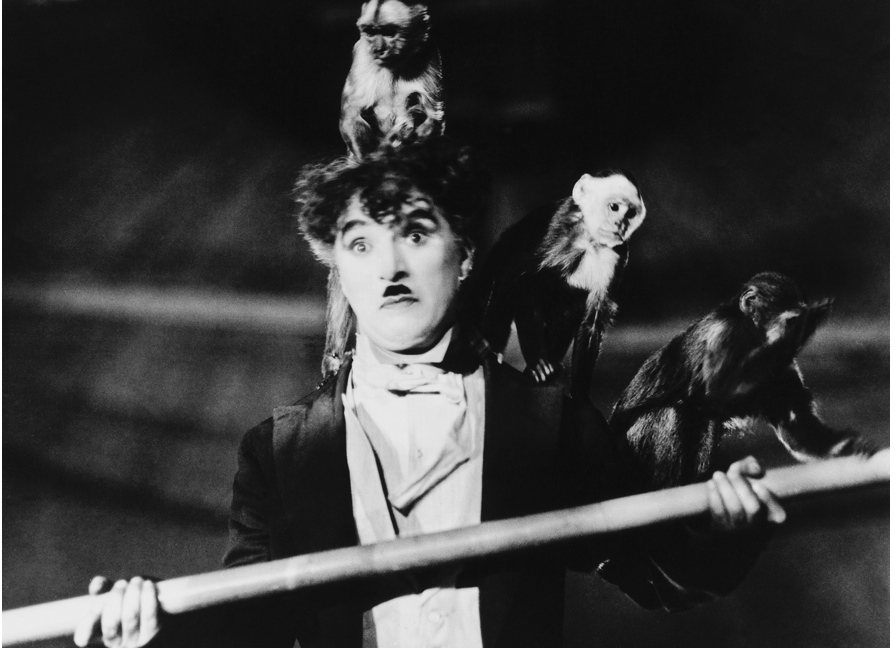
4/14: Jaws (1975, Steven Spielberg)*; The Circus (1928, Charlie Chaplin)
I hadn’t seen Jaws since being a child who was only half paying attention, and while not, in my mind, one of the best films ever made, it is nonetheless incredibly well-crafted and enjoyable. I have many, many more thoughts that I have already started organizing into an essay. As a piece of film history and a cultural text that reflects the changing socioeconomic makeup of American (and global) society in the precarious transition from New Dealing to Reaganomics, it’s fascinating and rife for interpretation and discussion.
The Circus has one of the most powerful endings ever put to film. The final silent adventure of one of the greatest movie characters, emphasized by a monumental ending score that reverberates with notes of career triumph and bittersweet acceptance. And so, the Tramp willingly steps aside and looks on as the circus caravan leaves him in its dust. In its wake, the circumference of the big top tent remains indexed at his feet. He stands, turning his back to us, walking out of the circle traced in dirt. Heading toward the highway, the iris of the camera tightens around Chaplin’s Tramp, the viewer’s gaze begging the Tramp to stay, ironically closing the world around him until there’s no room for him either. We’re not ready for him to disappear, but he takes his leave anyway. He doesn’t look back. The circus, the cinema goes on without the Tramp, without Chaplin. But this is hardly the last time we’ll be hearing from the greatest clown who ever lived. In fact, the next time will be the first.
4/16: Tommaso (2019, Abel Ferrara); Classe tous risques (1960, Claude Sautet)
I’m so glad there’s someone like Abel Ferrara out there who’s making movies like Tommaso. It’s weird, it’s autobiographical, it’s meandering, he and Willem Dafoe are an unstoppable force that I’ve become enamored by ever since watching New Rose Hotel in Film Noir and the Western. I don’t have particularly strong or rehearsed feelings about Tommaso, but I like that it exists. I like that I don’t know exactly how to feel about it.
I did not expect Classe tous risques to be as big of a drag as it was. I went in for Jean-Paul Belmondo and came away with him as the sole highlight. Toward the beginning of the film, Lino Ventura’s character watches his wife get gunned down by the police in front of him and not once do you believe that was something he, in fact, witnessed. Once Belmondo is introduced, his magnetic charm and lovable boyishness redeem an otherwise middle-of-the-road genre film.
4/17: Nostalghia (1983, Andrei Tarkovsky)
I can only describe watching Nostalghia on a big screen as a religious experience. It’s the type of two-hour film that feels like four and is all the better for it. Tarkovsky envisions nostalgia as an otherworld that entraps all desires, at once a landscape literal and wholly internal. Anytime there will be a Tarkovsky playing in theaters, I will be there.
4/22: Elevator to the Gallows (1958, Louis Malle)
This was a film I was so excited to be able to watch for the first time in a theater—my first time at Metrograph. However, after all the years of waiting to watch it, it was just fine. Nonetheless, the ending scene with Jeanne Moreau in the dark room really saved an otherwise mediocre addition to the canon of film noir. The score by Miles Davis—created by him essentially just riffing over the final cut of the film—is powerful in its tendency toward letting silence be silent. Like Classe tous risques, I can appreciate its impact on cinema and on the specific films it would help usher in that I enjoy watching and discussing much more. Feelings aside, there needs to exist a supercut of scenes in which Jeanne Moreau is wandering and pouting her way through modern European cities. She’s the best to ever do it. I love her. It’s about time I rewatch La Notte.
4/23: Cloverfield (2008, Matt Reeves)
Cloverfield rules. The concept of having the entire movie exist as on a single videotape is my kind of thing. Having the monster attack be recorded on top of previously shot footage of a romantic Coney Island day between two friends-to-lovers is an incredibly inventive way to establish character and introduce “flashbacks” as these accidental, unannounced formal intrusions, plus it’s just a beautiful, succinct way to bookend this movie.
4/27: The Visit (2015, M. Night Shyamalan)
I liked The Visit, but it suffers from the same problems I have with his other movies that I’ve watched over the past couple months. He cannot help himself but to overexplain his symbolism and metaphors. For example, in the climax between the two siblings and the escaped-asylum-inmates-turned-grandparent-imposters, brother and sister and husband and wife are separated. The germaphobe, OCD boy gets a shitty diaper slapped in his face, which is hilarious and shocking and disgusting, but I immediately knew that it would obviously cut back to his sister being terrorized upstairs and have her face her fear of the mirror. It feels clumsy and heavyhanded, but I don’t necessarily not like it, but it did take me out (not that that’s always a bad thing). And I don’t know what it is but the way Shyamalan directs children is extraordinary and light-years beyond any of his contemporaries. They’re funny without being annoying and feel so natural.
4/28: Monkey Man (2024, Dev Patel)
I went into Monkey Man hearing it wasn’t that great and was a bit of an unfocused, bloated mess, but came out blown away by the world it was able to create. The action was awesome, there were several shots that made me think “wow, I’ve never seen this before,” and Dev Patel’s performance is a strong anchor in his directorial debut. I appreciated the transgender representation brought in through Alpha and the hijra warriors—who are very much a part of Indian culture whether ultranationalists want to acknowledge it or not—which never felt belittling or pandering. They’re there and that’s that. They were interesting, they kicked ass, and that whole section in their temple demonstrates that those left behind or cast aside or forgotten by society at large are those who are best equipped to demonstrate a mode of living outside of or subversive to the accepted order, a new way of life organized around collective care for the (in)visible.
Books and TV Shows
Don Quixote (1605, Miguel de Cervantes, trans. J. M. Cohen)—Currently Reading
The Temptation of Saint Anthony (1874, Gustave Flaubert, trans. Lafcadio Hearn)—Paused
4/10: Klara (2010, Klara Lidén)
This was just some book I saw on one of the bargain shelves outside of the Strand that looked interesting because of its all black front cover (except for the title in white typewritten font in the bottom right corner) and the repetition of weird photographs when I flipped through it. It’s an interesting look into a contemporary Swedish artist that I had never heard of. A good chunk of the book feels a bit like nonsense, but it’s an interesting conceptual framework for a book, at least I haven’t encountered anything like it previously.
4/23: Command Z (2023, Steven Soderbergh)
Note: * indicates a rewatch, relisten, or reread


Leave a Reply