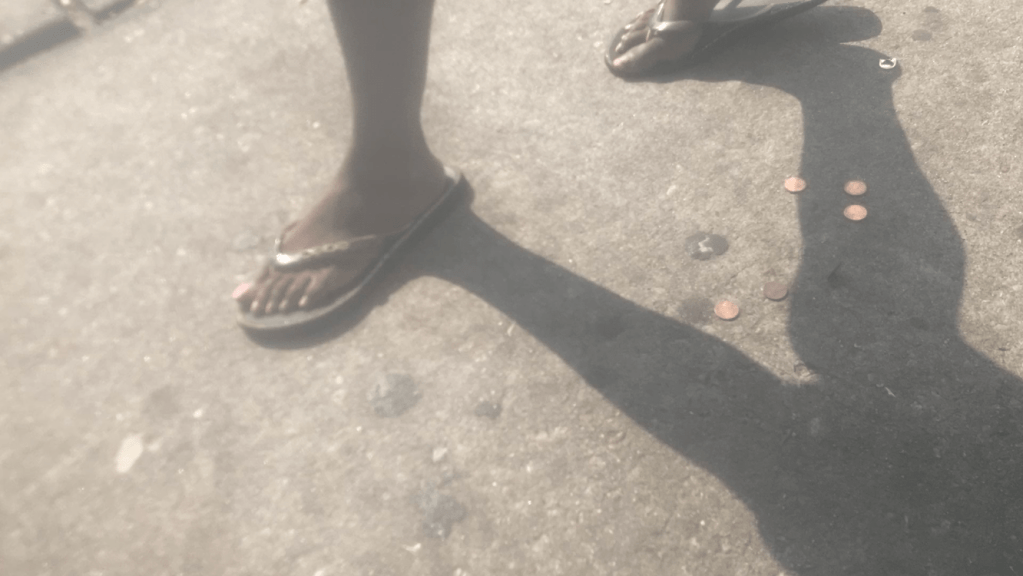
Of the concrete earth,
An oracle who could produce
Fire from her fingers.
She collects pennies from the dirt
And offers them to the concrete.
She read my future,
Said I’d never die.
My chariot awaits,
But you haven’t the fare.

Digital footprint (non-indexical index)
Of the concrete earth,
An oracle who could produce
Fire from her fingers.
She collects pennies from the dirt
And offers them to the concrete.
She read my future,
Said I’d never die.
My chariot awaits,
But you haven’t the fare.
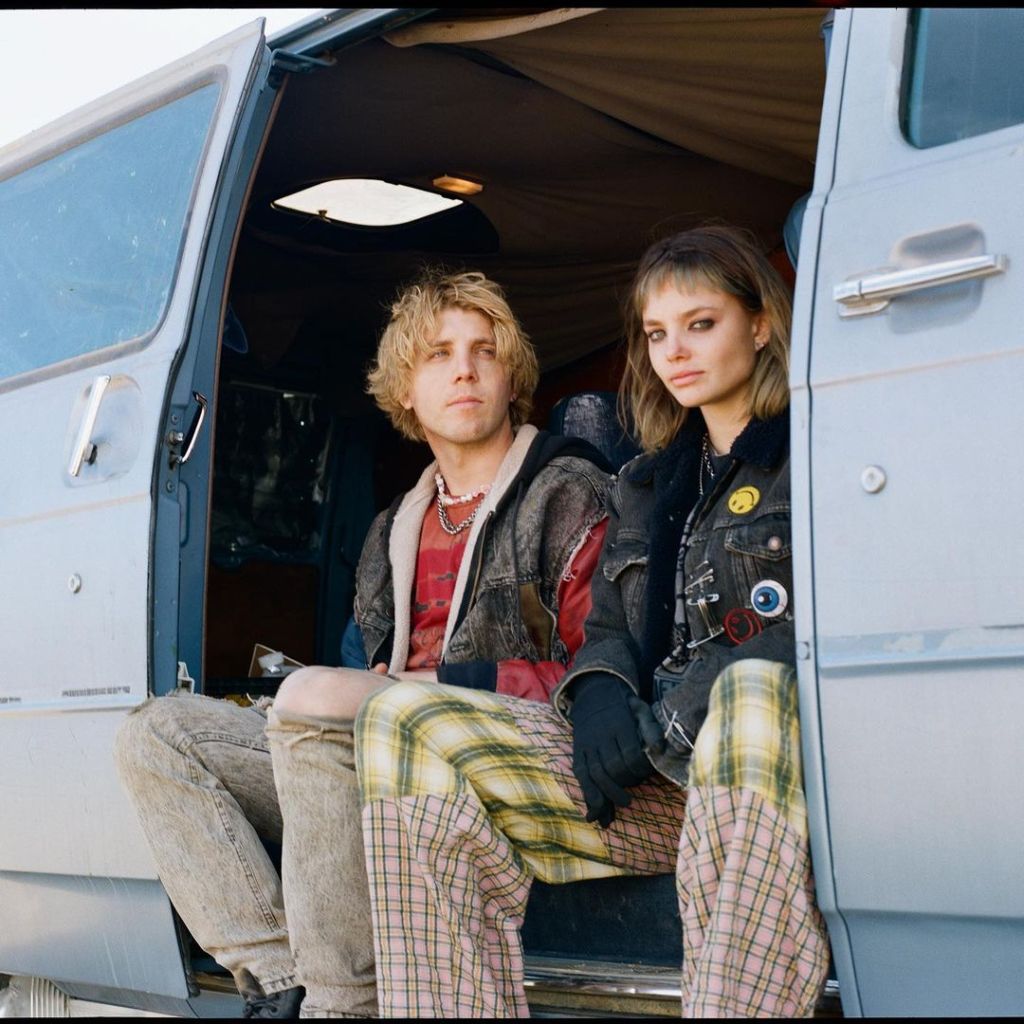
me and who?!!
How to Blow Up a Pipeline is the best fucking movie I’ve seen in a minute. Imagine Elephant (2003) meets Night Moves (2013) meets an 80s thriller. Holy shit, I’m almost tempted to watch it again following a rewatch of Van Sant and Reichardt’s respective films—what a boxset trilogy that would be! Jesus Christ. Wow. And why the fuck have I heard nothing about this movie!? It came out a year ago, but it is only now getting a US release. It feels like the same unfortunately overlooked treatment that another exceptional recent thriller, American Animals (2018), received. What a crime, man. Plus, it’s not some hippy dippy ending that weird online “metamodernists” love to harp about, talking about hope and shit. But, my God, what a fucking rollercoaster. I was about to get pissed as hell that they were setting up the two sexy ass anarchists to rat out the entire operation to the feds. I was thinking, “man, Marxists are gonna have a field day with this shit and say, ‘they fucking George-Orwell’d another leftist cause.’” (Funnily enough, the author of the 2021 book of the same name, Andreas Malm, is supposedly a Marxist). And yes, a word (or two) from the other Marxist scholar alluded to in the title in just a moment (or two).
But enough about the illusion of form—I could go on and on about how the film does an incredible job of balancing the polyvalency of all the character’s attitudes toward their ecoterrorism and giving them all credit where it’s due (I’m thinking of reformist Alisha’s line about Xochitl being a college girl who read one book and now thinks she can change the world LOL) or how it feels like the best onscreen depiction of how Gen Z really speaks and acts, like in the night-before hangout scene in the abandoned desert house. No, it’s time to talk about form itself. This film appropriates the wonderfully postmodern formal structuring device of Van Sant’s fragmented reflection on the Columbine massacre: focusing on individual characters through labeled, personalized flashbacks to recontextualize, refine, complicate the accepted notion of audience’s (and critics’) expectation for [cinematic (linear)] Truth. Further to this point, just incredible that a film can end with a goddamn TikTok and not make me wince or take it any less seriously. Wait, that’s actually so fucking genius. Ending with a TikTok call-to-action AND THEN CUTTING TO THE DESTROYED PIPELINE UP IN SMOKE—THAT IS BRILLIANT, THE FILM IS LITERALLY SAYING THAT TIKTOK IS NOT JUST A PLATFORM FOR ACTIVISM TO SPREAD AMONG THE YOUTH BUT A GENERATION-DEFINING CATALYST THAT IS DISMANTLING THE VERY FORM OF CINEMA AND MOVING IMAGE CULTURE AS WE KNOW IT AND HOW THAT IS NOT A BAD THING! We absolutely should question, organize against, and dismantle existing ways of doing things.
So, that brings me to the topic of the nostalgia mode (Frederic Jameson’s oft-quoted symptom of postmodern culture, a culture, which, he asserts, has lost the ability to historicize, and thus, everything is flattened into an inescapable, hellish present. Anyway, the nostalgia mode is a formal fixation on what Mark Fisher describes as the “antiquated models” of form, despite a work’s best appearances toward the contrary in terms of c*ntent (Capitalist Realism 58). So, while Coppola and Lucas and Spielberg lamented and resurrected the 50s from their position in the 70s and 80s (and today), we have been doing much the same with the 80s since the turn of the century and even still into the 2020s. (However, I cannot help but feeling a sense of shift, the slow death of the 80s nostalgia wave, which I strikingly realized when I saw Ben Affleck’s Air in the theater two weekends ago, an experience from which I have developed an essay that I’m dragging my feet to finish. In other words, the 90s are already here as the current occupying Ghost of Aesthetic Past.) The synth-heavy score of How to Blow Up a Pipeline recalls those common in any 80s thriller, but I would argue is not simply nostalgia, or to produce an equally menacing, ambient tone to the desert visuals, or just ’cause it sounds cool. No, Gavin Brivik’s original soundtrack appropriates the familiar sounds of synthesizers to transport the viewer back into the social climate of that particular decade. Think about it; a film this smart and socially/politically forward-thinking would not just slap on an 80s-esque sound just to catch the top-end of this cultural wave’s trough. Put simply, when I think 80s, I think Reagan. The successful neoliberal takeover—the privatization of everyday life, rampant deregulation, tax cuts for the ultra-wealthy, the empowerment of multinational corporations, increased crackdowns on organized labor: the New Deal has long been old news. And so, it’s not just the tense situations onscreen that create suspense but the droning electronic sounds that get your leg shaking. Spectatorial anxiety as economic anxiety. The very suspense stems in large part from the audio track (and its particular wicked 80s feel), a rather blockbuster-esque formal innovation with its reliance on Dolby (then later, surround) sound. To trace and diagnose the state of the present condition through nostalgic (hauntological?) sounds, in my mind, diverges from the lush operatic fantasy (John Williams) or comfortingly engulfing drone-and-braaam (Hans Zimmer) that dominates the soundscape of the Hollywood blockbuster.
It was just recently too that I was expressing to a friend how everything that’s coming out looks like utter dogshit, but if I have to sit through a laughably bad Ezra Miller Flash preview as a trade-off for a We’re All Going to the World’s Fair (2021) or a How to Blow Up a Pipeline, I’ll definitely still complain about it for sure, but at least I know anti-content is still out there, even if it is priced out of deserved theatrical slots. I had never even heard of director Daniel Goldhaber, but I will absolutely go back and watch his debut Cam (2018), a horror film about a camgirl, which sounds sick as fuck. I love films that make you wanna get out there and fuck shit up, as what you do right after you finish watching is what really matters. Anything that makes you move to create/destroy something. In terms of sheer affect, I’ve not wanted to go out and blow shit up this much since I rewatched Fight Club a couple months ago. So, if anyone reads this semi-hastily composed musing, here is my humble contribution. Now, I am free to learn how to build a bomb, it seems.
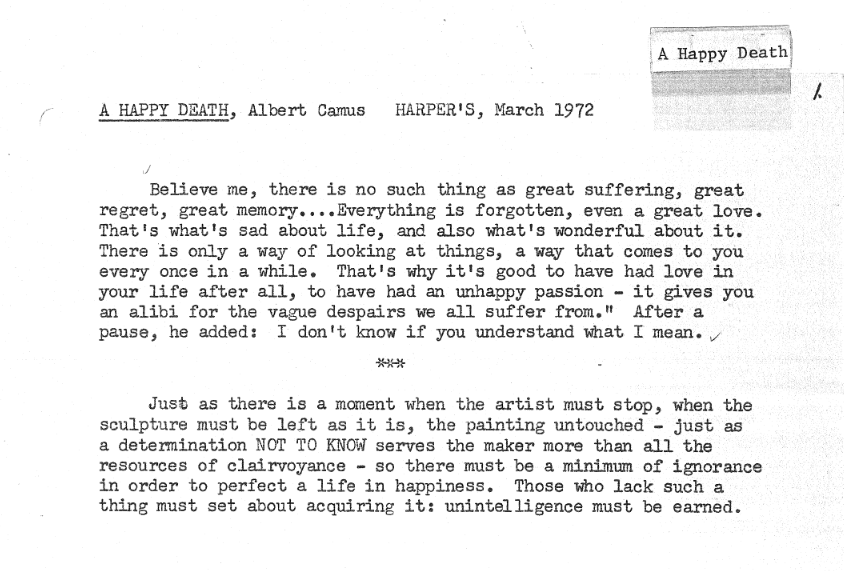
I could not even begin to record for you the number of bad ideas I have had that I almost went through with. The figure would be astonishing. What’s even more is how clever I thought they were and how, just like that, I changed my mind in the nick of time, but often it is simply inaction over time long-enough that leads to the defusal. I have one idea right now, but I don’t think it’s all bad. After all this time, I cannot shake it—actually a continuation of an aborted idea some months previous. Now, that plan was bad I’ll admit and I’m glad I came to my senses when I just watched as the last chance to follow through began to walk out the door. (Thank God for that guardian angel!) But since, I’ve reconsidered and repackaged and now I think the consequences would be much less dire for everyone, perhaps even welcomed? I still stand by it, in its more mature form. Enough time has passed, but h*pefully not too much. Doesn’t matter honestly, it’s kinda now or never.
I even have experience with such dumb ideas of this caliber, one time in the past, and I gotta say, I think I felt much better afterward. I mean, beforehand, I was nervous and sweating like crazy and shaking and stalling and I had to take a shit right before ’cause I was so anxious, but it felt good to get everything out in the open. If I hadn’t I would’ve regretted it, assuming it wouldn’t have eaten me from the inside-out first, and I do not regret anything. Ever. The reverse face of hope. That time turned out fine, better than fine, so…why not?
You know what? I think I will do something slightly stupid. I’ve convinced myself who was already convinced. What’s the harm, right? I’ll act while it’s still hot and fresh life and death. So, how best to do it? My stomach is falling out from within me. I need to alleviate this hollow, hurting feeling.
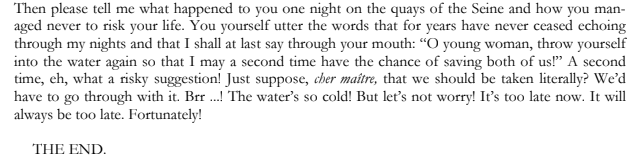
[From my copy of Collected Poems (1956) by Edna St. Vincent Millay, originally published in The Harp-Weaver and Other Poems (1923)]
Had I known that you were going
I would have given you messages for her,
Now two years dead,
Whom I shall always love.
As it is, should she entreat you how it goes with me,
You must reply: as well as with most, you fancy;
That I love easily, and pass the time.
And she will not know how all day long between
My life and me her shadow intervenes,
A young strong girl,
Wearing a black skirt and a crimson sweater
And a narrow band of ribbon about her neck.
I used to say to her, “I love you
Because your face is such a pretty colour,
No other reason.”
But it was not true.
Oh, had I only known that you were going,
I could have given you messages for her!

I am sorry. I have been away for far too long. I have put aside my passions in favor of cheap distractions, both breathing and inanimate. I have been afraid to set pen to paper, to turn the first page, to start anew. Until now, I have failed you. I have been fearful to create something I could proudly and wholly call my own. To innovate. To exist. To make art; something truly for myself. But fear is quick to overtake the mind, and subsequently, breeds anxiety. I have been paralyzed—no longer fear toward trivialities but toward my own existence! And thus, I have become obsessive. I have been obsessed with people who meant much to me and those who I gather now, meant little at all. Nonetheless, they were all crucial in this midnight awakening. I do not regret a second of it but it is no longer time for dealing with others. It is time that I take precedence for once. I am finally alone. In this moment, I have no one. But I have you, that’s enough. The clown Pagliacci I will be no longer, I will be the ghost that haunts his existence and tells his story. The only story I know well enough to tell. The story, the collection of masturbatory incoherence only I know. And I choose to keep it confined within me no longer. From now on, I will be his ghost.
I can’t talk to most people about most things I want to. They talk out of their ass and bore me or I start talking out of my ass ’cause I’m bored. I don’t do that anymore. I’d rather sit in my boiler room and think of more interesting conversations with the most interesting people. Not reliving old ones (no, I try not to be nostalgic), but imagining new ones. Sometimes I write them down—my little scenes on little notes strewn across my desk, or bulletin board, or tucked away in folders. Maybe I’ll use them for a project if I can ever do anything about anything. But I can never finish them. After a certain point, I don’t know what you’ll say next. If people ever venture into my double-monitor sauna, I’ll have to hide these scraps that I ration myself on. I don’t like people looking over my shoulder before it’s done, and even if it reaches completion, I have trouble with confessional. (I probably sound really ungrateful. I like my friends, and my grandma is my favorite person in the world, and I have wonderful, memorable conversations with both, but not about the things I can never talk about, not because they are forbidden, nothing like that, but, as people, they are so literal, and I wouldn’t know where to even begin with them.) Everyone is so goddamn literal.
I like people who can speak without opening their mouth—the body, the eyes have their own language. I’m reminded of Nietzsche and his well-documented love for dance: “Dancing in all its forms cannot be excluded from the curriculum of all noble education; dancing with the feet, with ideas, with words, and, need I add that one must also be able to dance with the pen?” I can’t move very fluidly or even speak without losing an entire train of thought or tripping over the ten simultaneous rushing thoughts, none of which are fleshed out, mind you, but if I could just get them all down and work through them and connect the dots to then disconnect them, then I could definitely make something great. Plus, the most I can muster is a trance-like stumble to “Venus in Furs” in the solitary dark; however, I know that I can dance with written words. But Nietzsche does not stop there: “I do not know what the spirit of a philosopher could more wish to be than a good dancer. For the dance is his ideal, also his fine art, finally also the only kind of piety he knows, his ‘divine service.’” For the dancer is my ideal, and so on, and so on.
To dance is to stretch. I feel constrained by words one after the other, linearity, continuity, rows and columns—how do I make the words do what I want, arrange them into a new (dis)organization, while making them somewhat legible to the people who will get what I’m trying to do, or at least appreciate it? That’s what I’m trying to figure out, how to manage the impossible challenge of putting a form onto the formless, or rather, the unformable—a stretch, one might say. With dancing, I would imagine that you have to stretch before and after, so is there ever a point where a dancer is not dancing? Their body is in constant, undying service to dance, fighting time and age and weather to contribute to the craft they crave. I wonder what it’s like to think in dance. For me, I think it’s shots and cuts—fragments, images, objects, assembled together after the fact, plan beforehand or not. Video: “I see.”
If we take Nietzsche at his word, then I think we could just as easily turn to Shakespeare and his metaphor-of-choice for life—the stage. “All the world’s a stage, // And all the men and women merely players” (As You Like It, II, vii). He continues in Macbeth, performed some years later: “Life’s but a walking shadow, a poor player // That struts and frets his hour upon the stage” (V, v). And I don’t think it would be a stretch to substitute dancers where he supposes players, given that both “[strut]” and “[fret]” on a stage. To dance is to stretch, to spread oneself thin in one’s life performance(s) atop that tragicomedic Shakespearean stage. And so, it is the second line—a perfect form-follows-function—of Macbeth’s soliloquy that catches my eye: everything stretches out into “Tomorrow, and tomorrow, and tomorrow.” Mind/body stretched too thin in time—into sheer surface. I can see my hand through it. It’s thin and white. The weight of a letter never sent. Paper beats rock, but two rocks create fire.
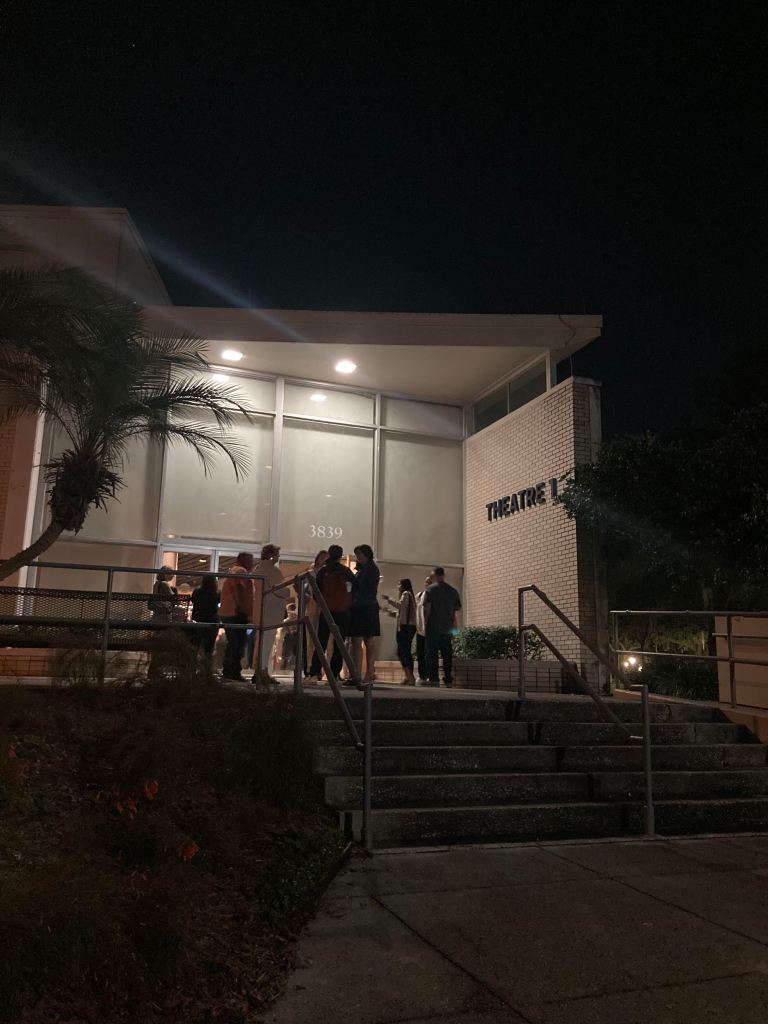
POSTSCRIPT But you know what’s even funnier about the man who trumpeted the death of God? In “On Reading and Writing” from Zarathustra he writes, “I would believe only in a god who could dance” (41, trans. Kaufmann). But if he would’ve been there that night, he would’ve seen his dancer-god. Yet, I was there and I didn’t even realize the presence, the gravity of what I saw and heard until a lifetime had already eclipsed; because that night, I wasn’t there to be looking for her onstage. Time was out of joint. I wish I could play it back with what I know now. I wouldn’t move my eyes from her, tracking every slight expression in order to glimpse what she hides away under cryptic lock and key. I wouldn’t adjust in my seat. I wouldn’t blink. I wouldn’t breathe. I would be converted by nothing else. I, her most pensive spectator. Now, we’ve come full circle, back to sitting in the dark to watch a most generous God perform for me without knowing it. The first recurrence in our eternity current. I will not die happy until I see the encore, but I won’t be around the next time she goes up.
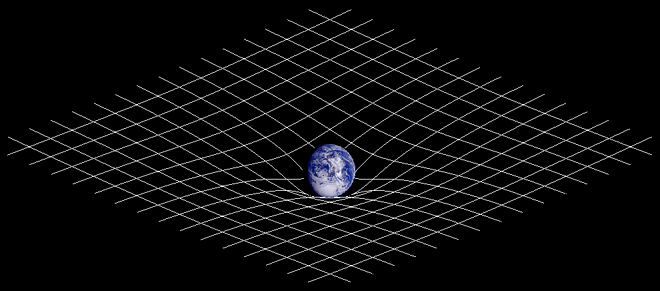
It got to the point where I was so hungry and fatigued that my eyes would not even look straight. Staring at the ceiling, and my body was too tired for even that. I wouldn’t move my head but my vision would drag itself from the patched popcorn ceiling to the dingy gray wall all on its own. So, I would reset my eyes and they would fall again to the same spot between the window and the corner next to the empty side of the bed, like clockwork. When I would focus on one spot—so my pupils couldn’t roll away—everything just spun. Me, we, they, you, none of it’s going anywhere, but everything is constantly moving about an indifferent axis, out of our control. If you lose your marbles in a world obsessed with hyperbolized gravitational physics, witnessed in the very spatiotemporal fabric of our popcorn entertainment—the only comfort/distraction from the everyday—they’ll eventually sink right back into place.1 It’s just gravity. That’s what holds (consumer) society together. In the age following the revolutionized nostalgia of Neo(liberal)-Hollywood aesthetics, there are now three certainties in life: death, taxes, and gravity.
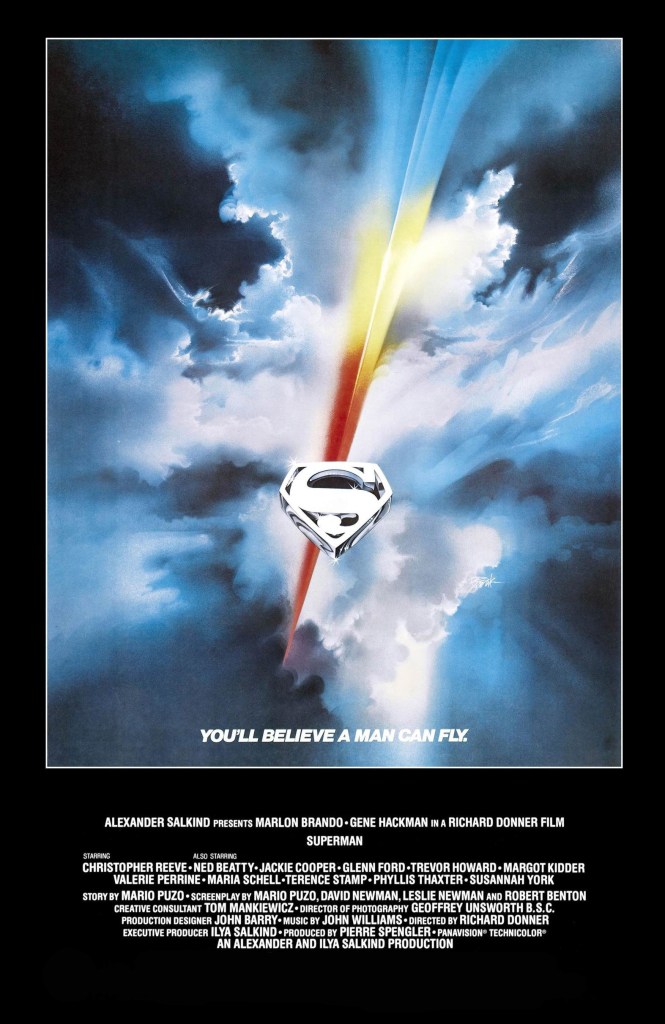
Death cannot be cheated per se, but geneticists continue to pursue the discovery of (and extension toward) some sort of innate biological expiry, pushing it further off, but taxes certainly can be cheated: unless, that is, you’re stupid enough to be poor, then sorry (60% of Americans living paycheck to paycheck), you’re likely outta luck.2 So, where does that leave Big G? It has become a play-thing, another game to be played (and therefore, cheated), just another variable to be modulated at will. Plug and chug. Force to be consumed. On the screen, we believe a man—a good ol’ American farm boy—can fly. But on the ground, outside the theater, is a different story, yet we still believe ourselves to be exceptional individuals of worthwhile merit. Steinbeck’s temporarily embarrassed capitalists. We have forgotten that the only place to spit in a rich man’s house is his face.
As it stands, gravity is the medium to be controlled—to control—rather than money, no, in service of top-down monetary control—austerity. “Who needs the nanny state!? I have my Funko Pops and baby movies and ‘hot takes,’ thank you very much.” We want to believe so badly that a man can fly, break through the barrier of the inertial present and its people, to rise above all the austerity, whether that condition be understood as free fall (Steyerl), flattening (Jameson), capitalist realism (Fisher), the end of history (Fukuyama), etc.3 Yet, not even Superman, a demigod proclaimed to be made of the same material that supports the towering financial district, can fly forever. No (super)man can control capital: it is a machine, after all. Only the machinic itself could stand a chance to dismantle it, physically or symbolically. One who defies gravity defies all the potentialities of money in service of those on the ground, in favor of quarter after quarter of record-breaking corporate profits. The machine is propped up for one more year until it can be handed off to the next guy who also doesn’t know what the fuck to do.4 The fear of collapse is always child’s play when daddy is always in the other room to clean up your mess when the tower of blocks starts to wobble. One who defies gravity is surely waiting for the blow–back down to Earth.
“Faster than a speeding bullet, more powerful than a locomotive, able to leap tall buildings in a single bound [emphasis added].”5
Even in the opening narration to his earliest animated iteration in 1941, the Man of Steel’s superhuman feats are measured against the monuments of capital and its progress. His first appearance in Action Comics #1 sees him leap a “twenty-story building,” for example.6 In both versions, what goes up must come down.
The phenomenological soothing/suffocating caress of gravity, it’s there even when I sleep. I don’t like how soft my bed is, I sink; I’m not even heavy; and it’s hot, so I sweat. It really is a bed too big for one person. Has anyone ever gotten so hungry they couldn’t see straight? Of course they have.
That was two days ago, I think. (It was.) Yesterday morning I woke up after half-sleeping in humid heat. I dread going to work more than usual. My first waking thought is automatic—in Thom Yorke’s droning singsong, “a job that slowly kills you”—and it makes me smile. (Not actually.) Getting ready, the sun fails to peak behind the clouds and through the blinds at its usual time. I was right to feel dread. I walk to the bus in the gray, start reading Venus in Furs, and walk to work in the same climate. It’s supposed to rain as I get there. (It doesn’t.) On ugly days, the restaurant never gets busy, doesn’t matter that it’s Friday morning. (I was right.) I’ll be fortunate if my tip share is even $20 after a 6-hour opening shift. (It was not.) I’m not even making $8/hour base pay, and not even $11.50 with my tip cut. (Did I really give up the one thing I’m good at, the one area where I was encouraged, for this? What am I trying to prove by shunning grad school for hustling and minimum wage employment?) Not to mention, this past week my scheduled hours were much less than average. I thought to take that free time to finally start to get my shit together, move on, away—do something. (I did not.) I might get caught in the rain when I leave. (I don’t.) I’m still thinking of that window, its light dimmed from the other side, like a cold eye in a dead face.
Roll over. Sink in, sweat out. Invite a friend. Leave a stain. Whatever that means to you. (What is it that you’re thinking as you lay there?)
If you can’t sleep, move to the other side. After that, all you can do is wash the sheets.
Notes
Images


 videophage.com

