
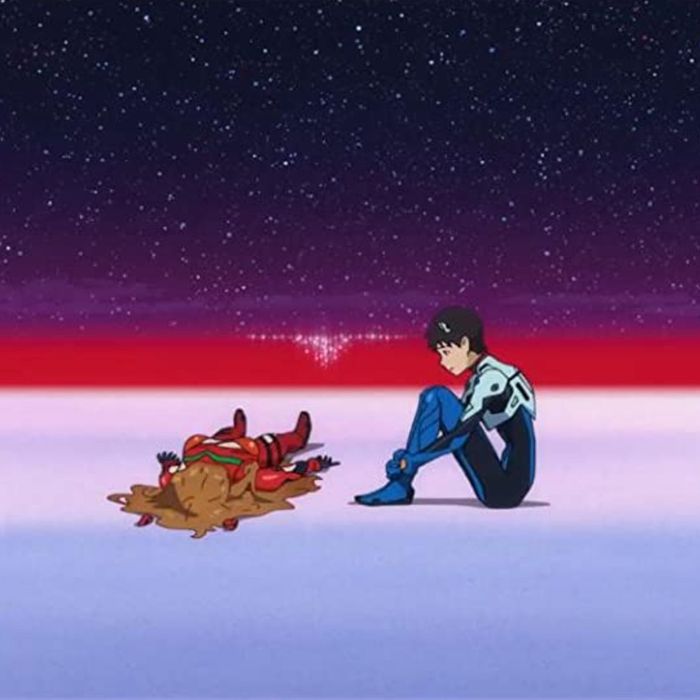

It got to the point where I was so hungry and fatigued that my eyes would not even look straight. Staring at the ceiling, and my body was too tired for even that. I wouldn’t move my head but my vision would drag itself from the patched popcorn ceiling to the dingy gray wall all on its own. So, I would reset my eyes and they would fall again to the same spot between the window and the corner next to the empty side of the bed, like clockwork. When I would focus on one spot—so my pupils couldn’t roll away—everything just spun. Me, we, they, you, none of it’s going anywhere, but everything is constantly moving about an indifferent axis, out of our control. If you lose your marbles in a world obsessed with hyperbolized gravitational physics, witnessed in the very spatiotemporal fabric of our popcorn entertainment—the only comfort/distraction from the everyday—they’ll eventually sink right back into place.1 It’s just gravity. That’s what holds (consumer) society together. In the age following the revolutionized nostalgia of Neo(liberal)-Hollywood aesthetics, there are now three certainties in life: death, taxes, and gravity.
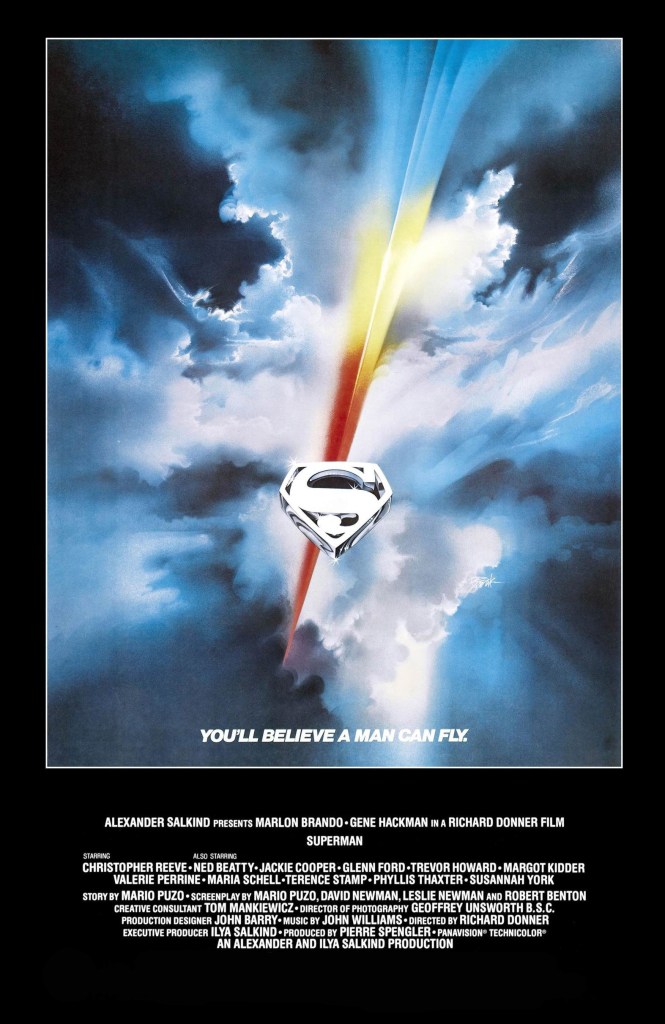
Death cannot be cheated per se, but geneticists continue to pursue the discovery of (and extension toward) some sort of innate biological expiry, pushing it further off, but taxes certainly can be cheated: unless, that is, you’re stupid enough to be poor, then sorry (60% of Americans living paycheck to paycheck), you’re likely outta luck.2 So, where does that leave Big G? It has become a play-thing, another game to be played (and therefore, cheated), just another variable to be modulated at will. Plug and chug. Force to be consumed. On the screen, we believe a man—a good ol’ American farm boy—can fly. But on the ground, outside the theater, is a different story, yet we still believe ourselves to be exceptional individuals of worthwhile merit. Steinbeck’s temporarily embarrassed capitalists. We have forgotten that the only place to spit in a rich man’s house is his face.
As it stands, gravity is the medium to be controlled—to control—rather than money, no, in service of top-down monetary control—austerity. “Who needs the nanny state!? I have my Funko Pops and baby movies and ‘hot takes,’ thank you very much.” We want to believe so badly that a man can fly, break through the barrier of the inertial present and its people, to rise above all the austerity, whether that condition be understood as free fall (Steyerl), flattening (Jameson), capitalist realism (Fisher), the end of history (Fukuyama), etc.3 Yet, not even Superman, a demigod proclaimed to be made of the same material that supports the towering financial district, can fly forever. No (super)man can control capital: it is a machine, after all. Only the machinic itself could stand a chance to dismantle it, physically or symbolically. One who defies gravity defies all the potentialities of money in service of those on the ground, in favor of quarter after quarter of record-breaking corporate profits. The machine is propped up for one more year until it can be handed off to the next guy who also doesn’t know what the fuck to do.4 The fear of collapse is always child’s play when daddy is always in the other room to clean up your mess when the tower of blocks starts to wobble. One who defies gravity is surely waiting for the blow–back down to Earth.
“Faster than a speeding bullet, more powerful than a locomotive, able to leap tall buildings in a single bound [emphasis added].”5
Even in the opening narration to his earliest animated iteration in 1941, the Man of Steel’s superhuman feats are measured against the monuments of capital and its progress. His first appearance in Action Comics #1 sees him leap a “twenty-story building,” for example.6 In both versions, what goes up must come down.
The phenomenological soothing/suffocating caress of gravity, it’s there even when I sleep. I don’t like how soft my bed is, I sink; I’m not even heavy; and it’s hot, so I sweat. It really is a bed too big for one person. Has anyone ever gotten so hungry they couldn’t see straight? Of course they have.
That was two days ago, I think. (It was.) Yesterday morning I woke up after half-sleeping in humid heat. I dread going to work more than usual. My first waking thought is automatic—in Thom Yorke’s droning singsong, “a job that slowly kills you”—and it makes me smile. (Not actually.) Getting ready, the sun fails to peak behind the clouds and through the blinds at its usual time. I was right to feel dread. I walk to the bus in the gray, start reading Venus in Furs, and walk to work in the same climate. It’s supposed to rain as I get there. (It doesn’t.) On ugly days, the restaurant never gets busy, doesn’t matter that it’s Friday morning. (I was right.) I’ll be fortunate if my tip share is even $20 after a 6-hour opening shift. (It was not.) I’m not even making $8/hour base pay, and not even $11.50 with my tip cut. (Did I really give up the one thing I’m good at, the one area where I was encouraged, for this? What am I trying to prove by shunning grad school for hustling and minimum wage employment?) Not to mention, this past week my scheduled hours were much less than average. I thought to take that free time to finally start to get my shit together, move on, away—do something. (I did not.) I might get caught in the rain when I leave. (I don’t.) I’m still thinking of that window, its light dimmed from the other side, like a cold eye in a dead face.
Roll over. Sink in, sweat out. Invite a friend. Leave a stain. Whatever that means to you. (What is it that you’re thinking as you lay there?)
If you can’t sleep, move to the other side. After that, all you can do is wash the sheets.

Notes
- Dr. Scott Ferguson describes, what he calls, the “hyper-Newtonian phenomenology” of the New Hollywood blockbuster as possessing an “immersive, contiguous physics of locomotion [emphasis added].” Much of the critique of the New Hollywood blockbuster hinted herein comes from Dr. Ferguson’s lectures and texts, so I am very indebted to and inspired by his ideas. For more on blockbuster aesthetics and the history of animation, check out this fantastic podcast episode (skip to ~1:13:51 for second quotation above). Beaman, Will and Scott Ferguson, hosts. “Can the Little Mermaid Speak?” Money on the Left, Spotify app, 14 Jan. 2023. https://open.spotify.com/episode/2uZm0JxwQiYPMcycp4co0l?si=1e44656e8e564001.
- Pino, Ivana. “More than Half of All Americans Are Living Paycheck to Paycheck, According to a New Report.” Fortune Recommends, Fortune, 28 Apr. 2023, https://fortune.com/recommends/banking/more-than-half-of-americans-living-paycheck-to-paycheck.
- In Nick Mullen’s reading of the dipshit crypto bros who lost all their money to ape jpegs, there are parallels to my figuration of the Superman character—that is, we made fun of their loss because we secretly wanted them to succeed, to hope that it really could be that easy to become rich, to defy gravity. It’s a really well-written essay of COVID self-loathing and alienation that is worth the short read. Mullen, Nick. “Haircut Day.” Nick Mullen, 15 May 2022, https://www.mull.dog/haircut-day.
- PlasticPills, host. “Bernard Stiegler and Posthumanist Post-Marxism (ft. Diego Ruzzarin).” Pill Pod, episode 119, PlasticPills – Philosophy and Critical Theory Podcast, Spotify app, 14 Apr. 2023. https://open.spotify.com/episode/3N6Nykisq6w5M2QXxFXUkN?si=c071dd14e10d488a.
- “Superman (1941) – Quotes.” IMDb, https://www.imdb.com/title/tt0034247/quotes/?ref_=tt_trv_qu.
- Siegel, Jerome and Joe Shuster. Superman. Action Comics, no. 1, DC Comics, June 1938. WordPress, https://whynotcomicbooks.files.wordpress.com/2018/06/action-comics-1.pdf.
Images
- Peak, Bob. Poster. Circa 1978. WordPress, https://cordaro9418.files.wordpress.com/2013/09/superman.jpg.
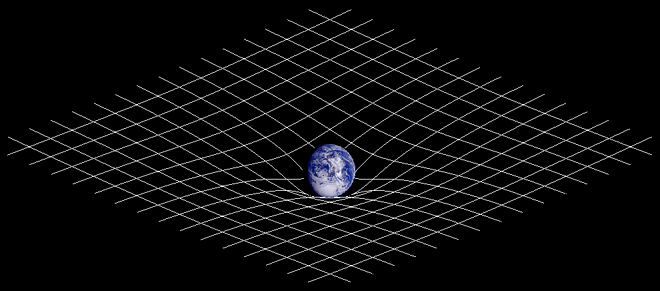
- Johnstone. Spacetime Curvature. 2 Mar. 2004. Wikimedia Commons, https://commons.wikimedia.org/wiki/File:Spacetime_curvature.png.


Leave a Reply