
He hates her when he reads her words. He does not think of her anymore as emphatically and obsessively as he once did those three years ago. However, she still comes and goes, passing through the walls of his brain like a ghost; sometimes he even conjures her up himself, he can’t help it. He hates that he cannot help himself, but sooner or later, he has to give in. Sitting at the computer, he scavenges through the rubbish pile of her curated history, descending further and further until he finds something promising, then descending again down another labyrinthine rabbit hole, moving quickly but deliberately for any sign of himself still left inside her. He hates that her words are so carefree and that there are so many of them; they are able to be so carefree because there are so many of them. There is an indescribable hollow fury, then he is filled with disgust at the whole ordeal—the hackneyed vanitas of candlelight and light-emitting diodes that color and smooth the resurfacing savory memories of their expired rendezvous. Nevertheless, he continues his excavation. He hates that he still cares, that he still has to know. He hates that his life has gone on, hers too. A romantic sentiment centuries ago maybe, a cause worthy enough of taking one’s own life once upon a time, but he knows better; he knows too much. And so, he wonders whether she has given the virtual projections of his life the same investigation, that same squinting scrutiny. A couple of vulnerable narcissists, he thinks.
He feels at once the fish and the fisherman, luring himself and letting himself be lured according to the tug on the opposite end of the line. He sees a post that beckons him, practically calling out to him and him alone—a message in a bottle that has finally reached him—but nonetheless still blurred and indistinct. In that moment, black text over white appears indistinguishable from the inviting gaseous glow of red and blue neon hanging on the other side of wet midnight glass. After gorging himself on the pink, wriggling flesh of her words, the hook still piercing his fish lips, he goes still and still feels hungry. The anger dissolves in an instant and he feels foolish, selfish. He reads and rereads in a pathetic frenzy. Now, he has become more like the worm, inching about uselessly over the same bone that it has already picked clean, hoping for a bite of meat it missed. He dissects her poetics and interrogates his past: did I say that? can this be me? did I say that? I could’ve; I must’ve; I could’ve. He just wants her to write about him. He wants her to write about him and to want for him to read it and for him to want her to want him to read it. He aches for her write his name, to give some pointlessly concrete indication that he is still her cherished object. To be loved as such by her would mean all the more the world to him than the nights they spent together, or at least the memories of them. Then again, maybe not really. It would be a hideous shame if she were so uncharacteristically literal, for that would surely spell the same for him. He could not convene with her again as he does now, dissecting the months-old lyrical bulletins of indulgences now three years passed. No, the fact she never names him allows this routine to continue. He would certainly hate otherwise. It is simply against the rules of the game and that is always what reconnects them, but then again, never brings them together.
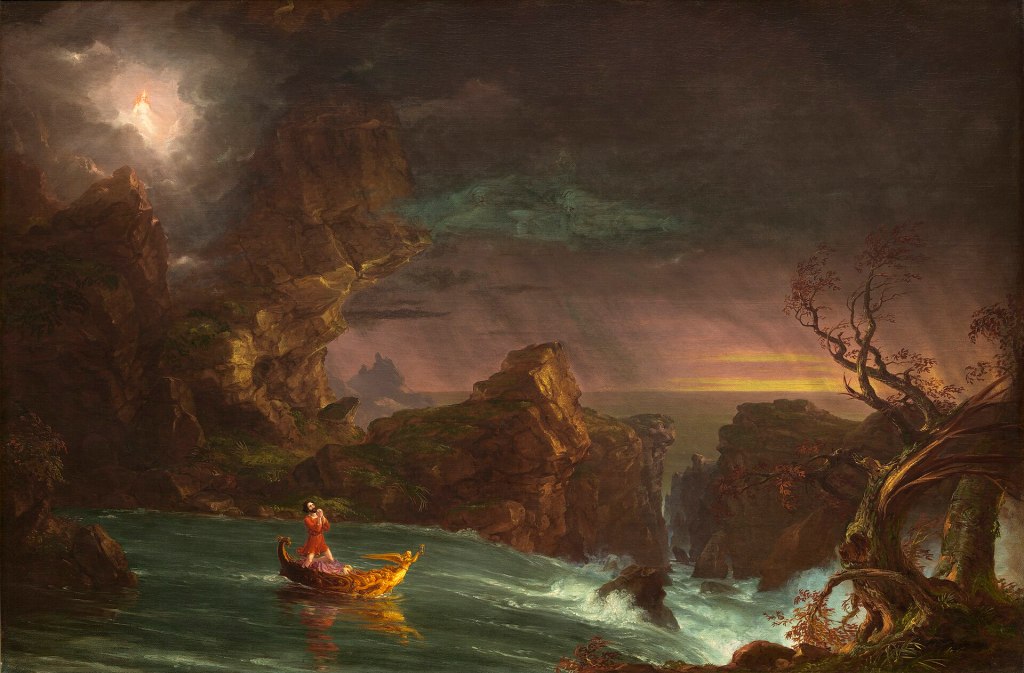
He feels sick now. He hates that he is overcome with the urge to confess whenever he dives headlong into her current, swept away by the undertow. It feels more like drowning actually, the burning excitement in his organs giving way to extrasensory bliss after the first breath of her flows—a deadly trick of his own mind slowly shutting down. With him, or rather with her, it has always been that way, feeling like a guilt-ridden stowaway aboard his own solitary vessel, some imposterous seafaring vagrant anticipating the moment he will be caught redhanded by some shipmate who simply is not there. As if hypnotized by a siren’s song, he feels compelled to leap overboard and fling his body into the sea, baring his soul for the sake of eyes he may very well never meet again, leaving behind a display of his few abandoned possessions for when the time comes for their invisible judgment. He hopes to find her there, on the other side of the confessional channel, and when she does, that she might offer some sign that she found her way. Even in her absence, he still desires her approbation; even in absence of any particular wrongdoing, he still desires her absolution. He could never hate her. Her words are not carefree at all, not in any derisive sense. Her words are unabashed, excruciatingly intimate and violently impassioned, and so he envies her, having hated her as the reminder of who he is not. To become language, expression for such an unyielding muse, is to be regarded in the highest honor, to be born again as an object immortalized amidst a sea of others, a fetish encoded and remixed—exalted!—with all the erosional tides of history and desire. Through all his doubt and failing memory, he knows who “he” is to “her” and who “she” will be for “him.” Thus, he plans his message to the sea and the woman who might be there, waiting on the other side of the waves.
The light outside has long gone down now, the space only illuminated by the glow of screens and the waxen stump dimly flickering and sputtering in the base of its brass holder. That’s one more day in one more year between them.
There is the rest of a day to attend to.


Leave a Reply