
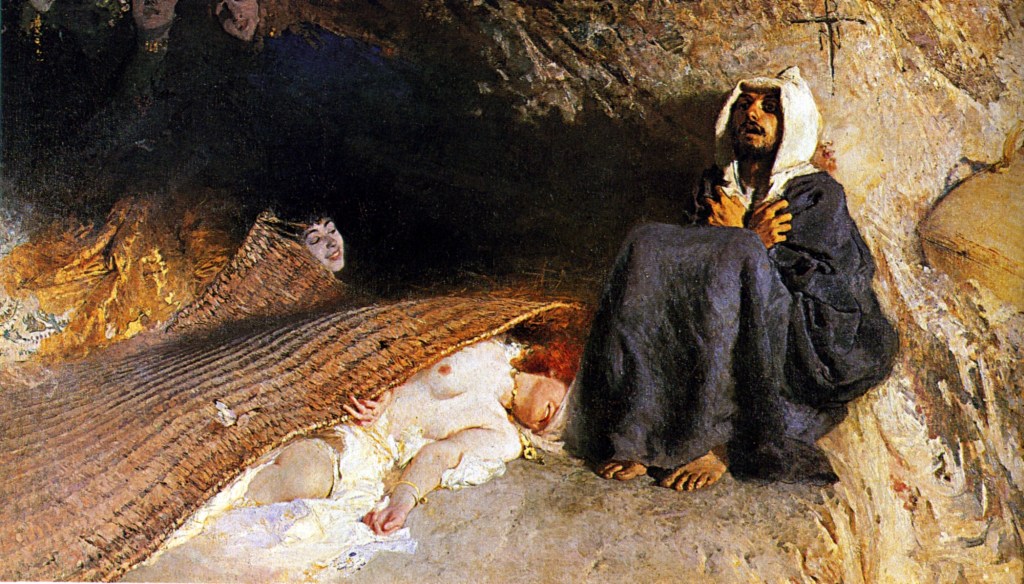


I can’t talk to most people about most things I want to. They talk out of their ass and bore me or I start talking out of my ass ’cause I’m bored. I don’t do that anymore. I’d rather sit in my boiler room and think of more interesting conversations with the most interesting people. Not reliving old ones (no, I try not to be nostalgic), but imagining new ones. Sometimes I write them down—my little scenes on little notes strewn across my desk, or bulletin board, or tucked away in folders. Maybe I’ll use them for a project if I can ever do anything about anything. But I can never finish them. After a certain point, I don’t know what you’ll say next. If people ever venture into my double-monitor sauna, I’ll have to hide these scraps that I ration myself on. I don’t like people looking over my shoulder before it’s done, and even if it reaches completion, I have trouble with confessional. (I probably sound really ungrateful. I like my friends, and my grandma is my favorite person in the world, and I have wonderful, memorable conversations with both, but not about the things I can never talk about, not because they are forbidden, nothing like that, but, as people, they are so literal, and I wouldn’t know where to even begin with them.) Everyone is so goddamn literal.
I like people who can speak without opening their mouth—the body, the eyes have their own language. I’m reminded of Nietzsche and his well-documented love for dance: “Dancing in all its forms cannot be excluded from the curriculum of all noble education; dancing with the feet, with ideas, with words, and, need I add that one must also be able to dance with the pen?” I can’t move very fluidly or even speak without losing an entire train of thought or tripping over the ten simultaneous rushing thoughts, none of which are fleshed out, mind you, but if I could just get them all down and work through them and connect the dots to then disconnect them, then I could definitely make something great. Plus, the most I can muster is a trance-like stumble to “Venus in Furs” in the solitary dark; however, I know that I can dance with written words. But Nietzsche does not stop there: “I do not know what the spirit of a philosopher could more wish to be than a good dancer. For the dance is his ideal, also his fine art, finally also the only kind of piety he knows, his ‘divine service.’” For the dancer is my ideal, and so on, and so on.
To dance is to stretch. I feel constrained by words one after the other, linearity, continuity, rows and columns—how do I make the words do what I want, arrange them into a new (dis)organization, while making them somewhat legible to the people who will get what I’m trying to do, or at least appreciate it? That’s what I’m trying to figure out, how to manage the impossible challenge of putting a form onto the formless, or rather, the unformable—a stretch, one might say. With dancing, I would imagine that you have to stretch before and after, so is there ever a point where a dancer is not dancing? Their body is in constant, undying service to dance, fighting time and age and weather to contribute to the craft they crave. I wonder what it’s like to think in dance. For me, I think it’s shots and cuts—fragments, images, objects, assembled together after the fact, plan beforehand or not. Video: “I see.”
If we take Nietzsche at his word, then I think we could just as easily turn to Shakespeare and his metaphor-of-choice for life—the stage. “All the world’s a stage, // And all the men and women merely players” (As You Like It, II, vii). He continues in Macbeth, performed some years later: “Life’s but a walking shadow, a poor player // That struts and frets his hour upon the stage” (V, v). And I don’t think it would be a stretch to substitute dancers where he supposes players, given that both “[strut]” and “[fret]” on a stage. To dance is to stretch, to spread oneself thin in one’s life performance(s) atop that tragicomedic Shakespearean stage. And so, it is the second line—a perfect form-follows-function—of Macbeth’s soliloquy that catches my eye: everything stretches out into “Tomorrow, and tomorrow, and tomorrow.” Mind/body stretched too thin in time—into sheer surface. I can see my hand through it. It’s thin and white. The weight of a letter never sent. Paper beats rock, but two rocks create fire.
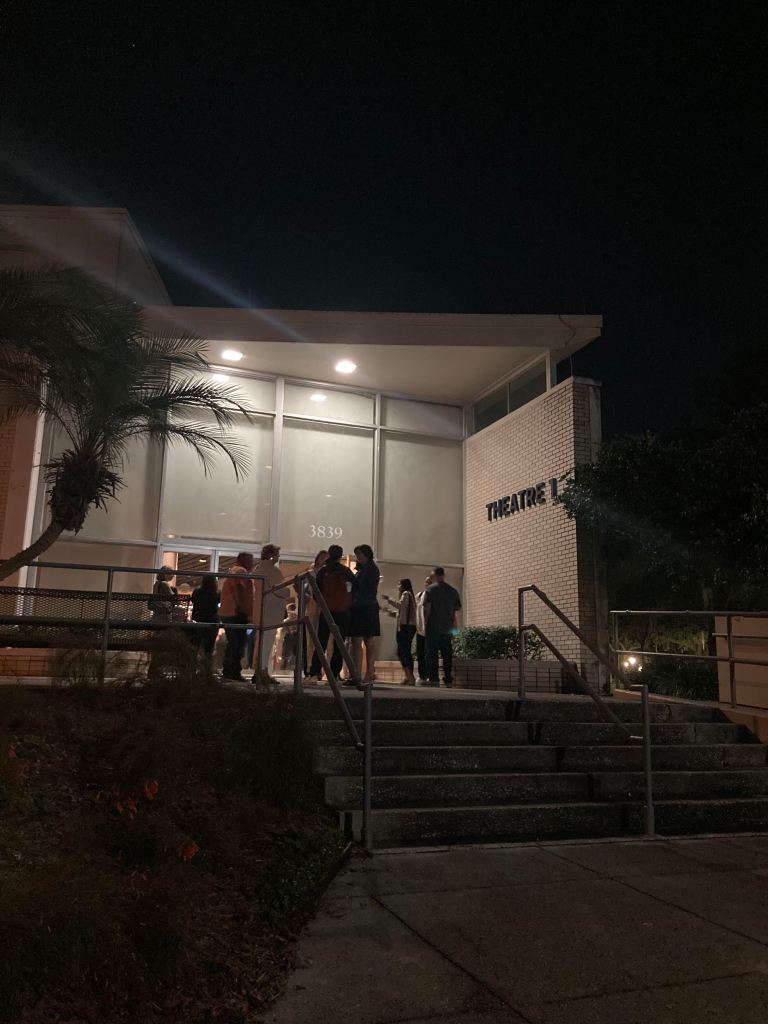
POSTSCRIPT But you know what’s even funnier about the man who trumpeted the death of God? In “On Reading and Writing” from Zarathustra he writes, “I would believe only in a god who could dance” (41, trans. Kaufmann). But if he would’ve been there that night, he would’ve seen his dancer-god. Yet, I was there and I didn’t even realize the presence, the gravity of what I saw and heard until a lifetime had already eclipsed; because that night, I wasn’t there to be looking for her onstage. Time was out of joint. I wish I could play it back with what I know now. I wouldn’t move my eyes from her, tracking every slight expression in order to glimpse what she hides away under cryptic lock and key. I wouldn’t adjust in my seat. I wouldn’t blink. I wouldn’t breathe. I would be converted by nothing else. I, her most pensive spectator. Now, we’ve come full circle, back to sitting in the dark to watch a most generous God perform for me without knowing it. The first recurrence in our eternity current. I will not die happy until I see the encore, but I won’t be around the next time she goes up.


Leave a Reply