
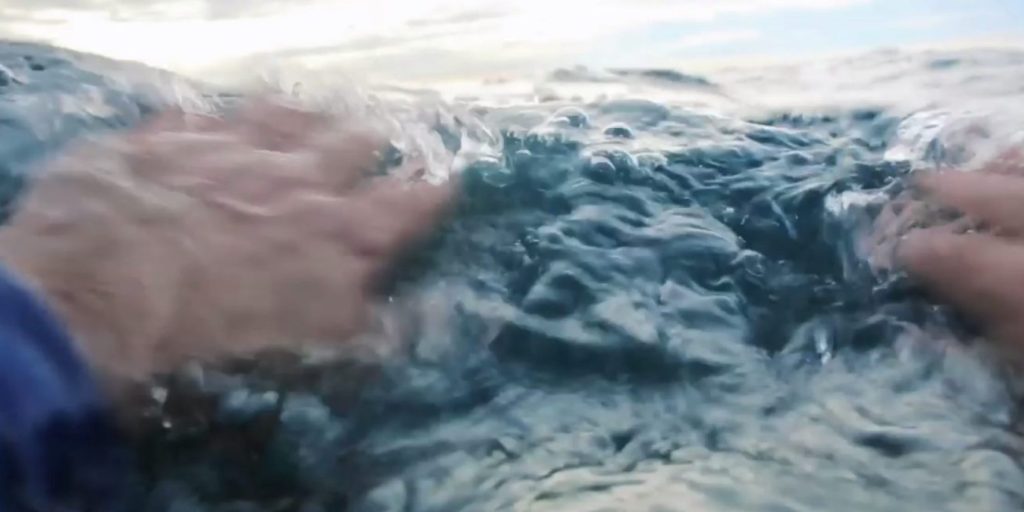
I’m already drowning again. I still have no clue what to do about it. It’s such a beyond trite observation at this point, but it is too much for any one person to have access to the entire wealth of the world’s knowledge without so much as a second thought toward the matter. The Library of Alexandria beaming its binary-coded information into your skull, absorbed unblinkingly. Only this time the library can seemingly never burn, and perhaps, we are all the worse for it. The accumulation of knowledge for the sake of itself. There can be no love of wisdom if we can never experience the risk of losing it all for good. Now, one source may just get washed away in a boundless sea of others until it all becomes too much to tread. The Library of Alexandria, and a house of ill repute; it is as if the greatest monument to human thought also had the best bathrooms for cruising, with the most popular peep shows in town. That’s what the internet is. Ready-to-hand access to any and all information, the ability to have just about any person you could ever desire, naked and performing, for you. Choose Your Own Adventure and Build-a-Harem. Equal parts Demetrius of Phalerum and Hugh Hefner. The tree of knowledge and the forbidden fruit.
Decades ago, one was forced to visit physical places to access either, forced to interact with other people to temporarily acquire that which they sought. You had to research, you had to peruse, you had to risk—trial and error. I’m not being nostalgic—and frankly, I wasn’t alive or old enough to enjoy the heyday of library archives or adult video arcades, restroom glory holes, or what have you—but, this purgatory we find ourselves in now just cannot be sustained, at least not by the human. It’s simply not tenable. I so desperately want to find a way, or rather a more interesting answer to the question, “what should we do?,” then simply walking away from it all, electing against every impulse to take no part in it. Aside from the fact this option is an impossible one, it is simply not helpful and, worst of all, hopelessly boring. Everyone already knows it. However, what is possibly the alternative? All things in moderation? There is no moderation. Our economy (although having undergone horrifying Gigerian transformations in the last century, let alone the last decade or two) has never run on such a principle, so we cannot either, especially not now. The powers that be need us more than ever to exist without temperance or taste. So, it seems it is a question of how do we navigate endless surplus and advertisement.
What’s the only other option? Kill yourself? Get a lobotomy? Give up on everything until you are homeless and starving? While noble in a Bartlebian sense, it’s only a proposition appealing to the living, romanticizing the mere thought experiment or justifying the bitter end of some sad sap who was willing to do what it takes but thankfully was not us. All for some sort of intellectual edge? No! What can I do right now? Everything seared into my head by the digital bibliotheca/bordello is designed to make me feel inferior. I don’t think any modern innovation captures both of these binary oppositions into one form more than the dating app. The left/right swipe feature mimics the simulation of page-turning from print media, then coupled with the neverending stream of seductive images and promising prospects. It always comes back to the buying and selling of potential, alternative, better futures. A product, solely designed to extract as much money/time from you as possible before you kill yourself; for those who don’t spend, less success is owed them and likely all the more reason to end it.
If it didn’t feel like drowning, it’d be significantly easier to let go, to sink and be forgotten; however, modern man has in him still that innate fear of drowning and the primal refusal of the horrible death it brings. A man’s gotta make a splash, as it were. It is in response to a life lived in a constant fluid state of alienated hyperarousal (fight-or-flight): a maelstrom of paranoia, self-loathing, distrust, obsession, brain fog, powerlessness. I want to do something that doesn’t just feel like staying afloat for a few more breaths before the inevitable. I want to be rescued. I don’t care if I’m the one who has to do it, I just need to know how. I don’t want to do just anything. I only want to do something great. And so, it is bombardment after bombardment of ideas that will go nowhere but notepads. The sinking weight of works unfinished. You know, I, like I am sure many others, make fun of those people who can only fall asleep or eat a meal accompanied by podcasts or let’s-plays or television or music—for fear of forming a single thought—but they’re right. They are right to feel that way. I do not claim to be above them nor do I enjoy ridiculing them. In many respects, I envy them; for I cannot just let go and embrace the new homeostasis.
At this point, I’m helplessly and juveniley trepidatious when it comes to reading books or essays or watching movies, because like great works should, they inspire some mechanism within me to create something of my own, incorporating that first impulse of an idea—a phrase, a scene, a shot, a truth—into something that does not exist. Yet, they never go anywhere and float helplessly in the water with me, bobbing in the waves of the tide and my own thrashing. Surrounded by this debris, drowning without ever knowing exactly when or what caused the wreck that sent you to your inevitable watery grave. Trying to cling to anything to stay afloat as your biological fail safe kicks in, only serving to push it all farther away or causing it to crack and sink. Put less figuratively, more ideas equal more things not getting done. How can this feeling of inability be channeled into the completion of some project?
In Albert Camus’s The Fall, the judge-penitent witnesses and does not intervene in the suicide of a woman leaping from a bridge. Yet, it was not necessarily the fall that killed her, but the water below that drowned her. In addition, it was the permission of one man to do nothing that condemned them both to the fall. Similarly, Hito Steyerl in her essay, “In Free Fall: A Thought Experiment on Vertical Perspective,” speaks to the contemporary philosophical dilemma of “groundlessness.” She remarks on the lack of stable ground or horizons on which to plant and align ourselves and our visions, likening this disoriented state to one of constant free fall. In each of their works, Camus and Steyerl assure us that falling, succumbing to its effects, can be liberating, that is, that liberation can be found within the act itself, as well as corruption and apocalypse. At the end of the novel, Camus’s absurd man shuts down, in the final lines, the hypothetical chance to go back and save the woman who jumps. He ridicules the hypothetical offer, smugly but not unjustly refusing to entertain the possibility of an alternative to events already happened: “Brr…! the water is so cold! But let’s reassure ourselves. It’s too late now, it will always be too late. Fortunately!” If the fall can carry with it a freedom, even a freedom to which one is condemned, then can drowning? Wherein lies the intellectual turn here?
We have collapsed and been flattened into the horizon, it is no longer visible or measurable because we have fallen off the ship and into the water. In her essay, Steyerl proffers the example of J. M. W. Turner’s The Slave Ship (1840) as one artistic expression of the aesthetic/political move from linear perspective toward “one or several other visual paradigms.” The lack of an easily identifiable horizon line disorients the viewer, attention shifts to the drowning slaves, displacing the viewer’s desperate eye, frantic for a visual life raft. There is no vanishing point for your gaze to follow to some determined endpoint, no, only the wreckage of the present historical moment. No longer looking from a linear vantage point, one that implies linear temporality, as we no longer look out at potential futures teleologically promised to us. In his essay, “The Metaphysics of Crackle,” Mark Fisher argues that the repercussions of postmodernity on a broader (white European) culture reflects a similar and previous “temporal disjunction that has been constitutive of the Afrodiasporic experience since Africans were first abducted by slavers and projected from their own lifeworld into the abstract space-time of Capital.” More concisely, black people were the first postmodern people, several centuries before the rest of us were accelerated to this point. We are all drowning now, jagged little images of men surrounded by flesh-hungry sharks with nothing to swim toward and no visible horizon with which to orient ourselves. Herein lies the paradigm of drowning, less visual and more phenomenological.
So, what is drowning, or more importantly, what does it feel like? Drowning induces panic, fatigue, hopelessness in its victims, with many reporting what most would describe as their life flashing before their eyes, especially regrets, dreams never lived. Then, there is calm as you embrace your fate in the waning moments of consciousness. Total surrender. And so, drowning compels the drowned in their panic to look backward: (1) spatially, to constantly turn about face, hoping against hope for any sign of rescue or refuge, (2) temporally, as your mind retreats into life review for your final moments, and (3) intrusively, for survivors, in the form of post-traumatic flashbacks. Survivors of drowning also report heightened states of euphoria immediately after first inhaling water: “I felt at peace,” “I was looking through a kaleidoscope of pretty colours,” “the most pleasant experience I’ve ever had.” Now, how do we achieve the euphoria of surrendering to death while alive?
I am afraid there is no exciting, subversive answer to that question, at least not from any of the avenues that have come to inform my thinking. Embrace the absurd, pushing the boulder up the hill eternally? Become an object, living forever as an image? The more I think the more these notions seem like theoretical flights of fancy, no matter how rhetorically or aesthetically alluring to my romantic, critical sensibilities. But really, what on Earth would either of those maxims actually look like in practice? They are certainly seductive ideas, or rather images of ideas, but at this point, I have not the slightest clue how to realistically incorporate them into my life. (Am I not, by trying to live these images in material reality, forgoing the trap of representation (as outlined by Steyerl) in favor of the bountiful possibilities of direct participation in the image?) Alas, I am not an object, as it were, even if I wish so desperately I was (without even really comprehending what that means, rather vaguely, intellectually clinging to whatever that signifies for some sort of disaffected air of superiority). Rather, objects do not concern themselves with drowning. As an object, I would be free to float, or even sink or have already been sunk; it would not matter. An object drowned will simply sink and there it will remain. The object does not struggle in the current, it merely records its flows and violences onto its form, acting as an indexical record. Man is not indifferent to his body swallowed into the horizon, panicking and glimpsing his own struggling hands—hands only trained to consume—in the bobbing expanse of incomprehensible fluid infinity that immediately envelopes him. We cannot hold onto anything.
Perhaps, the pleasurable kaleidoscope is not some transcendental state where we’ll glimpse our future again, but nothing more than the endless scroll of algorithimic feeding, the relentless swiping of a finger up that sinks you deeper and deeper down into yourself, temporarily forgetting the murky darkness that is always just outside of you. Rather, the object pulls you deeper and deeper into itself, into the image. In this near-death experience, this state of pre-death, one achieves ultimate bliss and capitulation, your brain slowly shutting down. “It was more of a numb feeling than anything. Kind of distant, like I was watching everything unfold from a different perspective, like it wasn’t really me that was experiencing everything. I think my mind was too dulled by panic and fear and exhaustion to really notice any pain at all.” In the struggle to remain afloat, one does not possess the faculties or demeanor to concern oneself with the drowning of others, although we certainly know they are there, just as ultimately helpless. The object has taken its revenge on the subject, revealing us to be, as Thierry de Duve (channeling and translated by Rosalind Krauss) puts it, “thing[s] of absolute narcissism.” Beings fastened unto objects, force fed and chasing escapist, self-destructive, hedonistic desires for some sensation of comfort. Every person screaming out into an inky void of noise, trying to quickly accumulate influence to keep their head above the deep, only and understandably fixated on their own position, unable to lend attention to the thoughts of others helplessly drowning just out of sight and reach. The NSA describes this narcissistic condition rather aptly: “We’re drowning (not waving) in a sea of data.”
As if looking up at the sun from below the ripples of the ocean surface, I find myself struggling to breach the upper limit of not only my intelligence and will but my imagination. It should be at this point where a more levelheaded and proper theorist would build to the subversive but optimistically contrarian turn. However, I suspect the author never truly believes in their submission to faith in the unrealized radical potential futures of their dissected subject matter; more than anything, it feels like the standard generic convention of critical theory. When will we learn that everything theorized (by McLuhan, by Steyerl, by Haraway, by Hardt and Negri, by Deleuze and Guattari, and on and on) has come to pass in some way or the other but without the political liberation. The future arrived and it is terrifyingly bleak. Thus, I simply cannot extract myself or do not believe in any redemptive opportunity within the phenomenology of drowning. Exponentially rising sea levels, the overwhelming, ever-increasing sea of data, the endless stream of content—our future has been taken underwater. We will have to wait—and not long now—until the drowning become the drowned before we can be reunited with the sunken treasure of our once-future. The only thing left to do: to stop swimming and just get on with it.


Leave a Reply