
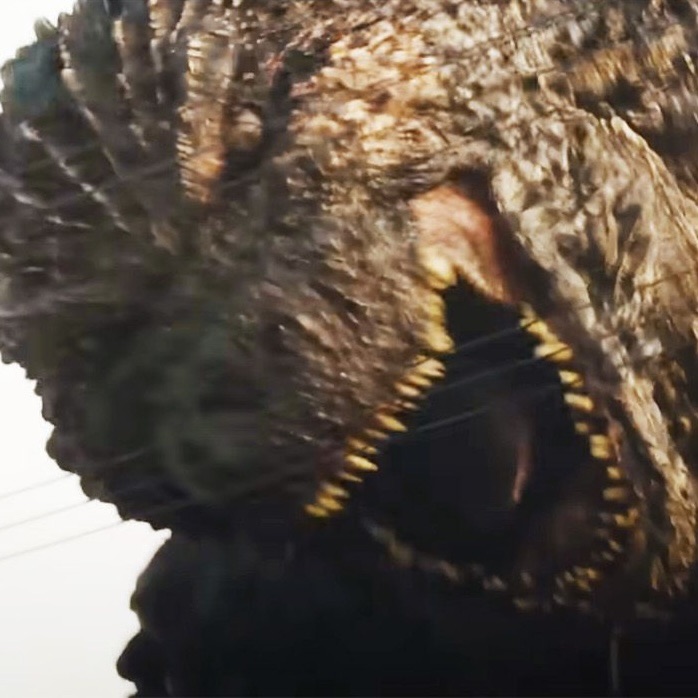
Godzilla Minus One is a film that delivers exactly what is promised by the kaiju genre in spite of a “shoestring” budget within the industrial economy of the blockbuster. According to the film’s director, the film cost even less than the $15 million amount that had been reported as its official budget. Nonetheless, the film delivers compelling action set pieces, a charming love story, and a cast of stock side characters that are memorable and likable. But better yet, the film makes a promise that is unforeseen—in my limited memory—within the blockbuster form, and it keeps it. In the third act, as the retired Japanese Navy men prepare their plan to defeat the monster, engineer Kenji declares that this final mission will have zero human casualties. And the film executes exactly that—not even a single redshirt-esque, “unimportant” death; however, as the viewer, I did not feel like this was a cop-out or a concession made on the grounds of less-than-ideal funds or irritating plot armor, despite some glaring examples of deus ex machina and bait-and-switch deaths. Rather, writer-director Yamazaki Takashi, by returning to the immediate postwar period of Japan, envisions a future founded upon collective care, one that not only masterfully reckons with a decades-old national guilt but introduces a level of care not present in the contemporary (American) blockbuster.
As film scholar Scott Ferguson puts it, the blockbuster “allegorizes its own operations,” and the thirty-third installation in the Toho Godzilla franchise, despite its low budget and care-ful approach, is no expection (145). Such examples illustrated in the blockbuster typically see characters employing the assistance of targeting computers or holographic displays or any such futuristic/fantastic technology to register and align abstract phenomenological data, which according to Ferguson, represses the the “boundless co-presence” and “mysterious mediations” of abstraction (147). The blockbuster envelops its viewer in an ecstatic audiovisual spectacle both comforting and suffocating. An “insufficient [form] of care” for the neoliberal age (147). By returning to midcentury Japan, merging the blockbuster with the historical epic, there is no such diegetic technology present (although this does not entirely diminish its hyper-Newtonian aesthetic, rather sidelining it for a surprising amount of the runtime). In the place of the aforementioned hi-tech gadgets are printed charts and maps, handdrawn diagrams, and most importantly, the film photograph.
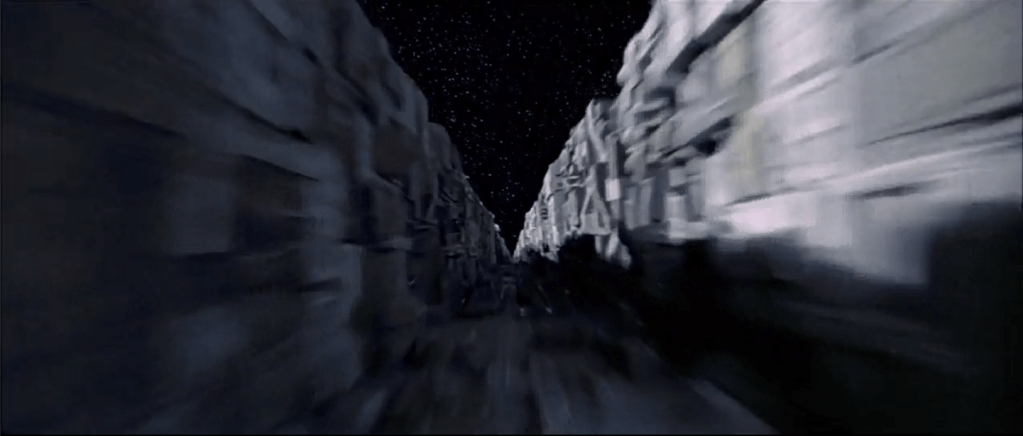
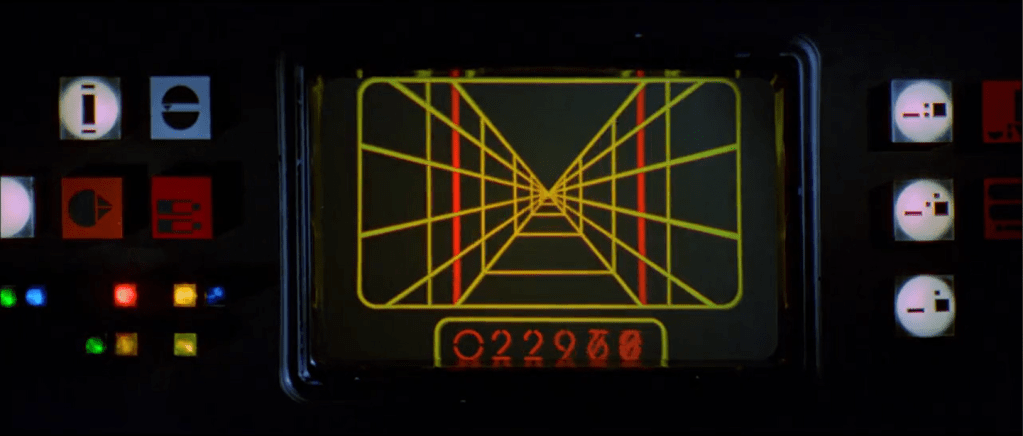
If the film recenters interpersonal networks of human connection in the midst of Godzilla’s leveling of Tokyo (as well as the flattened landscape of contemporary cinema), Yamazaki registers this attempted realignment most demonstrably through the figure of the photograph. It is through the photograph that the film’s mission is allegorized. In the film, one can practically see the human element behind the film in part to its low budget. The viewer sees the man behind the film through its endearingly economical effects. And as a mangaka offers a more intimate, even amateurish approach to comic artmaking than major American comic book publishers, more often than not collapsing the role of illustrator and writer into one singular artist, Yamazaki is both writer and director and VFX supervisor. This (relatively) scrappy, DIY approach is almost entirely unheard of in blockbuster filmmaking—certainly in the last decade—which has made increasingly Fordist and atomized the production process: uninvolved (boards of) directors relegating creative labor to outside VFX houses and/or highly specialized teams with whom they are unfamiliar whether due to time constraints, the juggling of other multimillion dollar commitments, or the breakneck pace demanded by a cross-media, instantly streamable multiverse—the nature of the business. “That’s just how things are done here.” No. Both of these highly-grossing franchises have recently released their thirty-third entry, so what’s the excuse? Godzilla Minus One offers a rendition on the most pervasive cinematic form that treats its subject matter, craft, and audience with a more involved hand, one guided by care.


So, Godzilla allegorizes its mission through the recurrence of photography throughout the film. In many ways, it can be said that photography motivates the main characters and drives the plot. (Of course, the act of photographing actors to make a motion picture also performs both these functions in an extradiegetic sense; so, by reflexively acknowledging the photographic basis at the heart of cinema, Yamazaki likewise recognizes interpersonal care as the center of any culture.) To take a photograph, to hold onto a photograph is a sign of care, as the film routinely demonstrates. Yet, according to theorist Roland Barthes, the figuration of the photographic image supposes a paradoxical and simultaneous preservation of life and production of death: “This will be and this has been” (96, 92). The earliest and longest lasting instance of photography in the film—the photos of the dead Odo Island mechanics given to Koichi, after his failure to attack Godzilla, by their sole survivor Tachibana—comes to thoroughly encompass both of these poles of photography. The guilt-ridden kamikaze pilot carries these photos, refusing to let go of the shame he carries after depriving the Japanese empire of one more honorable suicide and his subsequent failure to fire on an invincible sea monster.
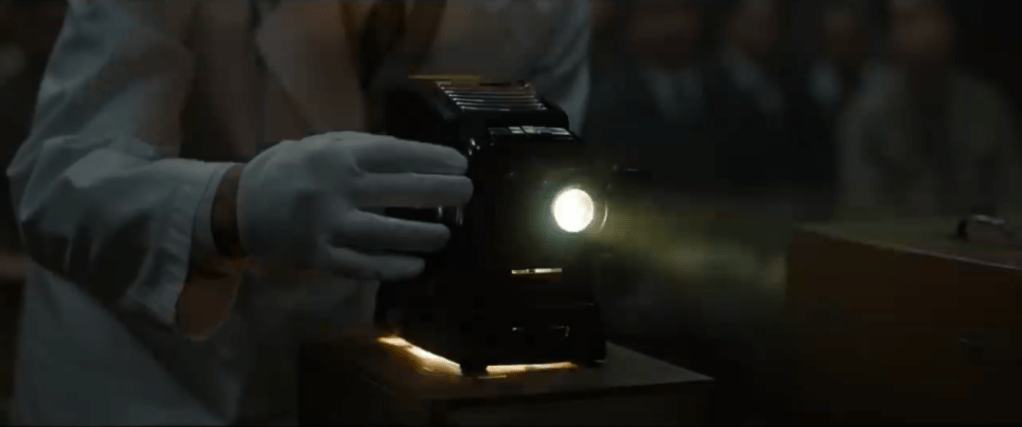
In Camera Lucida, Barthes reflects on the death of his mother and her postmortem existence by photographic means, commenting on her absence/presence. He sees a photo from her youth and remarks, “she is going to die” (96). In her photograph, he sees his own impending death. Through this exercise, Barthes has “no hope of ‘finding’ her” (63). Koichi has no hope of finding these men either. He has nightmares of his own death. The bundle of photographs given to Koichi once aboard the rescue vessel depict scenes from the fallen men’s lives, with most appearing to be posed family portraits. These photographs are documented proof of the lives these men once lived, a collective testament to the fact that they once cared and were cared for. It is not until he begins to care for himself—by being forgiven by Tachibana, by admitting his feelings for Noriko after her death, by finally wanting to live, by forcing himself to bear the weight of these photographed lives, by allowing himself to care and be cared for—that there exists the possibility of such a future for all. Kenji declares that no one will die on G-Day, maintaining that their future cannot—it will not—be built upon anymore neglect and death.
The second major instance of photography takes as its subject Noriko, whom Koichi accepts into his dilapidated Tokyo home along with the child in her care, Akiko, following his return from war. After taking employment as a Pacific minesweeper, Koichi creates a bond with the crew and they are invited for dinner at the “family” home of Koichi, Noriko, and Akiko. A photograph is taken of Noriko at the dinner table, visibly uncomfortable at the insistence her likeness be recorded. To capture her life force with an image signals her death later in the film during the Godzilla attack on Ginza. “She is going to die.” After her death, her picture reemerges and finds itself in the cockpit of Koichi’s fighter. After this point, the status of the photograph is uncertain. Afterward, Koichi is informed that Noriko is in fact alive, having regained consciousness in a hospital; however, I find myself preoccupied still with the status of the photograph. When Koichi flew the plane into Godzilla’s mouth, did he eject with it? Did it burn in the explosion? For all intents and purposes, the photograph is destroyed. It is never seen again in the remaining final scenes. For the sake of the viewer, the photo is gone, as Noriko gets to live again (minus one eye and a mysterious indexed mark on her neck; a burn from Godzilla’s atomic breath? a scar? radiation poisoning?). He ejects from the plane and destroys the somber, deathly image of her visage, choosing to live in honor of his memory of her and for the life of his young, “adopted” child. It is only then that she can return to the picture, as it were. It is only then that their future can begin.
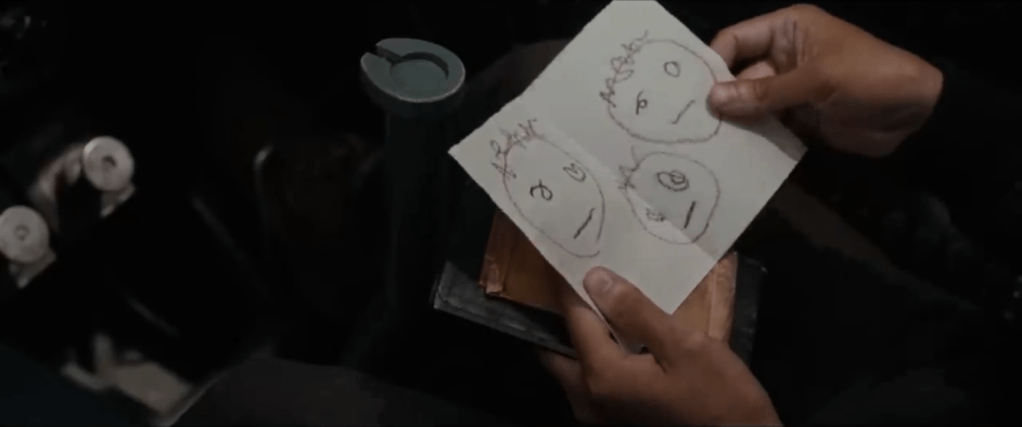
However, the final instance I would like to discuss is not even a photograph at all. It is a child’s drawing. Akiko draws a family portrait: her, Noriko, Koichi. Significantly more abstract than the photographic image, the drawing is also more iconic than indexical, according to C. S. Peirce’s semiotic formulation. But the truth claim of the photographic arts is not only founded upon indexicality. According to film historian Tom Gunning, it is in combination with iconicity that such a claim can be proposed (42). The iconic is necessary and cannot be overlooked. With Akiko’s drawing, there exists no indexical connection between the subjects and the light that allows her to see them, unlike the photochemical reaction of film photography. The “compelling sense of directness” implored by photography in its reproduction of the world is made increasingly abstract through the iconic nature of drawing media (Sadowski 332). And so, it is here I also believe to be some nugget of care extractable toward some collective future that remains unexplored. Although bearing little resemblance to any of the three, the picture nonetheless imagines a future where they are finally together as a family. It is not realistically figured—the three subjects are next to indistinguishable from each other, their expressions are blank and openended, there is no indication of setting or mise-en-scène—and returns an air of abstraction to the family unit, to the representational arts, and the blockbuster. In the final moments of the film, Akiko gets her wish.
But at the end of the day, Godzilla Minus One is a blockbuster, and like Godzilla at the end of this film, it is still the dominant form that is not going away anytime soon, no matter how many times it is sunk. Although, in recent years, the blockbuster has become increasingly stale not just to a critical audience but for the mainstream to which it widely appeals: the visual effects so lackluster as to reverse the once seemingly dialectical progression of digital imaging capabilities (as in the recent outputs of the MCU since the start of its “Multiverse Saga”), or on the other hand, so sublime and immersive, that is to say, too believable and realistic (as is the case in Avatar: The Way of Water), as to arise no sense of transcendental wonder within the viewer at all. As film critic Leonard Goi remarks, “[The Way of Water’s] visual charms can often trigger the opposite [of their intended] effect, yanking you out of Pandora rather than drawing you in.” Spielbergian form without the requisite and resultant Spielberg Face. The average consumer, so conditioned by the digital information society, understandably demands more from their media, having come to depend on a never-not-unavailable stream of personally marketed content flows algorithmically curated to their interests. Or, as Steven Shaviro puts it, the consumer has become adapted to flexibility, no longer content with “Fordist standardization and uniformity” that lacks input for customization and personal preference (14). However, flexibility goes beyond the consumer, even ordering the consumed.


Shaviro’s conception of flexibility, drawing from Deleuze and David Harvey, can be employed to trace the entangled relationship between the blockbuster and neoliberalism, not so coincidentally birthed as formalized regimes around the same time. First and foremost, flexibility is the prerequisite for the Information Age: “an ability to take on any shape as needed, a capacity to adapt quickly and smoothly to the demands of any form, or any procedure, whatsoever” (14). Shaviro delineates two reasons why flexibility is cultivated in the contemporary moment: the first being as a means to reduce costs through what he calls “just-in-time production.” The second reason is of particular interest to the discussion at hand:
flexibility is the attribute that “new economy” corporations
look for in their employees: workers must be “adaptible [sic] and
flexible, able to switch from one situation to a very different one,
and adjust to it; and versatile, capable of changing activity or
tools, depending on the nature of the relationship entered into
with others or with objects” (Boltanski and Chiapello 2007, 112).
And so, we can think of the blockbuster as under the employ of the neoliberal. The blockbuster—as economic model, as aesthetic form, as pop culture entertainment—comprises, in part, the culture industry of capital, performing the indispensable function of pacifying the masses via consumption. The culture industry, as a machination of capital instills new desires in its subjects; desires only achievable through products only it can provide (for a price, of course). “Advertising has us chasing cars and clothes, working jobs we hate, so we can buy shit we don’t need,” as Tyler Durden put its in Fight Club. All art has become advertisement. Only now, it’s not selling products necessarily but rather experiences, “escape.” We are purchasing affect. Consumption as affective labor. And while there is a whole industry of toys and collectibles and comic book tie-ins and box sets that has spawned out of the Lucas-Spielberg model, that is in no way the main product of the neoliberal culture industry. We buy in to the fantastical, spectacular worlds of the blockbuster and its larger-than-life characters. And so, outside the envelope of the theater seat with built-in haptic effects, the curved widescreen, and Dolby surround sound, we look for heroes to catch and save us from our free fall. But all our heroes died decades ago.
However, the blockbuster machine, despite its exclusion of “abstraction’s endless co-presence,” which “furnish[es] nervous sensoria with disastrously insufficient forms of collective care,” is nonetheless an impressive marvel, owed to its technological advancements to the (post)cinematic arts, thanks to all the capital pumped into it (Ferguson 147). The omnipresence of the blockbuster mimics the spread of neoliberal network society into all corners of the Earth—physical, virtual, affective, psychological, etc.—to become the undisputed global order. So, like any good employee, the blockbuster must be flexible, its aesthetic preoccupations merging with the documentary, the art film, the historical drama, television, video games. I am not moralizing about the state of cinema, and declaring its death as has been done hundreds of times over. I am not condemning the blockbuster. As Godzilla Minus One highlights, there is still plenty to admire. In fact, I don’t believe the first step toward a new kind of approach to cinema can be constructed within the cinema. Things will happen as they will. Instead, it is the work of the critic, a really good critic, the professional contrarian, to exalt the seemingly mediocre and the overlooked, to point out what you and I cannot yet see, what we feel is unworthy of being seen. What started as a half-baked review idea transmogrified into an ode to Steven Shaviro and his style of criticism, especially his Post-Cinematic Affect. But, in the meantime, if this is all we’re gonna get, shouldn’t we at least have an iteration that is not only more enjoyable but also more audacious?
Merry Christmas. War is over, if you want it.
Works Cited
Too lazy to do this right now…
Ferguson, Scott. Declarations of Dependence: Money, Aesthetics, and the Politics of Care.
Gunning, Tom. “What’s the Point of an Index? or, Faking Photographs.”
Barthes, Roland. Camera Lucida: Reflections on Photography.
Sadowski, Piotr. “Between Index and Icon: Towards the Semiotics of the Cast Shadow.”
https://rbc-cataloging-manual.beinecke.library.yale.edu/comic-books-and-graphic-novels
https://www.traileraddict.com/star-wars-4/targeting-computer
Shaviro, Steven. Post-Cinematic Affect. https://www.xenopraxis.net/readings/shaviro_postcinematicaffect.pdf
https://w1.chainsawman-online.com/manga/chainsaw-man-chapter-148/
https://twitter.com/Trey_Explainer/status/1578421650961203200
https://pbs.twimg.com/media/Fejxdg5XEAIep28?format=jpg&name=large


Leave a Reply